A Detailed Overview of Safety Standards and Applications for Car Fuse Holders in Electric Power Steering Systems
News 2025-10-20
Electric power steering (EPS) systems are essential in modern vehicles, offering improved handling and efficiency by reducing the effort needed to steer. The car fuse holder is a vital component that protects these systems from electrical overloads and faults, ensuring reliable operation. As vehicles incorporate more advanced electronics, adhering to safety standards for fuse holders becomes crucial to avoid risks like system failures or fires. This article examines the role of fuse holders in EPS, emphasizing their applications and performance benefits while aligning with industry safety requirements.
Application Scenarios in EPS Systems
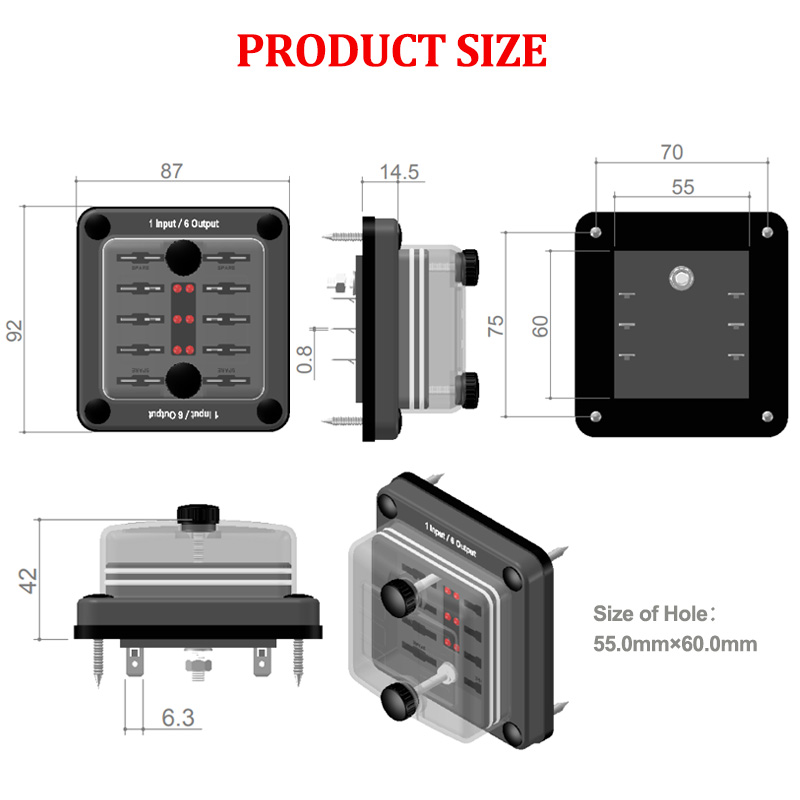
Fuse holders are strategically placed in EPS modules to shield critical circuits from excessive current. In electric and hybrid vehicles, they safeguard components during dynamic driving conditions, such as sharp turns or sudden stops, where power demands fluctuate. These holders also integrate with advanced systems like adaptive cruise control, maintaining stability and preventing disruptions that could compromise driver safety. Their design allows seamless incorporation into compact EPS units, supporting the transition to autonomous driving technologies.
Performance Advantages of Advanced Fuse Holders
Advanced fuse holders deliver superior protection through fast-acting mechanisms that interrupt faults quickly, minimizing damage to EPS electronics. Constructed with robust materials, they resist heat, vibration, and corrosion, ensuring longevity in harsh automotive environments. This durability enhances system efficiency, reducing downtime and maintenance costs. Furthermore, their precise current-handling capabilities allow customization for specific EPS needs, improving overall vehicle performance and energy management in real-world scenarios.
Adhering to Safety Standards
Safety standards from bodies like ISO and SAE dictate the design and testing of fuse holders for EPS applications. Compliance involves evaluations for thermal endurance and electrical integrity, ensuring holders can handle automotive stresses without failure. These standards promote features such as enhanced sealing and fault detection, which are critical for EPS reliability. By meeting these criteria, fuse holders contribute to safer vehicles, particularly in systems where steering assistance must remain operational during electrical anomalies.
Frequently Asked Questions
1. What is the main role of a car fuse holder in EPS systems?
Answer: It protects the electric power steering system by breaking electrical circuits during overcurrent events, preventing damage and ensuring safe operation.
2. How do fuse holders improve EPS performance?
Answer: They offer rapid fault response and durability, enhancing system reliability and reducing the risk of failures in demanding driving conditions.
3. Why are safety standards important for these components?
Answer: Standards ensure fuse holders meet rigorous tests for heat and vibration resistance, safeguarding vehicle occupants and maintaining EPS functionality.