Anti Static Coating Auto Fuse Enhancing Safety In Flammable Vehicle Electrical Environments
News 2025-12-08
Anti static coating auto fuse technology addresses ignition risks in fuel-rich and gas‑exposed vehicle zones. Modern vehicles integrate dense wiring near tanks, pumps, battery modules, and volatile vapors, where uncontrolled static discharge can trigger arcing. By combining conventional over‑current protection with engineered surface coatings, these fuses help keep electrical subsystems stable under low‑leakage, high‑flammability conditions common in commercial fleets, mining trucks, refueling trucks, and hybrid or hydrogen platforms.
Key Technical Characteristics
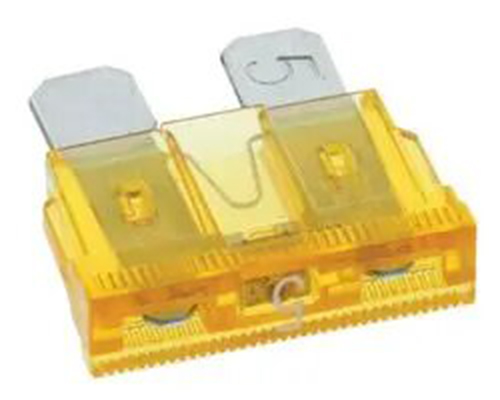
Anti static coating auto fuses use dissipative polymer or ceramic coatings that control surface resistivity, avoiding rapid charge accumulation while preventing sudden electrostatic discharge. The coating is tuned so that leakage remains negligible under normal operating voltages, protecting CAN lines, sensor loops, and power rails from unwanted current paths. Pulse‑rated fusible elements support automotive load dumps, cranking transients, and high inrush currents from pumps and motors. Compliance with ISO 8820, ISO 7637, AEC‑Q200 or equivalent standards ensures consistent performance over wide temperature ranges, vibration, and humidity.
Application Scenarios In Flammable Zones
The technology finds primary use around fuel delivery and alternative energy systems. In gasoline and diesel vehicles, coated fuses protect pump modules, tank vent valves, and vapor recovery systems where hydrocarbon concentration can peak during refueling or hot soak. In CNG, LPG, and hydrogen platforms, they support valve actuators, pressure sensors, and emergency shutoff circuitry positioned near high‑pressure lines. Battery electric buses and forklifts operating in chemical plants or warehouses benefit when traction auxiliaries, DC‑DC converters, and coolant pumps are fused using anti static coatings to limit ignition sources close to vapors or dust.
Performance Advantages And Design Benefits
Compared with conventional blade or cartridge fuses, anti static coated versions reduce electrostatic field strength at the device surface and mounting interface, decreasing the likelihood of micro‑arcs between terminals or to nearby grounded metal. The coating also improves contamination resistance, lowering the impact of moisture films, fuel mist, or conductive dust on fuse behavior. Controlled surface resistance enhances EMC stability in high‑frequency environments such as turbocharger controls and high‑speed inverters. These performance gains allow engineers to specify tighter clearances, improve harness routing in cramped engine bays, and meet stringent safety targets without oversizing protective devices.
Selection, Integration, And Maintenance
Engineers should select ratings based on worst‑case short‑circuit current, ambient temperature around fuel systems, and expected transient profiles. Proper PCB or harness layout keeps creepage and clearance distances compatible with the reduced but still present electric fields. Using dedicated fuse holders that maintain coating integrity during insertion helps preserve anti static performance over life. Routine inspection intervals in fleet maintenance programs should include checks for discoloration, cracking, or chemical attack on the coating, especially in vehicles exposed to aggressive fuels, de‑icing fluids, or industrial solvents.
1. How does an anti static coating auto fuse reduce ignition risk?
The coating dissipates electrostatic charge in a controlled manner, lowering local field strength and cutting the chance of sparks that could ignite flammable vapors.
2. Where is this type of fuse most commonly installed in vehicles?
Typical locations include fuel pump modules, vapor management systems, gas or hydrogen valve controls, and electrical circuits routed near tanks or high‑pressure lines.
3. Does the coating affect normal fuse operation or trip time?
When correctly specified, the coating does not alter time‑current characteristics; the fusible element still defines opening behavior while the coating mainly manages surface charge and contamination effects.