Automotive Battery Box Lightweight Design Enables Safer, Faster Handling and Installation
News 2025-11-17
Lightweight battery enclosures are becoming a key design focus in modern vehicles, especially for electric and hybrid platforms. As battery packs grow in capacity, the weight and complexity of the battery box strongly affect assembly efficiency, maintenance safety, and overall vehicle performance. By optimizing materials, structural layout, and interface design, automotive manufacturers can achieve easier handling and installation while maintaining mechanical strength, thermal stability, and protection against impact and corrosion.
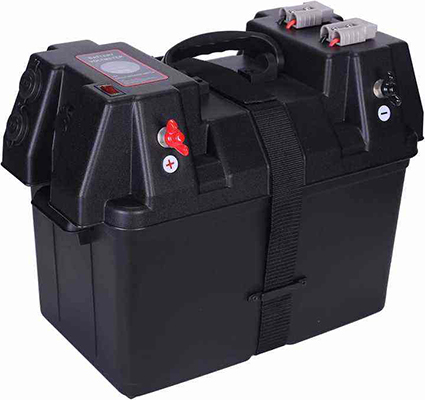
Material selection for lightweight yet robust structures
Modern automotive battery boxes increasingly use high-strength aluminum alloys, stamped high-tensile steels, and engineering plastics such as glass-fiber-reinforced composites. These materials cut mass compared with traditional thick steel housings while preserving stiffness and crash resistance. Finite element analysis helps engineers refine wall thickness, rib geometry, and joint locations, ensuring the enclosure can withstand road vibration, stone impact, and underbody deformation. Surface treatments and sealing systems enhance resistance to moisture, road salt, and chemicals, extending service life even in demanding environments.
Design features that simplify handling and installation
A well-engineered battery box integrates ergonomic lifting points, standardized mounting brackets, and clearly defined cable routing to support fast and safe assembly. Reduced weight allows technicians to use smaller lifting equipment and enables more precise positioning during installation. Modular sub-assemblies, such as removable access covers and slide-in tray designs, shorten replacement time in the workshop and reduce vehicle downtime. Integrated alignment pins, quick-release fasteners, and pre-assembled harness interfaces further lower the risk of installation errors that could compromise electrical performance or safety.
Performance benefits in real vehicle applications
In electric passenger cars, a lightweight battery box helps lower the vehicle’s center of gravity and improves energy efficiency by reducing overall mass. Commercial vehicles and buses gain payload capacity when enclosure weight is minimized, enabling more flexible route planning and higher operating efficiency. For off-road and specialty vehicles, optimized battery enclosures provide robust underbody protection while remaining manageable during field service. Across these applications, enhanced thermal management features—such as integrated cooling channels and optimized airflow paths—help maintain battery temperature within the optimal range, supporting longer cycle life and stable output.
Integration with safety, standards, and future scalability
To meet automotive safety and electronics standards, the battery box design must account for electrical isolation, controlled venting paths, and fire-resistant materials in critical zones. Lightweight designs can still accommodate intrusion barriers, crush zones, and sealing systems that comply with IP and impact ratings. For OEMs planning next-generation battery chemistries or capacity upgrades, scalable enclosure platforms with adaptable mounting points and configurable internal layouts reduce engineering effort. This approach allows faster integration of new cell formats while retaining the same external interfaces and installation procedures.
1. How does a lightweight battery box improve workshop efficiency?
Reduced mass, clear lifting points, and modular components make the pack easier to position, shorten installation time, and minimize the need for heavy handling equipment.
2. Which materials are commonly used for lightweight automotive battery enclosures?
High-strength aluminum alloys, advanced steels, and reinforced polymer composites are frequently used to balance low weight, structural stiffness, and corrosion resistance.
3. Why is thermal management important in battery box design?
Effective thermal management maintains cells within their optimal temperature range, improving safety, extending battery lifespan, and ensuring consistent power delivery under varying driving conditions.