Corrosion-Resistant Automotive Battery Box Materials for Demanding Coastal Environments
News 2025-11-17
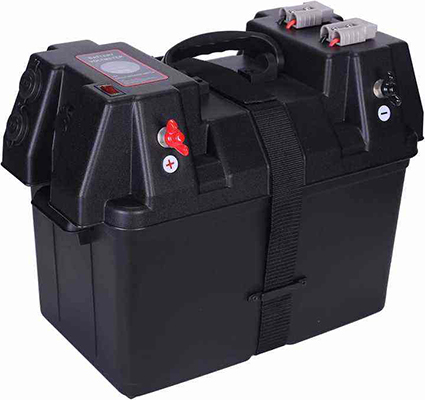
Corrosion-resistant material selection for an automotive battery box is a decisive factor for safe and durable vehicle operation in coastal regions. High salt concentration in the air, frequent condensation, and higher humidity levels accelerate electrochemical reactions on metal housings, terminals, and structural fasteners. A well-engineered battery enclosure must protect cells and electronic control units while limiting weight and meeting crash, vibration, and thermal management requirements. For modern electric and hybrid platforms that operate in seaside cities, ports, and offshore-support fleets, the battery box has become a strategic component rather than a simple container.
Material types suited to coastal applications
When selecting materials for a coastal-use automotive battery box, suppliers typically evaluate aluminum alloys with high corrosion resistance, coated high-strength steel, and advanced fiber-reinforced polymer composites. Marine-grade aluminum offers excellent resistance to chloride-induced pitting and can be optimized with anodizing or conversion coatings to extend service life. Galvanized and e-coated steels remain attractive where cost sensitivity is high, particularly when combined with robust seam sealing. Composite housings based on glass fiber or carbon fiber provide high stiffness-to-weight ratios and inherently resist rust, while specialized gelcoat or fluoropolymer layers further reduce saltwater permeation. Hybrid designs that combine a metallic lower tray with a composite cover are increasingly used to balance cost, weight, and sealing performance.
Key performance advantages and durability features
A corrosion-resistant battery box for coastal operation must maintain structural integrity over many years of exposure to spray, road brine, and repeated wet–dry cycles. Properly selected materials reduce the risk of perforation corrosion that could allow water ingress, short circuits, or loss of insulation resistance. Robust coatings and sealants minimize crevice corrosion at overlaps and fasteners, while well-designed drainage channels prevent stagnant saltwater pockets. Materials with stable electrochemical behavior help avoid galvanic corrosion between different metals, protecting busbars, brackets, and high-voltage terminals. In addition, lightweight yet strong materials support vehicle range targets by lowering mass, and their thermal conductivity characteristics can be tuned to work with liquid cooling plates or phase-change elements integrated into the enclosure.
Application scenarios in coastal mobility and infrastructure
Coastal environments cover a broad set of application scenarios beyond private passenger cars. Corrosion-resistant battery boxes are in demand for electric buses operating in seaside tourist corridors, last-mile delivery vans serving port logistics centers, and ride-sharing fleets in coastal megacities. Municipal maintenance vehicles, airport ground support equipment near oceanfront facilities, and harbor patrol vehicles all face repeated salt spray and flooded road conditions. In these cases, the enclosure must withstand stone chipping from debris, vibration from rough surfaces, and regular high-pressure cleaning without coating damage. Robust housing materials protect not only traction batteries but also auxiliary power packs used for telematics units, lighting systems, and autonomous driving sensors that depend on stable power supply over long duty cycles.
Design practices, standards, and validation for coastal use
For coastal deployment, material choice must be paired with rigorous enclosure design and validation. Engineers apply multi-layer coating systems, sealed welds, and integrated gaskets to achieve high ingress protection ratings, often targeting IP67 or higher. Drainage slots, sacrificial anodes in specific architectures, and isolation of dissimilar metals help manage corrosion risks identified during design FMEAs. To verify performance, suppliers run accelerated salt spray, cyclic corrosion, and stone-chip tests in accordance with automotive standards such as ISO and OEM-specific requirements. Thermal and mechanical simulations ensure that the chosen corrosion-resistant materials withstand crash loads and battery swelling without cracking protective layers. These practices reduce warranty claims and strengthen the safety case for electric vehicles marketed in coastal regions.
1How does a corrosion-resistant battery box improve EV safety in coastal cities?
A well-protected enclosure minimizes the chance of water ingress and corrosion at joints and connectors, stabilizing insulation resistance and reducing the risk of thermal or electrical faults in high-humidity and salt-laden conditions.
2Which materials are most commonly used for coastal battery enclosures?
Marine-grade aluminum, coated high-strength steel, and glass fiber or carbon fiber composites are frequently chosen because they balance corrosion resistance, structural strength, mass, and cost for coastal environments.
3What tests should a coastal-use battery box pass before production?
It should undergo salt spray and cyclic corrosion testing, ingress protection validation, vibration and mechanical shock evaluation, thermal cycling, and OEM-specific durability protocols that simulate long-term seaside exposure.