Durable-Build-Quality Thermal Fuse Resists Damage During Frequent Automotive Use
News 2025-11-27
Durable-Build-Quality Thermal Fuse Resists Damage From Daily Vehicle Use
Robust Construction for Automotive Environments
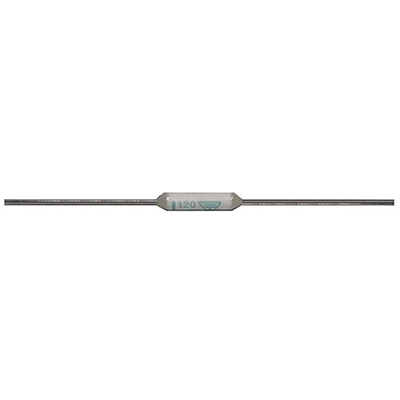
A durable-build-quality thermal fuse is engineered to maintain protection in demanding automotive environments where vibration, dust, and temperature cycling are routine. Using heat-resistant housings, precision crimped leads, and stable organic pellets, the component maintains consistent opening characteristics even after years of daily vehicle use. The fuse interrupts current once a defined temperature threshold is exceeded, preventing overheating in wiring harnesses, control modules, and power circuits. This robust construction ensures the fuse will not fatigue, crack, or drift out of specification despite continuous exposure to road shock and engine compartment conditions.
Key Performance Advantages in Vehicle Systems
The primary strength of this thermal fuse lies in its precise opening temperature and low resistance path under normal operating conditions. Tight production tolerances keep trip points within narrow bands, helping engineers meet ISO and OEM safety margins. Low internal resistance minimizes energy loss and heat buildup in high-current circuits such as electric power steering, blower motors, and heated seats. High dielectric strength and insulation integrity improve system reliability in 12 V and 48 V architectures. The component also supports extended life under repeated thermal cycling, ensuring stable protection for long-duration automotive duty cycles.
Typical Application Scenarios Across the Vehicle
Automotive designers deploy this thermal fuse in numerous safety-critical and comfort subsystems. In battery management units, it protects against abnormal charging temperatures. Inside LED headlamps and interior lighting modules, it prevents thermal runaway due to blocked airflow or component failure. Electric pumps, fans, and compressors benefit from overtemperature protection when mechanical loads increase. The fuse is also integrated into seat heaters, heated steering wheels, infotainment power rails, and DC-DC converters to safeguard passengers and electronics during continuous daily driving, urban stop-and-go traffic, and high-temperature summer operation.
Integration, Standards Compliance, and Design Considerations
This thermal fuse is available in radial, axial, and surface-mount styles, simplifying integration into compact automotive PCBs and harness assemblies. Lead-free constructions support RoHS requirements, while testing is aligned to AEC-Q200 and major OEM specifications. When designing a circuit, engineers select the opening temperature slightly above the system’s maximum normal operating range, verify clearance and creepage distances, and confirm fusing coordination with upstream protection such as fuses or circuit breakers. Proper mounting that limits mechanical stress and ensures adequate thermal coupling to monitored components maintains predictable response under all driving conditions.
Quick Questions and Answers
1. Where is this thermal fuse most commonly used in vehicles?
It is widely used in battery packs, HVAC blowers, seat heaters, lighting modules, and auxiliary motor drives to prevent overheating and potential fire hazards.
2. How does the fuse improve long-term vehicle safety?
By maintaining a stable opening temperature and mechanical integrity, it consistently disconnects faulty circuits, reducing the risk of insulation damage and thermal runaway over the vehicle lifetime.
3. What should engineers consider when selecting a rating?
Engineers should evaluate normal operating temperature, peak ambient conditions, current load, and nearby heat sources, then choose an opening temperature and current rating that match real-world automotive duty cycles.