Durable-Construction Fuse Ensures Robust Protection In Harsh Vehicle Operating Conditions
News 2025-11-17
Durable-construction fuse robust build withstands vehicle operating conditions
Robust mechanical design for demanding automotive use
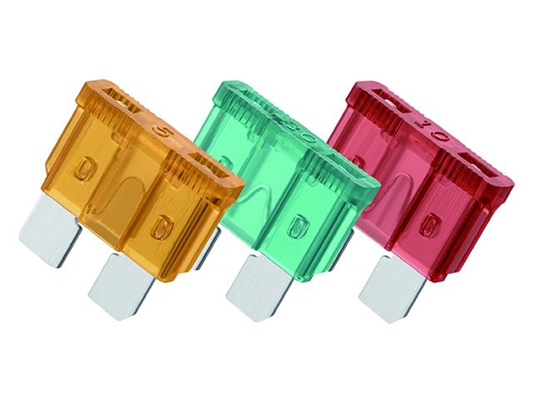
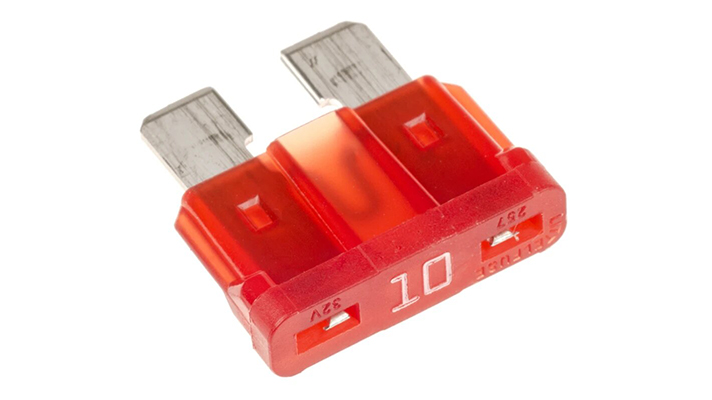
The durable-construction fuse is engineered to survive the full spectrum of mechanical stresses present in modern vehicles. A reinforced body made from high-temperature thermoplastic or ceramic maintains dimensional stability close to hot engine blocks, turbochargers, and power electronics. Securely crimped and welded end caps prevent loosening under continuous engine vibration, road shock, and chassis flex. The internal fuse element is supported to minimize fatigue from micro-movements, extending operating life under cyclic loads. These construction choices reduce the risk of nuisance opens, intermittent contact, and thermal runaway, helping automotive OEMs meet stringent reliability expectations and warranty targets.
Electrical performance, safety ratings, and standards compliance
Beyond mechanical strength, the fuse is tuned for precise electrical protection of vehicle wiring and electronic control units. Tight tolerance current ratings and carefully engineered I²t characteristics enable accurate coordination with harness sizes and semiconductor protection limits. Arc-quenching materials and internal geometries suppress harmful arcing during fault clearing, supporting high interrupting ratings required in 12 V, 24 V, and emerging 48 V architectures. Compliance with ISO, SAE, and UL automotive fuse standards simplifies validation and global sourcing. The robust construction maintains stable resistance over life, ensuring predictable voltage drop and minimizing parasitic power loss under continuous load.
Key automotive application scenarios and integration options
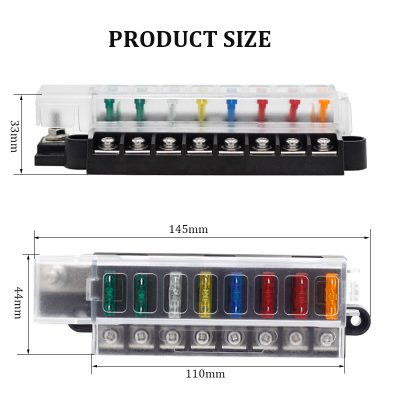
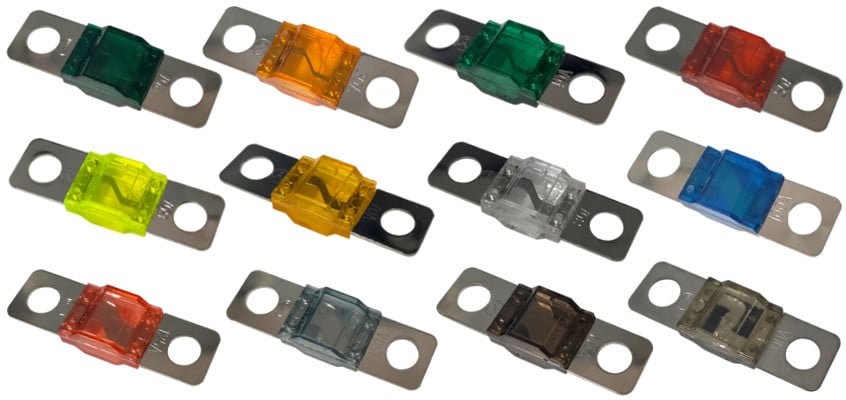
This rugged fuse targets harsh applications including engine compartment junction boxes, battery distribution units, electric power steering, fuel pump circuits, and comfort loads exposed to wide temperature swings. In hybrid and battery-electric vehicles, it protects DC/DC converters, on-board chargers, and auxiliary battery lines where fault energy levels are high. Compact footprints support dense layouts in power distribution centers, while various terminal formats—bolt-down, plug-in, or PCB-mount—enable flexibility during platform design. The stable construction simplifies automated assembly, supports reflow-capable variants when required, and reduces maintenance interventions in fleet and off-highway equipment.
Thermal endurance, environmental resistance, and lifecycle benefits
The fuse housing and element are designed to tolerate continuous high current load near rated values while managing self-heating effectively. Optimized thermal paths, appropriate alloy selection, and controlled melting points provide predictable trip behavior across the vehicle temperature range, including cold-start conditions and extreme under-hood heat. Corrosion-resistant terminations maintain low contact resistance in the presence of moisture, salt spray, and oil vapors. Long-term stability of electrical and mechanical properties reduces unplanned downtime and lowers total cost of ownership for fleet operators, off-road vehicles, and commercial trucks.
Frequently asked questions
1. What vehicle systems benefit most from this durable fuse?
High-stress circuits such as engine compartment power distribution, electric power steering, cooling fans, fuel pumps, and high-current accessory lines gain the greatest benefit, particularly where vibration, heat, and fault energy levels are elevated.
2. How does the robust construction improve safety and reliability?
Reinforced materials, secure terminations, and controlled I²t behavior reduce the risk of fatigue failure, overheating, and uncontrolled arcing, providing consistent protection of wiring looms and electronic modules throughout the vehicle lifetime.
3. Is this fuse suitable for hybrid and electric platforms?
Yes, the fuse is well suited to hybrid and battery-electric vehicles, protecting DC buses, DC/DC converters, on-board chargers, and auxiliary circuits that operate at higher voltages and demand stable performance under demanding thermal and electrical conditions.