Easy-Install Thermal Fuse Enabling Seamless Integration in Modern Car Electronics Systems
News 2025-11-27
Thermal Protection Designed Around Automotive Electronics
Easy-install thermal fuses are reshaping how engineers protect vehicle electronics from overheating and overload conditions. As power distribution becomes denser and ECUs control everything from engine management to ADAS sensors, temperatures can escalate rapidly in confined spaces. A dedicated thermal fuse, tuned to a precise cutoff temperature, interrupts current instantly when abnormal heat builds up. Unlike resettable devices, it provides a clear, one-time fail-safe that prevents damage to wiring harnesses, control modules, and sensitive semiconductor components.
Seamless Integration Into Vehicle Electrical Architectures
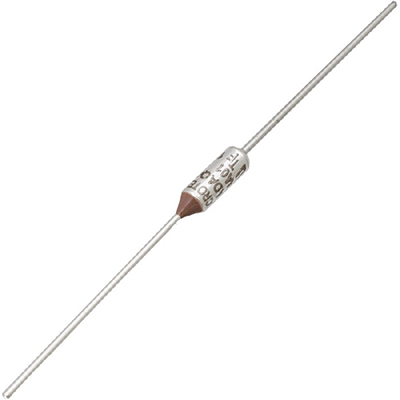
Modern automotive platforms demand components that drop smoothly into existing harnesses, PCBs, and connector systems. This plug‑and‑play thermal fuse is designed around standard lead spacing, compact radial and axial packages, and low-profile dimensions suitable for tight instrument panels, power junction boxes, and battery management systems. Pre-formed leads and clear polarity marking accelerate assembly on automated lines. Compatibility with common soldering profiles and crimping processes ensures that OEMs and tier suppliers can introduce thermal protection without redesigning their layout or tooling.
Performance Advantages Under Harsh Automotive Conditions
Automotive environments impose vibration, wide temperature swings, and continuous thermal cycling. The fuse element and encapsulation materials are engineered for stable operation across the full automotive temperature range, preserving accurate opening temperature over the lifetime of the vehicle. Fast response to localized hotspots minimizes the risk of PCB delamination, connector damage, or thermal runaway in power electronics. Low internal resistance reduces self-heating and improves current handling efficiency, while carefully controlled I²t characteristics match the needs of DC/DC converters, motor drivers, heater grids, and LED lighting controllers.
Application Scenarios Across the Vehicle Platform
This easy-install thermal fuse suits a broad spectrum of car electronics applications. In engine bays, it safeguards electronic throttle control, fuel pumps, ignition drivers, and fan controllers where ambient temperatures can rise significantly. Within the cabin, it protects infotainment systems, digital clusters, and USB power hubs from abnormal current draw caused by connector faults or peripheral failures. In electrified platforms, it is well suited to on-board chargers, DC fast-charging interfaces, battery junction boxes, and auxiliary PTC heaters, where precise thermal cutoff prevents damage to cells and high-value power modules.
Simplified Assembly and Maintenance Benefits
The simplified installation concept reduces assembly time and error risk. Clear labeling of temperature rating and current specification aids production technicians and field service teams. Standardized packaging reels support automated pick-and-place processes, decreasing manual handling and ensuring consistent placement quality. In the field, the one-time operation characteristic streamlines diagnostics: once open, the fuse provides a definitive indication of an overtemperature event, helping service centers pinpoint root causes in wiring or downstream loads and replace damaged components before returning the vehicle to the road.
1. What differentiates this thermal fuse in car electronics?
Its compact size, automotive-grade materials, and precise opening temperature deliver fast, accurate thermal protection that integrates easily into existing vehicle electrical architectures.
2. Where is the fuse most commonly installed in vehicles?
Typical locations include ECU power inputs, heater circuits, battery management boards, lighting controllers, and junction boxes serving high-current accessories.
3. How does it improve long-term system reliability?
By interrupting current during abnormal temperature rise, it prevents permanent damage to PCBs, connectors, and semiconductor devices, extending the service life of critical automotive electronics modules.