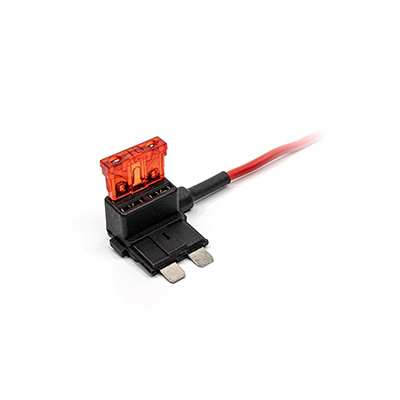
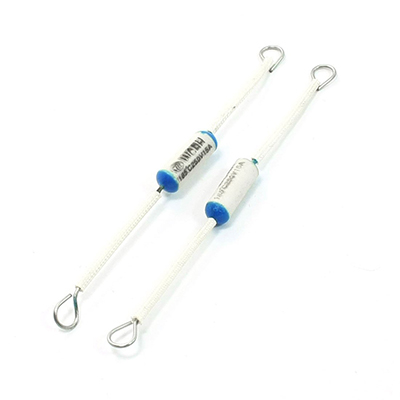
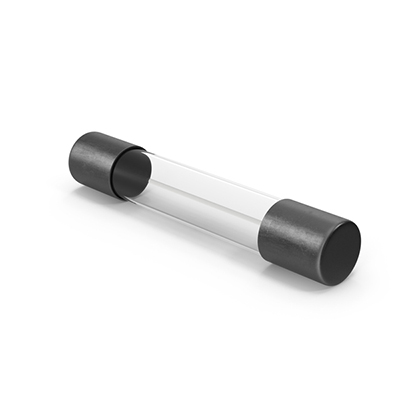
Electrical Surge Impacts On Fuse Box Internal Fuse Integrity In High-Demand Systems
News 2025-12-28
Electrical systems in automotive, industrial, and building applications rely on fuse boxes as primary protection nodes against overcurrent and transient surges. Within these enclosures, internal fuses must maintain precise operating thresholds while enduring thermal, mechanical, and electrical stress. When high-energy surges propagate through a distribution network, the integrity of these fuses directly determines whether downstream circuits remain safe, stable, and operational. Understanding surge impact on fuse materials, contact interfaces, and time-current characteristics helps engineers specify and maintain fuse boxes that meet stringent safety and uptime requirements.
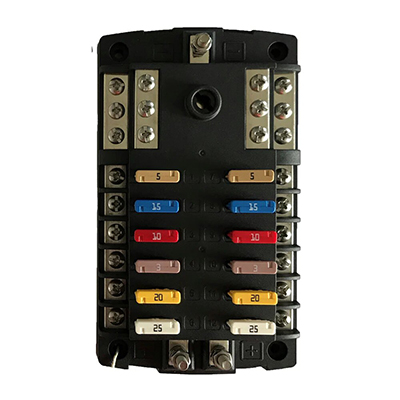
Surge Characteristics And Internal Fuse Stress
Electrical surges arise from lightning strikes, motor switching, inverter transients, or grid disturbances. These events introduce rapid voltage and current spikes that exceed the nominal design window of many internal fuses. The surge profile—rise time, peak amplitude, and duration—dictates whether a fuse operates in its intended melting zone or enters an abnormal regime that causes partial damage without full clearing. Repeated sub‑threshold surges can anneal the fuse element, shift its resistance, and alter I²t performance. In high-density fuse boxes, this stress is amplified by elevated ambient temperature and limited airflow, making surge-aware fuse selection and coordination crucial.
Material Behavior, Contact Integrity, And Performance Advantages
Fuse elements typically use tin, silver, copper, or alloys optimized for predictable melting behavior. Under surge conditions, these materials experience local hot spots, grain structure changes, and potential microcracking. Contact springs, clips, and terminals must preserve low contact resistance, or the fuse operates hotter than intended. High-performance internal fuses designed for surge-prone environments offer improved arc-quenching media, ceramic or glass bodies, and tighter manufacturing tolerances. These features yield superior breaking capacity, lower let‑through energy, and more consistent opening times, which directly protect sensitive ICs, converters, and control modules embedded downstream.
Application Scenarios And Design Considerations
In automotive fuse boxes, internal fuses must handle load dumps, inductive loads, and complex wiring harness interactions. Industrial control panels face repetitive switching surges from drives and contactors, while renewable energy combiner boxes experience DC surges and rapid power fluctuations. Engineers enhance fuse integrity by coordinating fuses with surge protective devices, selecting appropriate voltage ratings, and validating performance under worst-case surge simulations. Correct spacing, creepage distances, and thermal management inside the fuse box reduce nuisance openings and avoid slow degradation of fuse characteristics over the equipment lifetime.
Maintenance, Monitoring, And Long-Term Reliability
Regular inspection of fuse boxes deployed in surge-intensive environments helps detect discoloration, contact oxidation, and signs of overheating that indicate compromised fuse integrity. Advanced systems integrate thermal sensors, current monitoring, and condition data to predict fuse fatigue under repetitive surges. When combined with high-interrupting-rating fuses and surge coordination studies, these practices extend equipment availability, minimize unplanned downtime, and support compliance with safety standards. The result is a protective architecture that balances fast fault clearing, minimal power loss, and robust response to transient events.
1. How do electrical surges damage internal fuses?
Surges create extreme thermal and electrical stress, causing element deformation, contact degradation, and shifts in time-current behavior even when the fuse does not fully open.
2. Which applications place the highest surge stress on fuse boxes?
Automotive power distribution, industrial motor control centers, and renewable energy inverters expose internal fuses to frequent switching surges and wide load variations.
3. What design choices improve fuse integrity under surges?
Using surge-rated fuses, coordinating them with SPD devices, optimizing thermal layout, and verifying performance under realistic surge tests significantly improves long-term fuse integrity.