Fog Light Fuse Safeguards Automotive Fog Lighting Circuits Against Overload Damage
News 2025-11-17
Fog light fuse safeguards fog light circuits from electrical overloads by interrupting abnormal current before it reaches sensitive lighting components. In modern vehicles, fog lights operate in harsh environments, facing vibration, moisture ingress, and frequent thermal cycling, all of which can stress electrical wiring and connectors. A correctly specified fuse limits the impact of short circuits, insulation failures, and corroded terminals, preventing melted wiring, lighting module failure, or even fire. By pairing fog lamps with a dedicated fuse, manufacturers maintain circuit selectivity, ensuring that an issue in the fog light branch does not disable other critical lighting systems.
Key Functions and Operating Principle
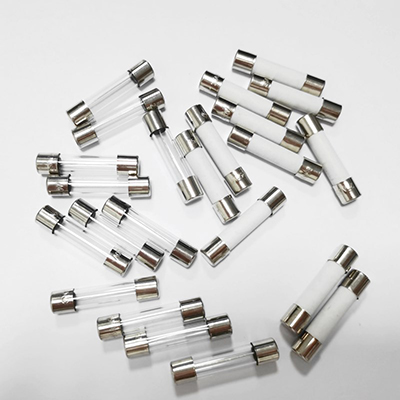
A fog light fuse is a sacrificial protection device inserted in series with the fog lamp circuit. Under normal operation it introduces negligible voltage drop, allowing stable power delivery to halogen, HID, or LED fog lamps. When current rises above the rated threshold for a defined time, the fuse element heats up and opens, breaking the circuit. This time‑current behavior is carefully calibrated: it tolerates brief inrush currents during lamp start‑up yet reacts quickly to sustained overloads. Selecting an appropriate fuse rating and characteristic curve is crucial to avoid nuisance blowing while still safeguarding wiring, switches, relay contacts, and control modules.
Application Scenarios in Automotive Lighting Systems
Fog light fuses are widely used in passenger cars, SUVs, light trucks, commercial vehicles, and off‑road equipment. In conventional 12 V systems they protect dedicated front and rear fog lamps, typically grouped by axle or side. In 24 V commercial platforms, fuses protect multiple high‑output fog lamps installed on bumpers, roof bars, or auxiliary racks. Many OEMs integrate fog light fuses in under‑hood fuse boxes, near the battery or body control module, minimizing unprotected cable length. Retrofit and aftermarket lighting kits also rely on in‑line fuse holders to protect auxiliary fog lamps added to vehicles used in mining, agriculture, or emergency response, where long operating hours and dirt exposure increase wiring failure risk.
Performance Advantages and Design Considerations
A properly engineered fog light fuse delivers several performance benefits. It improves system safety by limiting fault energy and preventing overheating of PVC or cross‑linked polyethylene insulation. It also stabilizes fog lamp operation, since well‑protected circuits experience fewer catastrophic failures and less degradation due to hidden heat damage. From a design perspective, engineers must consider continuous current draw of the lamps, ambient temperature near the fuse box, derating factors, and compatibility with blade, mini‑blade, or micro‑fuse footprints. High‑rupturing‑capacity construction and corrosion‑resistant terminals maintain consistent performance over the vehicle lifetime, even under high humidity and salt spray conditions.
Integration, Maintenance, and Troubleshooting
Effective application of a fog light fuse requires careful integration into the wiring harness. Short, direct routing from the power source to the fuse and then to the fog lamp relay reduces voltage drop and mitigates the risk of unprotected sections. Clear labeling in the fuse panel aids technicians during maintenance and allows fast fault isolation when a fog light circuit fails. When troubleshooting non‑functional fog lamps, checking the dedicated fog light fuse is one of the first diagnostic steps. Using the correct replacement rating is vital; oversizing the fuse to avoid repeated blowing can mask underlying problems such as chafed wires, water ingress in connectors, or internal lamp shorts, eventually leading to far more severe damage.
FAQs on Fog Light Fuse Protection
1. Why does a fog light fuse blow repeatedly?
Repeated blowing usually indicates persistent overload, shorted wiring, or moisture‑damaged connectors rather than a defective fuse. The root cause often lies in abrasion of the harness near the bumper, corrosion inside lamp housings, or incorrect lamp wattage.
2. Can a higher‑rated fuse be used to stop nuisance failures?
Installing a higher‑rated fuse is not recommended, as it allows excessive current that wiring and lamp components were not designed to handle. The correct approach is to verify lamp specifications, inspect cables, and confirm that the fuse rating and type match OEM design data.
3. Where is the fog light fuse normally located in a vehicle?
Most vehicles place the fog light fuse in the engine‑bay fuse box or power distribution center, sometimes in a secondary cabin fuse panel. The exact location and designation are listed in the owner’s manual or vehicle wiring diagrams.