High-stability fuse solutions enabling consistent operation and reduced failure risk
News 2025-11-17
Reliable-performance fuse consistent operation prevents unexpected failures
Role of high-stability fuses in modern electronics
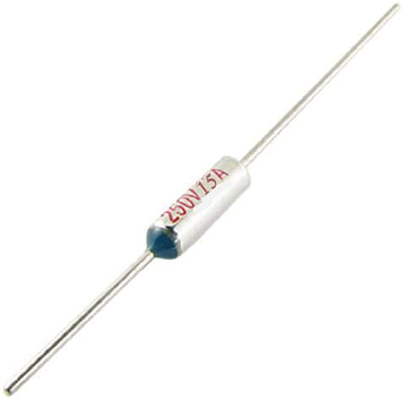
Power distribution networks, industrial controllers, and automotive ECUs demand protection components that react precisely under fault conditions. Modern high-stability fuses act as predictable weak links, interrupting current before semiconductor devices, PCB traces, or wiring harnesses sustain thermal damage. In compact IoT nodes, telecom base stations, medical analyzers, and EV on-board chargers, the fuse must maintain narrow tolerance on current rating and time-current characteristics despite ambient temperature swings and mechanical vibration. This consistency allows design engineers to accurately coordinate fuses with circuit breakers, inrush limiters, and surge protection, achieving selective tripping and minimizing nuisance outages. By maintaining stable behavior over thousands of hours, these fuses help preserve uptime and support stringent service-level objectives.
Key performance characteristics that prevent unexpected failures
The most effective fuses combine low resistance, fast fault clearing, and tight manufacturing variation. Low internal resistance reduces I²R losses, heat generation, and voltage drop in high-current rails, improving efficiency in DC-DC converters and motor drives. Carefully engineered fuse elements deliver repeatable melting profiles, so a 10 A fuse behaves nearly identically in each unit produced, enabling predictable system response. High interrupt ratings allow safe disconnection of short-circuit currents in industrial 480 V AC panels and high-voltage battery packs. Robust arc-quenching media and ceramic bodies prevent case rupture and plasma ejection, protecting nearby components. Compliance with UL, IEC, and AEC-Q200 standards further demonstrates that fuses have been validated under surge, temperature cycling, and mechanical stress, reducing the probability of unexpected open-circuit failures during normal operation.
Application scenarios across industry segments
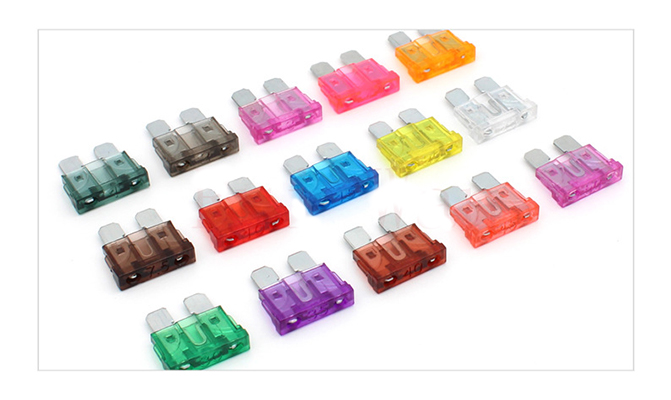
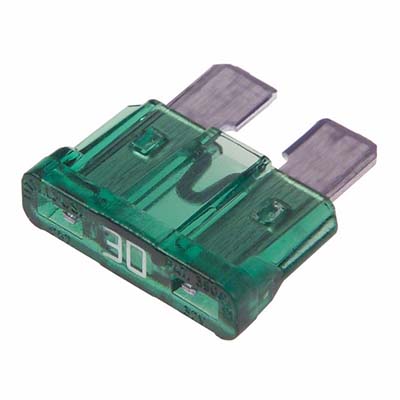
In industrial automation, PLC backplanes and servo drives use cartridge or NH fuses to isolate branch circuits, keeping the remaining line operational when a single load fails. Data centers integrate surface-mount fuses on VRM outputs to protect CPUs, GPUs, and memory from shorted rails, limiting downtime to specific boards instead of entire racks. Automotive powertrains and ADAS control units rely on blade and high-voltage fuses to secure lithium battery modules, inverters, and on-board chargers, where stable performance under vibration and wide temperature ranges is mandatory. In medical devices such as imaging systems, infusion pumps, and laboratory analyzers, slow-blow fuses handle inrush from transformers and capacitive loads while safeguarding patient-connected electronics. Renewable energy inverters and string combiners adopt gPV or gR fuses tailored to DC fault conditions, supporting sustained field operation even under harsh outdoor environments.
Design considerations to achieve consistent operation
Selecting a suitable fuse begins with accurate fault analysis, including normal operating current, inrush profile, overload margin, and prospective short-circuit level. Engineers should align fuse I²t characteristics with downstream semiconductor safe operating areas to ensure the fuse clears before MOSFETs or IGBTs enter thermal runaway. Proper coordination between upstream breakers and downstream fuses avoids overlapping tripping regions and improves selectivity. PCB layout must provide adequate copper area as a heat sink, preventing localized hot spots that shift fuse ratings. Derating based on ambient temperature and expected lifetime helps maintain consistent operation in enclosures where internal heat may exceed 70°C. Incorporating status indicators or fuse-monitoring circuits in critical infrastructure allows predictive maintenance, so devices that approach end-of-life can be replaced during scheduled service windows instead of during costly unplanned shutdowns.
Future trends and integration into smart systems
Next-generation protection strategies combine conventional fuses and electronic circuit protection to balance speed, accuracy, and isolation capability. Designers increasingly use miniature SMD fuses compatible with automated assembly, delivering robust performance while conserving board space in densely packed modules. In battery management systems and HV junction boxes, fuses are paired with current sensors and microcontrollers, enabling precise logging of fault events and better root-cause analysis. High-stability materials and improved process control further narrow tolerance bands, allowing more aggressive system-level optimization and higher power density. By choosing fuse families backed by extensive reliability data, OEMs secure consistent operation across global production runs, reduce field returns, and strengthen brand reputation in demanding markets.
1、What sectors benefit most from high-stability fuses?
Industrial automation, automotive electronics, data centers, medical equipment, and renewable energy systems gain the greatest benefit because they require strict uptime, predictable protection behavior, and compliance with international safety standards.
2、How do reliable fuses enhance system efficiency?
Low-resistance fuse elements reduce power loss and heat, allowing power supplies and converters to operate closer to optimal efficiency while still protecting downstream components from overloads and short circuits.
3、What should engineers prioritize when selecting a fuse?
Engineers should prioritize accurate current rating, time-current curves aligned with load profiles, adequate interrupt rating, compliance with relevant standards, and proven performance under expected temperature, vibration, and lifetime conditions.