Industry-Standard Thermal Fuse Enabling Seamless Integration Into Modern Automotive Electrical Systems
News 2025-11-27
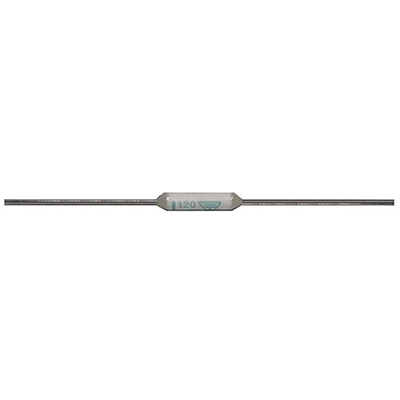
Modern vehicles depend on dense, high-power electrical networks that demand predictable over-temperature protection. An industry-standard thermal fuse compatible across most car electrical architectures helps engineers unify protection strategies in body control modules, infotainment units, EV battery systems, and comfort electronics. By triggering permanently at a precise temperature, it prevents overheating in wiring harnesses and compact control boards where space and thermal margin are limited.
Key Performance Characteristics
A high-quality automotive thermal fuse maintains a narrow opening temperature tolerance, typically ±5 °C, supported by rigorous lot testing and AEC-Q compliant processes. Low internal resistance minimizes power loss in 12 V and 48 V lines, which is vital in high-current circuits such as seat heaters, blower motors, and DC/DC converters. Fast thermal response ensures that localized hot spots in PCB-mounted components do not propagate into connector damage or wiring insulation failure. Long-term stability under vibration, humidity, and temperature cycling allows consistent operation through the full vehicle lifetime.
Compatibility Across Vehicle Electrical Architectures
Modern cars may combine 12 V legacy networks, 48 V mild-hybrid rails, and high-voltage traction batteries. A standardized thermal fuse footprint and rating set enables use in junction boxes, battery disconnect units, and control modules without redesigning the protection layout for each platform. The fuse can be implemented in series with heaters, motor windings, LED arrays, and power stages, or embedded into subassemblies such as charger modules and power distribution units. This architectural flexibility speeds platform reuse, simplifies validation, and reduces BOM complexity for global vehicle programs.
Application Scenarios in Automotive Systems
In power seats and steering systems, the thermal fuse protects against stalled motors that cause sustained overcurrent and heat. Within HVAC blowers and PTC heaters, it guards plastic ducts and surrounding trim from thermal damage during blocked airflow conditions. Battery management systems rely on properly rated fuses placed near high-density cells to interrupt current when abnormal heating occurs, supporting functional safety targets. In infotainment and ADAS controllers, the component can be paired with current-limiting circuitry to safeguard high-value processors and memory against thermal runaway triggered by fault conditions or fan failure.
Design and Integration Considerations
Engineers must select the nominal opening temperature above the maximum expected operating value yet below the point where insulation or adjacent materials are at risk. Adequate thermal coupling to the hotspot, through direct contact or a dedicated heat path, is crucial for accurate activation. PCB layout should avoid routing high-current traces under the fuse body without proper derating, and mechanical mounting must withstand shock and vibration encountered in engine compartments and underbody locations. Meeting automotive EMC and safety standards is supported when the fuse is used together with fuses, PTCs, and thermal sensors as part of a layered protection strategy.
FAQ
1. Where is this thermal fuse typically used in a vehicle?
It is commonly installed in HVAC systems, seat and window actuators, battery packs, LED lighting modules, and electronic control units to interrupt current when local overheating occurs.
2. How does the thermal fuse differ from standard current fuses?
A thermal fuse responds primarily to temperature, not just current, and opens permanently once its calibrated melting point is reached, even if the overcurrent is modest but sustained.
3. Can the same fuse type support both 12 V and 48 V networks?
Yes, as long as the voltage and current ratings match the application; industry-standard designs are qualified to operate safely across typical automotive low-voltage and 48 V systems.