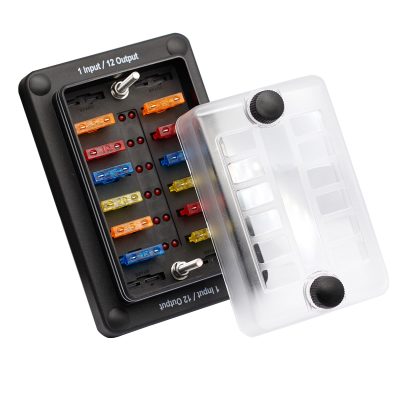
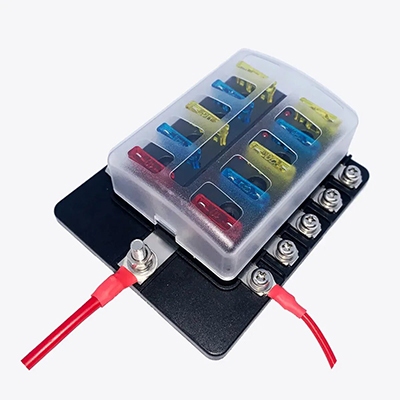
Integrated Relay Systems for Advanced Circuit Protection in Automotive Fuse Boxes
News 2025-10-31
Automotive fuse box relays play a crucial role in managing electrical circuits by integrating control mechanisms that ensure safe and efficient operation. These systems combine relays with fuse boxes to protect against overloads and short circuits, which is essential in modern vehicles where electronic components are increasingly complex. By centralizing control, manufacturers can enhance the reliability of electrical systems, reducing the risk of failures that could lead to costly repairs or safety hazards. This integration supports the growing demand for sophisticated automotive electronics, making it a key feature in contemporary car designs.
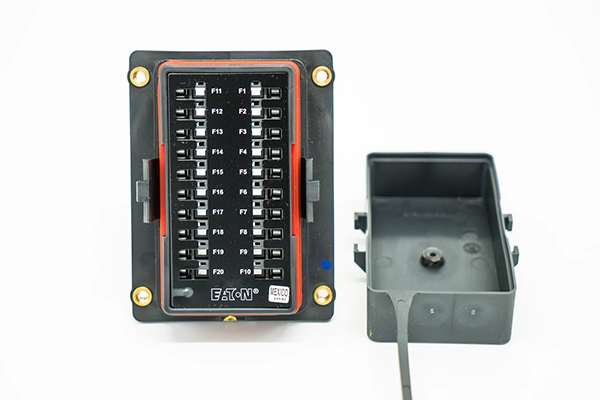
Key Components of Relay-Integrated Fuse Boxes
Relay-integrated fuse boxes consist of several essential elements, including electromagnetic relays, fuses, and circuit boards that facilitate seamless communication. Relays act as switches that can handle high currents while being controlled by low-power signals, allowing for precise management of various circuits. Fuses provide overcurrent protection by melting when excessive current flows, thus preventing damage. This combination in a compact unit simplifies wiring and installation, enabling automakers to design more streamlined electrical architectures that save space and weight in vehicles.
Performance Benefits in Electrical Management
These integrated systems offer significant advantages in terms of durability and efficiency. By minimizing the number of separate components, they reduce potential failure points, leading to longer system lifespan and lower maintenance needs. The quick response time of relays ensures that circuits are protected almost instantaneously, enhancing overall vehicle performance. Additionally, this setup allows for better energy management, which can improve fuel efficiency in traditional engines or extend battery life in electric vehicles, making it a smart choice for high-performance automotive applications.
Practical Applications in Automotive Settings
In real-world scenarios, integrated relay systems in fuse boxes are used in areas like lighting, power windows, and engine control modules. For instance, in safety-critical systems such as airbag deployment or anti-lock braking, these controls ensure reliable operation under extreme conditions. They are also vital in electric vehicle charging circuits, where they manage high-voltage flows safely. This versatility makes them indispensable in both passenger cars and commercial fleets, supporting innovations in autonomous driving and connectivity features that rely on stable electrical performance.
Frequently Asked Questions
1. What is the main function of a relay in a fuse box?
It acts as an electrically operated switch to control high-current devices with low-current signals, protecting circuits from overloads.
2. How do integrated systems improve vehicle safety?
By providing faster response to faults and reducing wiring complexity, they minimize the risk of electrical fires and system failures.
3. Can these systems be upgraded in older vehicles?
Yes, many can be retrofitted, but it requires professional installation to ensure compatibility and maintain safety standards.