Labeling Mistakes In Fuse Box That Create Confusion During Electrical Repairs
News 2025-12-22
Misapplied or missing labels in a fuse box can turn a routine service task into a risky diagnostic exercise. In industrial cabinets, data centers, vehicles, and building distribution panels, technicians depend on accurate circuit identification to isolate loads, protect sensitive electronics, and restore operation quickly. When labels are ambiguous, inconsistent, or outdated, repair teams may waste time tracing conductors, trip healthy circuits, or expose components to unintended stress, undermining safety and uptime.
Vague Circuit Descriptions and Ambiguous Naming
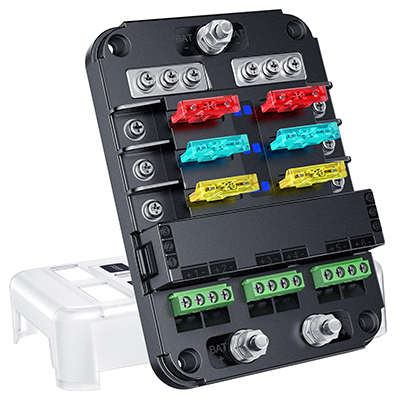
Many fuse blocks are labeled using vague terms such as “Lights,” “Spare,” or “General.” In complex control panels or automotive fuse boxes, these labels fail to reflect real application scenarios, where a single fuse can feed PLC I/O modules, communication gateways, or mixed auxiliary loads. Ambiguous names make fault isolation difficult and can cause technicians to pull the wrong fuse during emergency maintenance. Clear functional naming, including load type, voltage level, and zone or equipment tag, dramatically improves troubleshooting speed and reduces the risk of unexpected shutdowns in production lines or server racks.
Outdated Labels After System Upgrades
System retrofits often change circuit assignments, but the original fuse labels remain untouched. This mismatch is common in building renovations and machinery upgrades where added drives, sensors, or HMI panels reuse existing fuse positions. When documentation and panel markings do not match the actual wiring, technicians rely on assumptions, which can lead to energizing or isolating incorrect circuits. Maintaining synchronized labels, wiring diagrams, and digital asset records preserves diagnostic accuracy and supports higher performance by reducing downtime during fault events and planned service windows.
Inconsistent Labeling Standards and Poor Legibility
Fuse boxes frequently mix hand‑written stickers, faded ink, and mismatched abbreviations. In harsh environments such as outdoor enclosures, mobile equipment, or high‑temperature cabinets, low‑grade labels deteriorate quickly. Poor legibility slows inspections and increases the likelihood of human error. Applying standardized, machine‑printed labels that follow an internal naming convention and using durable materials rated for the enclosure environment enhances both safety and long‑term reliability. Clear, consistent labeling supports faster fuse replacement, better load balancing, and more accurate current‑carrying capacity management.
Impact On Performance, Safety, and Maintenance Efficiency
Labeling mistakes affect more than convenience; they directly influence performance metrics such as mean time to repair, fault isolation precision, and protection coordination. Incorrectly identified fuses may be replaced with devices of the wrong rating, compromising selective coordination and exposing downstream electronics to overcurrent stress. In applications such as EV fuse boxes, industrial motion control, and telecom power distribution, precise labeling allows technicians to isolate sensitive circuits quickly and restore key loads first. When labels are accurate and standardized, maintenance teams can execute targeted interventions, optimize spare fuse inventories, and maintain system availability at a higher level.
1、How can accurate fuse box labeling improve troubleshooting speed?
Clear, standardized labels allow technicians to identify affected circuits without trial‑and‑error, reducing diagnostic steps and shortening outage duration.
2、What label materials work best in harsh electrical environments?
UV‑resistant, heat‑stable, and chemical‑resistant label stocks combined with permanent industrial adhesives maintain legibility and adhesion inside demanding enclosures.
3、Why is coordination between labels and documentation important?
Matching panel labels, wiring diagrams, and digital records ensures that every fuse position reflects the true circuit connection, which supports safe operation and predictable repair outcomes.