Lightweight Construction Auto Fuse Enabling Reduced Vehicle Electrical Load Demand
News 2025-12-08
Lightweight construction auto fuses are becoming a strategic component in modern automotive electrical architectures. As vehicle platforms integrate more ECUs, sensors, and comfort features, engineers confront higher current demands and stricter efficiency targets. A low-mass, thermally optimized fuse not only safeguards circuits, it directly contributes to weight reduction, improved packaging, and lower parasitic losses across the wiring harness.
Design Characteristics and Materials
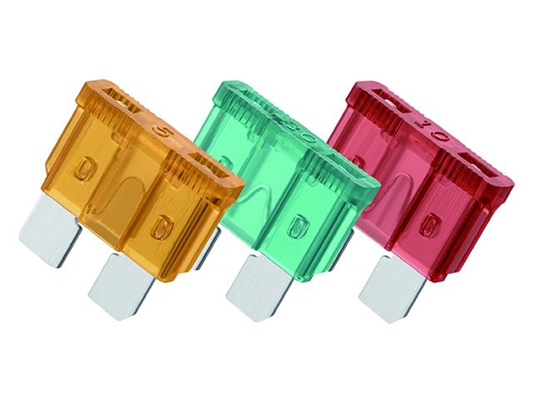
Lightweight auto fuses typically adopt compact footprints, thin conductive elements, and high-temperature polymer housings. Optimized alloy compositions allow precise melting characteristics at defined current thresholds while limiting resistive heating during normal operation. Reduced metal mass lowers overall component weight and supports denser fuse box layouts. Robust terminals ensure low contact resistance, preventing hot spots that could degrade adjacent plastics or connectors over time.
Performance Benefits in Vehicle Electrical Systems
In passenger cars, commercial vehicles, and EV platforms, these fuses help reduce electrical load by minimizing voltage drop and I²R losses along the supply lines. Lower internal resistance stabilizes voltage delivered to sensitive control modules and power electronics, supporting stable operation of ADAS, infotainment, and battery management systems. Their thermal efficiency enables high current ratings in smaller packages, freeing space in junction boxes and allowing shorter wiring routes that further cut copper usage and harness weight.
Application Scenarios and Integration Considerations
Lightweight construction auto fuses are widely applied in power distribution units, under‑hood fuse boxes, and high-current branches feeding HVAC blowers, seat heating, pumps, and LED lighting. In hybrid and battery-electric vehicles, they are suited to auxiliary circuits around the high-voltage battery, DC‑DC converters, and on‑board chargers, where tight thermal limits and compact design are mandatory. During platform development, engineers must match fuse time‑current curves to motor inrush currents, relay switching characteristics, and ambient temperature profiles to avoid nuisance blows while maintaining stringent protection levels.
Quality, Standards, and Lifecycle Reliability
To meet OEM requirements, lightweight auto fuses are validated under automotive environmental standards such as ISO 16750 and tested for vibration, humidity, and thermal shock. Long‑term stability of the fusible link under cyclic loading is crucial to prevent resistance drift and premature aging. High-quality variants maintain consistent blow characteristics over the entire service life, supporting predictive maintenance strategies and on‑board diagnostics that monitor circuit integrity and log abnormal current events.
1What vehicle types benefit most from lightweight auto fuses?
They are suitable for passenger cars, light commercial vehicles, trucks, and especially EVs and HEVs where every gram and watt saved supports extended range.
2How do lightweight fuses help reduce electrical load?
Low resistance designs cut I²R losses and voltage drop, improving distribution efficiency and allowing downsized wiring in some circuits.
3Are these fuses compatible with existing fuse boxes?
Most products follow standard blade or bolt‑down formats, enabling drop‑in use, though engineers should always verify rating, footprint, and thermal limits before substitution.