Multi-purpose fuse versatile design suits various vehicle electrical systems and platforms
News 2025-11-17
Multi-purpose fuse versatile design suits various vehicle electrical systems
Versatile architecture tailored to modern vehicle platforms
Multi-purpose fuses are engineered to protect a wide spectrum of vehicle electrical systems, from low-power sensor circuits to high-current power distribution rails. Their versatile architecture accommodates different voltage levels, including 12 V, 24 V, and emerging 48 V networks used in mild hybrid and electric vehicles. By combining standardized footprints with multiple current ratings, these fuses simplify platform design across passenger cars, commercial trucks, construction machinery, and agricultural equipment. Engineers can reuse a unified protection concept across multiple vehicle lines, shortening development cycles and reducing qualification costs while maintaining strict compliance with automotive safety standards.
Performance characteristics and protection capabilities
The performance of a multi-purpose fuse is defined by its time-current curve, breaking capacity, and thermal stability. Fast-acting characteristics safeguard sensitive control units, ADAS modules, and communication buses against short-circuit faults, while time-delay variants tolerate inrush currents from motors, pumps, and capacitive loads. High interrupt ratings allow safe clearance of severe faults without arc propagation or housing damage. Stable resistance over temperature prevents unwanted derating in engine compartments and battery junction boxes. Low internal power dissipation improves energy efficiency and reduces hot spots in compact fuse blocks, contributing to long-term system reliability and reduced maintenance.
Key applications across legacy and next-generation vehicles
Multi-purpose automotive fuses support a broad set of application scenarios, ranging from conventional internal combustion platforms to battery electric architectures. Typical uses include protection of body electronics, lighting systems, HVAC blowers, power windows, seat adjustment motors, and infotainment units. In commercial vehicles, they safeguard telematics systems, auxiliary power take-off controls, and trailer connectors. Within high-voltage or dual-voltage layouts, they work in coordination with electronic control units and solid-state switches in power distribution centers. Their ability to operate reliably in harsh temperature ranges, under vibration and exposure to automotive fluids, makes them suitable for under-hood and chassis-mounted locations as well as cabin fuse panels.
Design-in considerations and system integration benefits
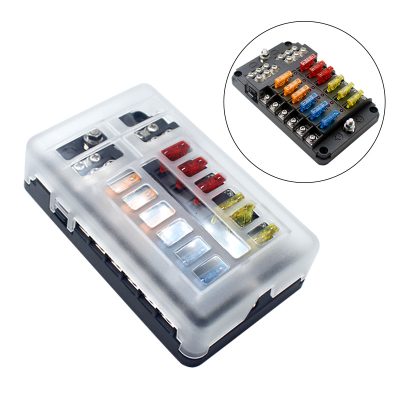
When selecting a multi-purpose fuse, designers evaluate continuous operating current, ambient temperature, conductor cross-section, and expected fault profiles. Proper coordination between fuse ratings and wiring harness specifications prevents nuisance openings while guaranteeing wire protection under overload conditions. Standardized blade or bolt-on formats enable easy integration into modular fuse and relay centers, supporting fast servicing in the field. Clear marking of current ratings and color coding assist technicians during diagnostics and replacement. The use of a harmonized fuse family across an entire vehicle platform simplifies supply chain management, enables global sourcing strategies, and supports scalable production, which aligns well with OEM cost and quality objectives.
Brief questions and answers
1What vehicle systems benefit most from multi-purpose fuses?
They are widely used in body electronics, powertrain auxiliaries, ADAS controllers, infotainment, and low-voltage power distribution nodes across passenger and commercial vehicles.
2How does fuse selection influence overall electrical safety?
Correct dimensioning ensures that conductors and loads remain protected under overload or short-circuit faults, minimizing fire risk and preventing damage to critical control units.
3Are multi-purpose fuses suitable for emerging 48 V architectures?
Yes, many product lines offer ratings and breaking capacities tailored to 48 V systems, making them compatible with mild hybrid, electric, and advanced auxiliary power networks.