Non-Corrosive Thermal Fuse Ensures Long-Term Safety in Vehicle Electrical Circuits
News 2025-11-27
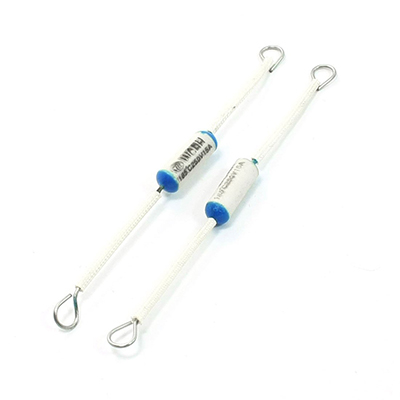
Non-corrosive thermal fuses are becoming a key protection component in modern vehicle circuits, where compact packaging and high power density push temperatures to the limit. By interrupting the circuit at a precise, pre-defined temperature, these fuses prevent wiring damage, connector deformation, and thermal runaway in control modules. Unlike conventional devices that may degrade when exposed to moisture, road salt, or chemical vapors, non-corrosive constructions maintain stable performance across long vehicle lifetimes and harsh environments.
Key Construction and Non-Corrosive Design
Non-corrosive thermal fuses typically employ high-purity metal leads, corrosion-resistant end caps, and sealed housings that block electrolyte ingress. The temperature-sensitive element is isolated from contaminants, reducing drift in opening temperature and avoiding increased resistance over time. Automotive-grade versions use materials qualified to withstand condensation cycles, salt spray, and continuous vibration. This design stability directly improves circuit predictability, which is vital for safety-related loads such as fuel pumps, electronic steering, and battery management systems in hybrid and electric vehicles.
Performance Advantages in Vehicle Applications
In vehicle harnesses and control units, non-corrosive thermal fuses deliver precise trip temperatures, low initial resistance, and consistent I²t characteristics across thousands of thermal cycles. Their rapid, one-time cut-off behavior protects against stalled motors, blocked fans, and overcharged lithium-ion cells. Because corrosion is minimized, contact resistance does not rise significantly over time, limiting local heating at solder joints and connector interfaces. This stability supports compliance with automotive standards such as ISO 16750 and helps designers meet stringent lifetime requirements without oversizing conductors or heat sinks.
Typical Installation Scenarios and Design Considerations
These fuses are widely integrated into blower motors, seat heating modules, power window actuators, engine cooling fans, and on-board chargers. Designers usually place the device close to the main heat source, in direct thermal contact with windings, power MOSFETs, or resistor banks, to guarantee fast response when abnormal temperatures occur. Proper selection involves matching rated current, opening temperature, and maximum interrupt current to the specific load profile. Non-corrosive types are particularly suited to sealed ECUs and battery packs where service access is limited and long-term stability is mandatory.
Impact on Long-Term Reliability and Maintenance
Over the lifespan of a vehicle, exposure to humidity, de-icing salts, lubricants, and fuel vapors can accelerate corrosion in standard protection devices. Non-corrosive thermal fuses mitigate this risk, leading to fewer intermittent faults, reduced warranty returns, and more predictable diagnostic behavior. Their stable characteristics simplify fault-tree analysis and help OEMs keep consistent protection strategies across multiple platforms. By avoiding performance drift, they also reduce the need for redundant protective elements, saving space and cost in densely populated electronic control units.
1. How does a non-corrosive thermal fuse differ from a standard fuse?
A non-corrosive thermal fuse focuses on temperature-triggered cut-off and uses materials that resist moisture and chemical attack, maintaining stable performance where standard fuses may degrade.
2. Where is a non-corrosive thermal fuse typically installed in vehicles?
It is commonly installed near heat sources in blower motors, seat heaters, cooling fans, battery packs, and power electronics modules to sense abnormal temperature rise quickly.
3. Why is corrosion resistance important in automotive circuits?
Corrosion resistance prevents increased contact resistance, temperature drift, and intermittent failures, improving long-term circuit reliability and reducing maintenance costs.