Precision Wire Harness Assemblies Enhancing Automotive Sensor Accuracy and Control Efficiency
News 2025-10-31
Precision wire harness assemblies are integral to modern automotive systems, providing the critical interconnections that enable seamless communication between sensors and control units. These components ensure that data from various sensors, such as those monitoring speed, temperature, and position, is transmitted accurately and reliably to the vehicle’s control systems. In an industry where safety and performance are paramount, wire harnesses reduce electrical interference, minimize weight, and support the integration of advanced technologies like electric vehicles and autonomous driving features. By facilitating efficient signal flow, they contribute to enhanced vehicle functionality and longevity.
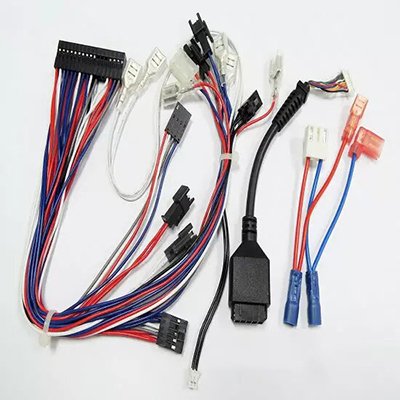
Applications in Automotive Systems
Precision wire harness assemblies are employed in a range of automotive applications, particularly in sensor and control systems. For instance, in advanced driver-assistance systems (ADAS), they connect radar and camera sensors to processing units, enabling features like collision avoidance and lane-keeping assistance. In engine management, these harnesses link sensors for fuel injection and emissions control, ensuring optimal performance under varying conditions. Additionally, in electric and hybrid vehicles, they support battery management and motor control, handling high-voltage requirements while maintaining compact designs. This versatility allows for improved system integration, reducing complexity and enhancing overall vehicle reliability in demanding environments.
Performance Advantages
These assemblies offer significant performance benefits, starting with superior electrical conductivity that minimizes signal loss and ensures precise data transmission. Their robust construction, often using high-grade materials like shielded cables and sealed connectors, provides excellent resistance to vibration, heat, and moisture, which is crucial for automotive durability. By optimizing weight and space, precision wire harnesses contribute to better fuel efficiency and easier installation during manufacturing. Furthermore, their design supports scalability, allowing integration with emerging technologies such as IoT-enabled sensors, which enhances system adaptability and reduces long-term maintenance costs in automotive applications.
Common Questions
1. What are the key benefits of using precision wire harnesses in automotive systems?
Answer: They provide accurate signal transmission, enhanced durability, and weight reduction, leading to improved vehicle performance and safety.
2. How do wire harness assemblies impact automotive sensor reliability?
Answer: By reducing electrical noise and ensuring secure connections, they maintain consistent sensor data accuracy, which is vital for control system operations.
3. What factors should be considered when selecting wire harness components for control systems?
Answer: Factors include material quality, environmental resistance, and compatibility with vehicle specifications to ensure long-term reliability and performance.