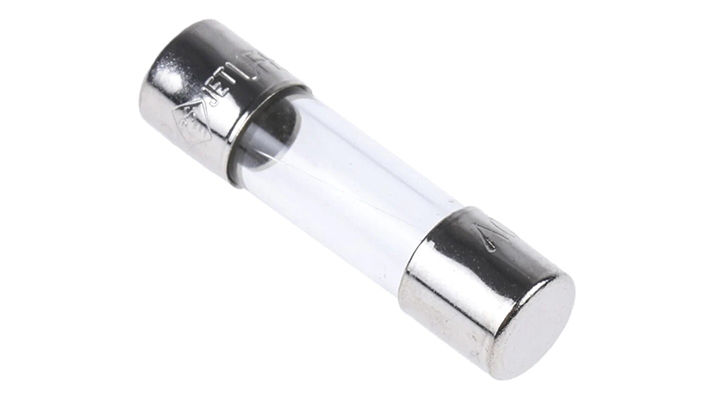
Rapid-Acting Thermal Fuse Enhances Circuit Protection In Demanding Applications
News 2025-11-27
Rapid-acting thermal fuses play a decisive role in modern circuit protection, where shrinking device sizes and higher power densities raise the risk of localized overheating. By permanently opening the circuit when a preset temperature threshold is exceeded, these fuses prevent damage to semiconductors, wiring, and surrounding materials. Their ability to respond within seconds to dangerous temperature spikes makes them a key safety element in consumer electronics, industrial controls, battery packs, and automotive modules.
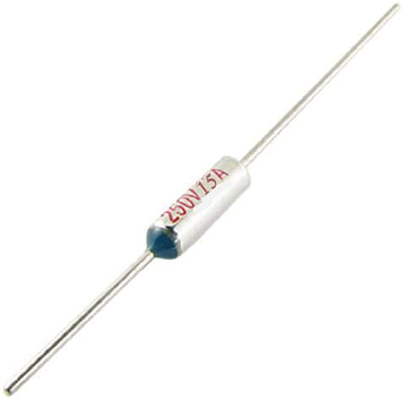
Operating Principle And Construction
A rapid-acting thermal fuse contains a temperature-sensitive pellet or alloy that mechanically releases a spring contact when exposed to excessive heat. Unlike resettable protectors, once this element changes state and the circuit opens, the device must be replaced. This one-time action removes the fault path completely, avoiding the risk of intermittent operation. High-quality designs maintain low contact resistance in normal operation, tight trip temperature tolerance, and stable performance over long service life. Package options include axial-leaded, radial, and surface-mount versions suitable for automated assembly.
Key Performance Advantages
The defining advantage of a rapid-acting thermal fuse is its fast response to overtemperature events, even when current flow is within normal limits. This is vital in scenarios where heat originates from external sources, such as blocked airflow, charger failures, or mechanical obstruction of a motor. Accurate opening temperatures, typically specified within ±5 °C, enable precise coordination with other protection components. Low internal resistance minimizes power loss and self-heating, while high interrupt ratings support safe operation in AC and DC systems used in appliances, power supplies, LED drivers, and EV subassemblies.
Application Scenarios In Modern Electronics
In battery management systems, rapid-acting thermal fuses protect cells against runaway caused by charging malfunctions or external heating. Household appliances use them near heating elements, transformers, and motors to meet international safety standards and reduce fire risk. LED luminaires integrate thermal fuses close to driver ICs and electrolytic capacitors, where prolonged heat exposure severely reduces lifetime. Industrial control panels adopt these devices in compact power modules and relays to ensure a defined fail-safe mode when ventilation fails or components age and run hotter than intended.
Design Selection And Integration Considerations
Engineers selecting a rapid-acting thermal fuse must align opening temperature, rated current, and voltage withstand capability with the real operating profile of the application. The fuse should be mounted in the hottest predictable point of the assembly while avoiding soldering conditions that exceed its specified lead temperature. Thermal coupling to the target component or hotspot is crucial; poor placement can delay tripping and weaken the protection strategy. Coordination with overcurrent protection, temperature sensors, and control firmware yields layered safety, improving compliance with IEC, UL, and automotive standards and supporting strong safety claims in product datasheets.
Common Questions About Rapid-Acting Thermal Fuses
1How does a rapid-acting thermal fuse differ from a resettable protector?
A rapid-acting thermal fuse permanently opens the circuit once its temperature threshold is exceeded and cannot reset, while resettable protectors resume conduction after cooling or fault removal.
2Where should designers place a thermal fuse on a PCB?
The device should be positioned close to the primary heat source or worst-case hotspot, using short thermal paths and avoiding airflow shields that delay temperature rise at the fuse body.
3Can a thermal fuse replace overcurrent protection?
No. A thermal fuse addresses overheating, not all current faults, so it must be used together with fuses or circuit breakers that handle short circuits and overcurrent conditions.