Robust Thermal Fuse Ensures Stable Protection In Demanding Vehicle Environments
News 2025-11-27
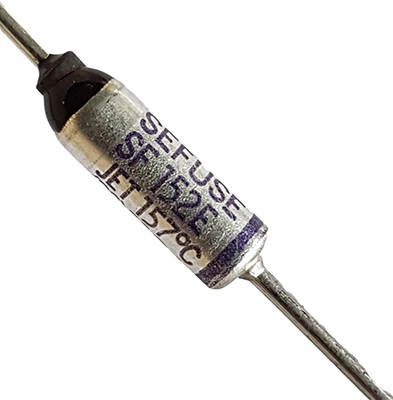
In modern vehicles, compact thermal fuses play a decisive role in safeguarding wiring, control units, battery packs, and comfort electronics from overheating. As power density increases in EVs, hybrid systems, and advanced driver assistance platforms, components experience constant temperature cycling and mechanical vibration. A robust automotive thermal fuse must interrupt current quickly under abnormal heat while maintaining stable performance under harsh long‑term operating conditions.
Automotive Application Scenarios
Thermal fuses are now embedded in traction battery modules, on‑board chargers, DC‑DC converters, LED lighting systems, seat heaters, blower motors, and infotainment units. In traction batteries they act as a last‑level safety element that opens the circuit when cooling fails or a cell defect generates excessive heat. In comfort electronics, the device prevents wire harness damage caused by blocked fans or misused seat heaters. The same component can be integrated into PCB assemblies or crimped inside harnesses, helping OEMs and Tier‑1 suppliers meet ISO 26262 and UNECE R100 safety targets while reducing system complexity.
Performance Under Vibration And Thermal Cycling
Automotive environments impose continuous vibration from engine, chassis, and road excitation, combined with rapid temperature swings from sub‑zero cold starts to high under‑hood heat. A robust thermal fuse uses mechanically reinforced end caps, high‑integrity welds, and carefully selected organic pellet material to maintain a stable opening temperature after thousands of thermal cycles. The structure resists micro‑cracks and contact fatigue, preventing nuisance openings or increased contact resistance that could lead to power loss in high‑current circuits.
Key Technical Advantages And Safety Features
The device offers a precisely defined opening temperature window, low initial contact resistance, and high breaking capacity suitable for both 12 V and 48 V architectures, as well as high‑voltage EV battery lines when used in coordinated protection schemes. Fast response time limits hotspot propagation in densely packed modules. Compliance with AEC‑Q200‑type stress screening and RoHS requirements supports global platform deployment. Designers benefit from multiple form factors, including axial leaded and surface‑mount styles, enabling short thermal paths and optimal placement near expected heat sources.
Design And Integration Considerations
Successful implementation requires careful coordination of the fuse opening temperature with system derating curves and cooling characteristics. Engineers typically place the thermal fuse close to critical components such as MOSFETs, IGBTs, power inductors, or battery cells, using thermally conductive but electrically insulating interfaces. Proper mounting ensures intimate thermal coupling while mitigating mechanical stress transfer from the PCB or housing. Simulation and validation under real driving profiles help confirm that the fuse operates only under genuine fault conditions, reducing warranty risk and maintenance incidents.
1How does this thermal fuse improve vehicle safety?
It disconnects the circuit quickly when abnormal temperatures occur in battery modules, power converters, or heaters, limiting fire risk and preventing damage to surrounding components.
2Where is this type of fuse typically installed in EVs and hybrids?
It is commonly installed in traction battery packs, on-board chargers, DC-DC converters, cabin heaters, and harness-based protection nodes near high-load circuits.
3What makes it suitable for harsh automotive environments?
Mechanical reinforcement, stable thermal pellet chemistry, and rigorous vibration and thermal cycling qualification ensure consistent performance under shock, vibration, and wide ambient temperature ranges.