Thermal Fuse Circuit Protection Enhancing Safety In Modern Electronic Systems
News 2025-11-27
Thermal Fuse Circuit Protection Enhancing Safety In Modern Electronic Systems
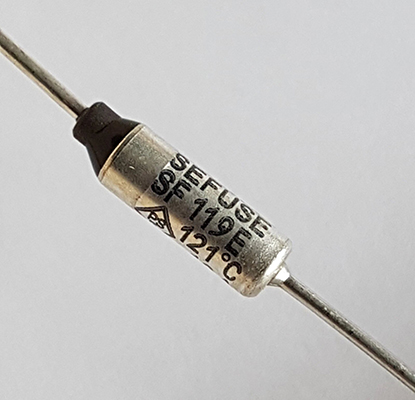
Role of Thermal Fuses in Circuit Protection
Thermal fuses are single‑use safety components designed to interrupt current when excessive temperature occurs anywhere in an electronic assembly. Unlike resettable devices, they permanently open the circuit once their calibrated melting point is reached, eliminating the risk of automatic restart in unsafe conditions. They play a decisive role in preventing overheating, fire hazards, and catastrophic equipment failure. Properly selected thermal fuses complement overcurrent protection, addressing situations where overload, blocked airflow, mechanical jamming, or abnormal ambient temperature push components beyond safe thermal limits.
Key Performance Characteristics and Selection
Performance of a thermal fuse is defined by its rated functioning temperature, holding temperature margin, current rating, and maximum interrupting capacity. High‑quality devices maintain tight tolerance between nominal operating temperature and open temperature, ensuring predictable response in safety‑critical designs. Low internal resistance minimizes power loss, while carefully engineered leads and encapsulation provide stable behavior under vibration and humidity. Designers must consider normal operating temperature, peak inrush current, and fault scenarios, then choose fuses certified under UL, VDE, or IEC standards to satisfy global compliance, especially in consumer electronics and industrial appliances.
Application Scenarios in Modern Electronics
Thermal fuses are widely integrated into power supplies, chargers, battery packs, motor drives, LED lighting, HVAC controls, and household appliances such as coffee makers and hair dryers. In switched‑mode power supplies, the fuse is often mounted near transformers or power MOSFETs to detect localized hot spots before PCB material or insulation degrades. In lithium‑ion battery protection, a thermal fuse works alongside current‑sensing circuitry to disconnect cells during runaway events. Motors in pumps, fans, and compressors use embedded thermal fuses inside windings, where they track real copper temperature and stop operation when ventilation is blocked or mechanical load increases.
Design Integration and Placement Considerations
Effective use of thermal fuses depends on strategic mechanical placement and accurate thermal coupling to the hottest risk points. Designers must avoid encapsulating the fuse in heavy copper areas or thick heat sinks that delay temperature rise at the sensing body. Mounting close to coils, transformers, or heating elements yields fast reaction during abnormal conditions. Soldering profiles must respect maximum body temperature to prevent pre‑aging or nuisance opening. Combining thermal fuses with NTC thermistors, PTC resettable fuses, and electronic monitoring achieves layered protection in power management units, enabling safe shutdown paths while maintaining competitive product size and cost.
SEO‑Focused Summary and Practical Notes
Thermal fuse circuit protection improves electronic product safety, extends equipment lifetime, and supports compliance with stringent safety regulations. Selecting parts with proven temperature stability, high interrupt ratings, and international approvals builds confidence in adapters, consumer electronics, industrial controls, and smart home devices. Clear datasheet review, realistic thermal modeling, and validation under worst‑case ambient conditions allow engineers to balance protection level, footprint, and price. As power density rises and enclosures shrink, precise thermal fuse application becomes a central element of dependable circuit protection strategy.
1. Typical opening temperature range
Most thermal fuses operate between 70 °C and 240 °C, with common values of 115 °C, 130 °C, 152 °C, and 192 °C depending on the target application.
2. Difference between thermal fuse and thermostat
A thermal fuse is a non‑resettable one‑shot device, while a thermostat or thermal switch automatically resets once temperature returns to the safe range.
3. Placement near heat source
The fuse should be mounted close to the primary heat source or predicted hot spot, using firm thermal contact so that its body temperature tracks the critical component accurately.