Thermal Fuse Technology Protecting Electrical Circuits Against Hazardous Overload Damage
News 2025-11-27
Thermal fuses play a decisive role in safeguarding electrical and electronic systems against overheating and overload conditions. Unlike resettable protectors, a thermal fuse offers one-time, permanent interruption when a preset temperature threshold is exceeded, ensuring that faulty circuits are taken offline before insulation breakdown, fire, or component destruction occurs. This irreversible behavior is highly valued in applications where safety compliance and long-term reliability must be guaranteed, from consumer appliances to industrial power modules and LED lighting systems.
Operating Principle And Core Structure
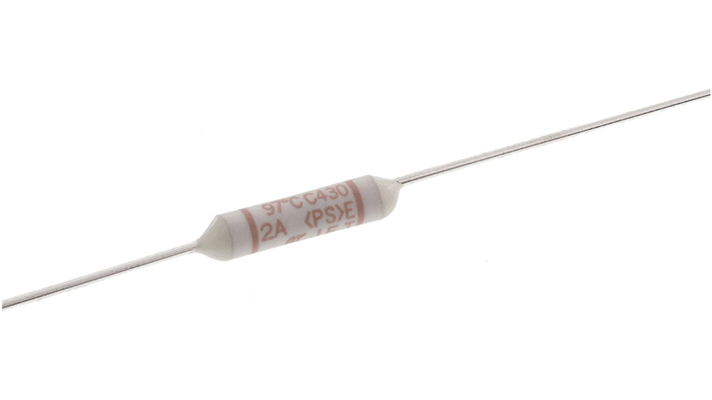
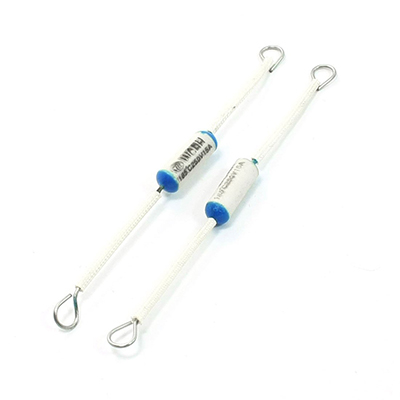
A thermal fuse is typically composed of a heat-sensitive pellet or organic material, a spring mechanism, and conductive terminals sealed in a compact housing. Under normal conditions, the fusible element maintains electrical continuity. When surrounding temperature rises beyond the rated cutoff point, the pellet melts or deforms, releasing the spring and pulling the contact apart. This rapid mechanical separation provides a clean, stable open circuit. Because actuation is driven by temperature rather than current alone, thermal fuses respond effectively to both overload and abnormal ambient heating, complementing conventional overcurrent fuses or circuit breakers.
Key Performance Advantages In Circuit Protection
High-temperature accuracy and fast trip response make thermal fuses particularly suitable for circuits that cannot tolerate prolonged overheating. They exhibit low initial resistance, minimizing power loss and heat generation during normal operation, which is important in compact power supplies and high-efficiency equipment. The one-shot design removes dependency on user intervention: once the thermal fuse opens, the circuit remains safely disabled until maintenance is performed and the device is replaced. Many products comply with UL, VDE, and IEC standards, providing traceable approval data and making it straightforward to satisfy international safety regulations and OEM qualification processes.
Application Scenarios Across Multiple Industries
Thermal fuses are widely deployed in household appliances such as coffee makers, hair dryers, washing machines, and electric heaters, where they prevent overheating of motors, heating elements, and plastic housings. In LED drivers, ballasts, and switch-mode power supplies, they are mounted near transformers, primary switching MOSFETs, or PFC stages to disconnect the mains when abnormal temperature rise occurs. Industrial automation systems use thermal fuses in control cabinets, battery chargers, and servo drives to protect transformers and power resistors from sustained overload. In e-mobility and energy storage, they serve as a last-line safeguard around charging modules and DC-DC converters, enhancing fire safety and system reliability.
Selection Considerations And Integration Practices
Choosing the appropriate thermal fuse requires evaluating rated functioning temperature, holding temperature margin, maximum operating voltage, interrupting current, and environmental conditions. Designers place the component as close as possible to the primary heat source to ensure precise thermal coupling, often using clips, epoxy, or heat-shrink sleeves to improve contact. It is important to avoid direct solder heat damage during assembly, typically by limiting soldering time and temperature or using crimp connections. Verification through temperature profiling and worst-case load testing confirms that the fuse opens within a safe window, without nuisance tripping during normal thermal cycling. Proper selection and layout allow the thermal fuse to act as a robust, predictable safety element that supports long service life of the equipment.
FAQs On Thermal Fuse Protection
1, What differentiates a thermal fuse from a traditional current fuse?
A thermal fuse responds to excessive temperature rather than only current level, so it can interrupt the circuit even when current is within specification but heat accumulation is dangerous.
2, Can a blown thermal fuse be reset or reused?
No. Once triggered, the internal structure is permanently altered, and the device must be replaced to restore circuit continuity.
3, Where should a thermal fuse be installed in practical designs?
It should be installed in series with the load, positioned close to the critical heat source such as transformers, heating coils, or power semiconductors to sense real operating temperature accurately.