Understanding Location Variations Of Vehicle Fuse Box Across Different Models
News 2025-12-22
Fuse box layout is a core element of modern automotive electrical design. As vehicle platforms diversify, the physical position, accessibility, and internal configuration of fuse boxes change significantly between models. These variations directly affect maintenance efficiency, diagnostic workflows, and the integration of sophisticated electronic modules. Engineers and service technicians must understand why manufacturers select particular locations and how these choices influence performance, protection levels, and user safety.
Engine Bay Mounted Fuse Boxes
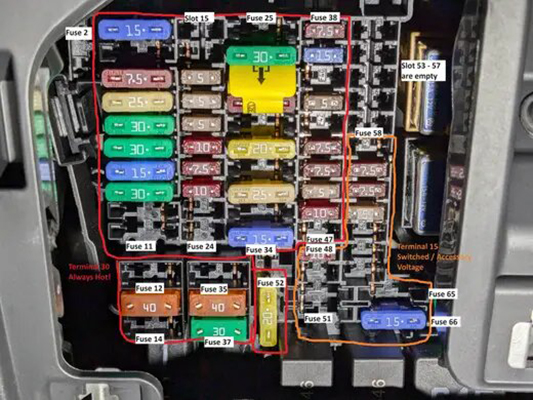
Engine bay fuse boxes are common in passenger cars, light trucks, and SUVs. Placed near the battery or along the fender, they provide short current paths to high‑demand loads such as starter motors, cooling fans, ABS pumps, and power steering units. This location reduces cable length and voltage drop, improving electrical efficiency and thermal performance. It also simplifies high‑current routing, since heavy‑gauge conductors remain in the front of the vehicle. From a service perspective, engine bay fuse boxes are easy to access under the hood, supporting quick diagnostics using test probes and current clamps. Weather‑sealed housings, robust terminals, and heat‑resistant plastics are mandatory to withstand vibration, oil mist, and under‑hood temperature peaks.
Cabin and Dashboard Fuse Box Locations
Interior fuse boxes typically support low‑to‑medium current circuits associated with driver comfort, infotainment, ADAS sensors, and interior lighting. Many manufacturers position these units behind the glove compartment, beneath the steering column, or in side kick panels. Placing the fuse box closer to the instrument panel network reduces wiring complexity, decreases harness weight, and simplifies routing during assembly. For the end user, interior locations enhance safety by distancing critical protection elements from engine heat and contaminants. However, accessibility varies: some compact models require trim removal or specialized tools, influencing maintenance time. Clear labeling, standardized fuse ratings, and logical grouping of electronic control units (ECUs) help technicians quickly isolate faults in complex multiplexed systems.
Trunk and Rear Compartment Fuse Box Configurations
Certain premium sedans, electric vehicles, and commercial vans employ rear‑mounted fuse boxes in the trunk or side cargo panels. This layout supports high‑current loads in the rear such as electric tailgates, rear HVAC blowers, power seat modules, tow packages, and battery management systems in vehicles where the battery itself is trunk‑mounted. The shortened cable runs to these rear loads minimize resistive losses and improve fault protection accuracy. In electric and hybrid vehicles, rear compartments often host additional high‑voltage protection units and service disconnects, reinforcing isolation between propulsion circuits and low‑voltage auxiliaries. Trunk locations also free space in the engine bay, enabling denser power electronics packaging and better crash structure design around the front of the vehicle.
Platform Strategies, Applications, And Performance Benefits
OEMs frequently adopt multi‑box strategies, combining engine bay, cabin, and rear fuse boxes into a distributed power distribution architecture. This approach supports modular platform development and flexible option content between trims, from base models to feature‑rich variants. In applications such as fleet vehicles, off‑road equipment, and emergency service vehicles, distributed fuse locations make it easier to add auxiliary harnesses and dedicated fused circuits without overloading a single panel. From a performance standpoint, optimized fuse box placement enhances thermal management, limits electromagnetic interference, and improves voltage stability across the wiring harness. When paired with modern blade fuses, micro‑relays, and solid‑state power controllers, these locations contribute to faster fault detection, higher system uptime, and simplified predictive maintenance.
1 What determines where a fuse box is placed in a vehicle?
Automakers balance wiring length, current levels, thermal constraints, crash safety, and service accessibility when selecting engine bay, cabin, or trunk locations.
2 Why do some vehicles have multiple fuse boxes instead of one?
Multiple fuse boxes shorten harness runs to different load zones, reduce voltage drop, support modular options, and help separate high‑current circuits from sensitive electronics.
3 Are fuse box locations different in electric vehicles?
Yes, electric vehicles often add rear or central fuse units near traction batteries and inverters to protect high‑voltage circuits while keeping low‑voltage distribution accessible to service technicians.