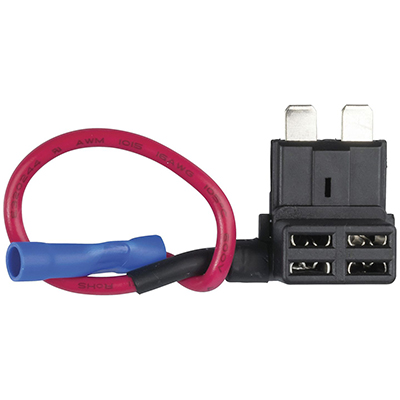
Alternator Fuse Safeguards Vehicle Charging System Against Harmful Overloads
News 2025-11-17
An alternator fuse is a dedicated protection device installed in the charging circuit between the alternator and the battery or power distribution module. Its core function is to interrupt excessive current caused by short circuits, wiring faults, or internal alternator failures, preventing damage to power electronics and wiring harnesses. In modern vehicles that integrate ADAS, infotainment, and high‑density ECUs, the alternator fuse plays a key role in maintaining system stability and protecting downstream loads from voltage spikes and thermal stress.

Function and Working Principle
The alternator fuse is typically a high‑amperage blade, bolt‑down, or fusible‑link type device rated to match the alternator’s maximum output and system voltage. Under normal operation it exhibits very low resistance, allowing efficient charging of the starter battery and auxiliary loads. When current exceeds its calibrated threshold for a defined time, the fuse element heats up and melts, opening the circuit. This controlled disconnection isolates the alternator from the battery and distribution bus, preventing cable overheating, connector damage, and potential vehicle fire. Correct coordination between alternator rating, cable gauge, and fuse rating is fundamental to safe system design.
Key Performance Advantages
High‑quality alternator fuses provide precise current limiting, fast fault interruption, and stable performance over a wide automotive temperature range. Low I²t characteristics reduce energy let‑through during short‑circuit events, protecting sensitive electronic control units and DC‑DC converters. Robust mechanical construction and vibration‑resistant terminations support use in harsh under‑hood environments. Many products use tin‑plated copper elements and flame‑retardant housings to minimize contact resistance and ensure long service life. These performance advantages reduce warranty claims, improve vehicle uptime, and support compliance with international automotive safety standards.
Application Scenarios in Modern Vehicles
Alternator fuses are widely deployed in passenger cars, light commercial vehicles, heavy trucks, agricultural machinery, and construction equipment. In 12 V and 24 V charging systems they protect high‑output alternators used to power electric steering, cabin HVAC blowers, high‑power audio systems, and auxiliary batteries. Hybrid and mild‑hybrid architectures often integrate dedicated fuses between belt‑starter generators, lithium battery packs, and power distribution units. Fleet vehicles that support telematics, refrigerated cargo, or emergency lighting rely on carefully selected alternator fuse ratings to balance charging performance and safety, even under continuous high‑load duty cycles.
Selection, Installation, and Maintenance
Correct alternator fuse selection considers alternator maximum current, system voltage, expected ambient temperature, and cable length. Engineers typically choose a rating slightly above normal operating current while ensuring coordination with upstream and downstream protection devices. The fuse should be installed as close as practical to the power source on mechanically secure holders or busbar mounts, minimizing unprotected cable length. Routine inspection during scheduled maintenance should confirm torque on terminals, absence of discoloration or cracking, and compatibility with any charging system upgrades such as higher‑amp alternators or added auxiliary batteries.
1. What happens when an alternator fuse blows?
The battery warning light usually illuminates, electrical accessories may dim or shut down, and the battery stops charging because the alternator output is disconnected.
2. Can a higher‑rated alternator fuse improve performance?
Oversizing the fuse does not increase charging performance and can compromise protection, allowing cables or components to overheat before the fuse operates.
3. Where is the alternator fuse typically located?
It is commonly mounted in the engine bay fuse box or on a dedicated high‑current fuse block close to the battery or alternator output terminal.