Automotive Battery Box Solutions for High-Performance and High-Demand EV Applications
News 2025-11-17
High-performance electric and hybrid vehicles place extreme stress on their energy storage systems. As pack energy density rises and fast-charging becomes standard, the automotive battery box moves from a simple enclosure to a key functional module that protects cells, stabilizes performance, and supports vehicle-level safety and durability targets.
Structural Role and Application Scenarios
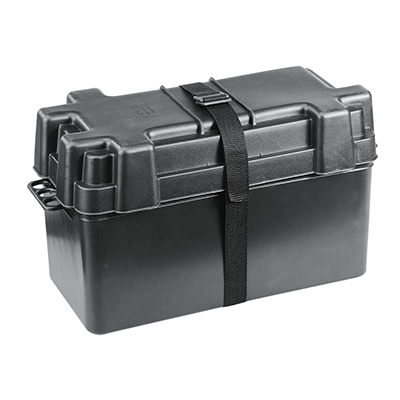
The battery box forms the structural backbone of the traction battery pack in performance sedans, sports EVs, off-road SUVs, and light commercial vehicles. Mounted in the underbody or rear floor, it must withstand road debris impact, stone chipping, torsional loads from the chassis, and occasional curb strikes. In motorsport-inspired EV platforms, the enclosure contributes to body stiffness and crash energy management. Fleet and logistics vehicles rely on battery boxes engineered for high cycle life and frequent DC fast-charging, where thermal and mechanical stresses accumulate over long operating hours. In all these scenarios, the enclosure enables safe integration of high-voltage systems into the vehicle architecture.
Key Performance Features and Material Choices
To meet demanding duty cycles, modern battery boxes use high-strength aluminum alloys, advanced steels, or composite-metal hybrids. These materials combine low weight with high stiffness and excellent corrosion resistance against road salt and moisture. Precision gaskets and welded or bonded seams achieve stringent IP ratings, preventing water and dust ingress that could compromise cell terminals and busbars. Integrated mounting points for modules, cooling plates, sensors, and high-voltage connectors simplify assembly and reduce NVH issues. Electromagnetic shielding layers and conductive coatings help maintain EMC compliance in dense electronic environments typical of performance vehicles.
Thermal Management and Safety Performance
Performance vehicles impose aggressive load profiles, making thermal management a central function of the battery box. The enclosure must support liquid cooling plates, heat spreaders, or refrigerant circuits that keep cells within a narrow temperature window under rapid acceleration, track use, and high-power charging. Dedicated compartments and fire-resistant barriers help contain thermal runaway and slow propagation between modules. Crash structures, including deformation zones and reinforced side beams, protect the pack during side-impact and pole collisions. Pressure relief paths and venting features are engineered to route gases away from the passenger cabin while maintaining structural integrity.
Integration, Manufacturability, and Future Trends
For OEMs and tier suppliers, the battery box is central to scalable platform strategies. Common enclosure architectures support multiple pack capacities, enabling flexible model variants without redesigning the vehicle floor. High-precision forming, casting, and extrusion processes ensure tight tolerances for automated module installation and sealing. Design-for-manufacturing principles reduce weld length, lower part count, and improve serviceability for field replacement or upgrades. Future solutions increasingly integrate sensing, health monitoring, and smart drain features, allowing real-time diagnostics and improved lifecycle management of high-value battery assets.
1. How does the battery box impact EV performance?
It enables higher power output and stable thermal conditions by providing structural rigidity, optimized cooling interfaces, and robust protection, allowing cells to operate closer to their optimal performance envelope.
2. Why are materials so important for battery box design?
Material selection directly affects weight, strength, corrosion resistance, and crash behavior, all of which influence range, safety ratings, and long-term durability in harsh automotive environments.
3. What makes a battery box suitable for fast-charging applications?
A suitable design offers efficient thermal paths, precise sealing, and secure routing for high-current busbars, ensuring minimal temperature rise and maintaining electrical safety during repeated high-power charging cycles.