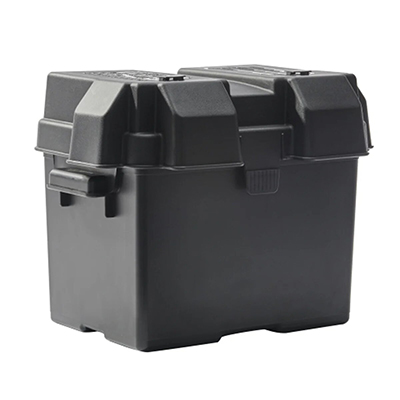
Battery Box Mounting Brackets For Stable And Secure Vehicle Power Systems
News 2025-11-17
Battery box mounting brackets ensure stable installation vehicles by locking high-value energy storage modules firmly to the chassis. In modern passenger cars, commercial trucks, construction machinery, and new energy vehicles, these brackets protect batteries from shock, vibration, and thermal stress. Well‑designed brackets support both conventional lead‑acid starter batteries and large lithium packs used in traction and auxiliary power systems, helping maintain electrical continuity and extending service life in demanding automotive environments.

Key Functions And Structural Design
Battery box mounting brackets perform three core functions: mechanical fixation, vibration damping, and protection against external impact. Typical constructions use stamped steel, aluminum alloys, or reinforced composites, combined with rubber grommets, isolators, and anti-slip pads. Multi-point mounting holes allow alignment with different frame geometries, while reinforced ribs and folded edges increase load capacity without adding excessive weight. Corrosion-resistant surface treatments such as hot-dip galvanizing, e-coating, or powder coating prevent rust in road-salt, moisture, and chemical splash conditions. The geometry is engineered to maintain battery clearance, allow cable routing, and ensure sufficient ventilation for heat dissipation.
Application Scenarios In Automotive And Off-Road Vehicles
Battery box mounting brackets are widely deployed in passenger EV platforms, hybrid vehicles, heavy-duty trucks, buses, forklifts, agricultural tractors, mining equipment, and marine service vehicles. Under-hood, underbody, and side-frame installations face continuous high-frequency vibration and occasional severe impact from potholes or off-road obstacles. In electric buses and delivery fleets, large traction battery arrays are mounted along the chassis rails, where bracket rigidity and fatigue resistance directly affect system safety and uptime. In harsh off-road and construction applications, brackets with sealed hardware, reinforced welds, and high-vibration isolators safeguard batteries against stone chips, mud, and chassis torsion, preventing housing deformation and terminal damage.
Performance Advantages And Safety Benefits
High-performance battery box mounting brackets improve vehicle safety, electrical reliability, and maintenance efficiency. A rigid yet damped mounting structure reduces micro-vibration of internal cells, lowering the risk of internal connection failure and premature capacity loss. Secure clamping and anti-loosening fasteners prevent battery movement during emergency braking, sharp cornering, or collisions, reducing the possibility of electrolyte leakage or short circuits. Optimized bracket design supports quick visual inspection, straightforward removal, and precise repositioning, which shortens service times for fleet operators. Compliance with automotive standards such as ISO 16750, SAE J2380, and relevant OEM specifications demonstrates that the bracket design has passed vibration, corrosion, and mechanical shock validation.
Design Considerations For OEM And Aftermarket Solutions
When selecting or designing battery box mounting brackets, engineers must evaluate load rating, installation envelope, thermal behavior, and compatibility with battery chemistry. For lithium-ion packs, brackets must maintain tight dimensional tolerances to support large enclosures while preventing localized stress on the pack housing. Integration with cable clamps, BMS harness supports, and ventilation ducts improves system-level performance and electromagnetic cleanliness. For aftermarket upgrades, adjustable slotted brackets and modular side rails simplify retrofits on different vehicle models, while preconfigured hole patterns reduce drilling on the chassis. Working with suppliers that offer 3D models, finite element analysis data, and salt-spray test reports helps OEMs shorten development cycles and meet stringent durability targets.
Common Questions About Battery Box Mounting Brackets
1. How do brackets improve battery life?
By reducing vibration, limiting mechanical stress, and maintaining stable positioning, mounting brackets help protect internal cell connections and housing seals, which can extend usable battery life and maintain consistent performance.
2. Which materials are best for vehicle battery brackets?
Automotive-grade steel and aluminum alloys are most common due to their strength-to-weight ratio and cost efficiency, while reinforced composites are used where weight reduction, corrosion resistance, or electrical insulation is a priority.
3. What should be checked during maintenance?
Technicians should check for loose fasteners, corrosion on bracket surfaces, cracks at welds or bends, damage to rubber isolators, and any signs of battery movement or abrasion marks on the box or mounting points.