Battery Box Mounting Hardware for Seamless Integration in Modern Vehicle Systems
News 2025-11-17
Battery box mounting hardware may appear secondary to cells and power electronics, yet it directly influences safety, durability, and integration quality in modern vehicle systems. From passenger EVs and hybrids to construction machinery, forklifts, AGVs, and agricultural equipment, engineered mounting solutions keep battery packs mechanically stable while supporting thermal management and electrical connectivity. Well-designed brackets, rails, clamps, and fasteners help manufacturers meet crash standards, minimize NVH, and simplify service. They also enable flexible platform strategies, allowing a single body design to host multiple battery configurations.
Mechanical Design and System Integration
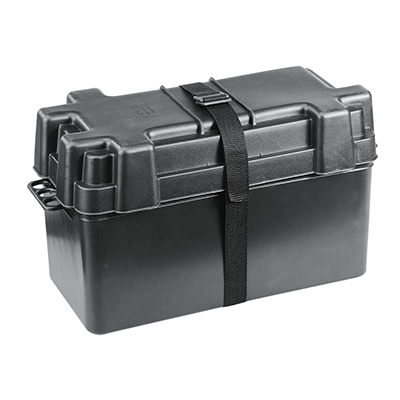
Battery box mounting hardware forms the structural interface between the energy storage system and the vehicle frame or body-in-white. In EV platforms, high-strength steel or aluminum brackets distribute pack weight across multiple crossmembers, resisting bending and torsional loads during acceleration, cornering, and impact events. Precision-formed mounting rails and locating pins ensure accurate alignment with chassis datum points, supporting automated assembly and repeatable quality. For vehicles operating off-road or in warehouse logistics, reinforced corner mounts and cross-braces counteract vibration and shock loads from uneven surfaces. Integrated provisions for cable routing, grounding points, and sensor mounting simplify system-level integration, helping engineers coordinate mechanical, electrical, and thermal designs in one cohesive package.
Performance, Durability, and Safety Benefits
Well-engineered mounting hardware improves performance by maintaining consistent battery pack geometry and contact pressure over the vehicle lifetime. Corrosion-resistant materials such as coated steel, stainless steel, and extruded aluminum preserve clamping force in harsh environments exposed to road salt, moisture, chemicals, and temperature cycling. Engineered fasteners with defined preload prevent micro-movement that can lead to fretting, seal damage, and enclosure leaks. In the event of a crash, energy-absorbing brackets and controlled deformation zones help manage impact loads, protecting the housing and limiting intrusion into the passenger compartment. Low-profile mounts also support aerodynamic underbody designs and optimized ground clearance, which is important for highway efficiency and off-road capability. These factors contribute to stable electrical performance, longer battery service life, and compliance with safety regulations.
Application Scenarios in On-Road and Off-Road Vehicles
Different vehicle categories place distinct demands on battery box mounting hardware. In passenger EVs and plug-in hybrids, underfloor packs require slim, high-stiffness mounting frames that connect to rocker panels and crossmembers while meeting stringent crash and NVH targets. Commercial trucks and buses often rely on side-mounted or frame-rail battery boxes that must handle high mileage, frequent load changes, and continuous vibration; here, modular brackets and service-friendly latching mechanisms support quick replacement and fleet uptime. In forklifts, AGVs, mining trucks, and agricultural machines, mounting solutions prioritize ruggedness, corrosion protection, and compatibility with high-pressure cleaning. For low-speed vehicles, delivery robots, and micro-mobility platforms, lightweight composite or aluminum brackets reduce mass while maintaining adequate stiffness. Across these scenarios, standardized mounting patterns and scalable bracket families allow OEMs and system integrators to reuse designs across multiple vehicle models.
Materials, Customization, and Installation Considerations
Material selection and customization options enable battery box mounting hardware to match specific project requirements. High-strength low-alloy steel is a common choice for cost-sensitive, high-volume vehicles, while aluminum brackets and extrusions help reduce mass in premium EV platforms. Surface treatments such as galvanizing, e-coat, and powder coating extend corrosion resistance, particularly in coastal regions and winter climates. Custom hole patterns, weld-on tabs, and integrated rubber isolators allow designers to tune stiffness, damping, and serviceability. During installation, consistent torque control for fasteners is vital to maintaining sealing and mechanical stability; preassembled hardware kits with labeled components help shorten assembly time and reduce errors on the production line. For the aftermarket and retrofit conversions, bolt-on bracket kits with clear documentation support safe integration of auxiliary battery systems, telematics power supplies, and idle-reduction packs.
FAQ: Battery Box Mounting Hardware in Vehicle Systems
1What factors should engineers prioritize when selecting battery box mounting hardware?
Engineers should evaluate load capacity, stiffness, corrosion resistance, crash performance, and compatibility with the vehicle frame and sealing strategy. Attention to fastener preload, service access, and wiring paths helps ensure safe operation and efficient assembly.
2How does mounting hardware influence battery pack lifespan?
Stable, vibration-controlled mounting reduces mechanical stress on cells, busbars, and cooling components. By preventing micro-movement and maintaining enclosure integrity, properly designed hardware supports consistent thermal conditions and extends battery lifespan.
3Which vehicles benefit most from specialized mounting solutions?
Heavy-duty trucks, buses, off-road machines, and high-volume passenger EVs benefit significantly from application-specific mounting hardware. These platforms experience demanding duty cycles, and tailored solutions improve durability, safety, and maintenance efficiency.