Compact Thermal Fuse Enables Safer High-Density Power Distribution in Modern Vehicles
News 2025-11-27
Compact Thermal Fuse Fits Tight Spaces in Modern Car Electrical Assemblies
Miniaturized Protection Tailored to Modern Harness Design
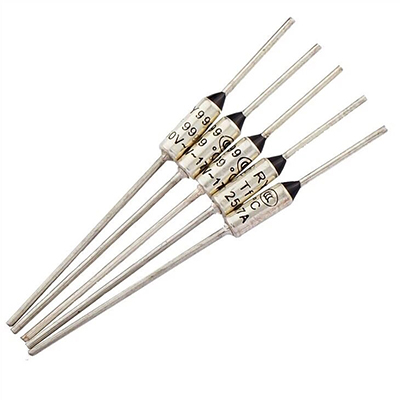
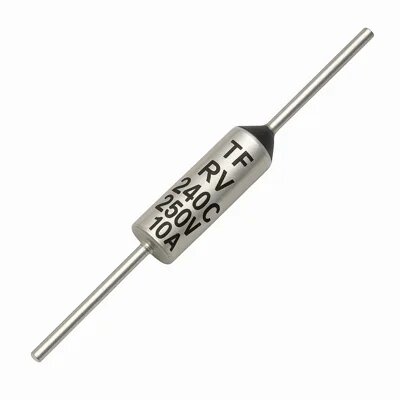
Compact thermal fuses address the packaging challenges of contemporary automotive electronics, where junction boxes, power distribution units, and on-board chargers must fit into extremely tight envelopes. By integrating a small, axial or surface-mount body, these fuses can be positioned directly on densely populated PCBs, within wiring harness splices, or in sealed connector cavities. This proximity to heat-generating components allows accurate sensing of abnormal temperature rise, protecting MOSFET-based power stages, DC‑DC converters, and battery management circuits without consuming valuable board space.
Key Performance Characteristics and Safety Compliance
Automotive-grade compact thermal fuses are engineered for precise opening temperatures, typically spanning 72 °C to 240 °C, depending on the targeted subsystem. Tight tolerance on fusing temperature minimizes nuisance tripping while ensuring dependable interruption under overload, stalled motors, or blocked ventilation. Low internal resistance and high interrupt ratings support use in 12 V and 48 V architectures. Compliance with UL, IEC, and AEC-Q200 requirements helps design teams meet global safety and reliability standards, simplifying homologation and ECU validation processes.
Application Scenarios in Vehicle Electrical and Electronic Systems
The primary use cases extend across body control modules, HVAC blowers, seat heaters, steering-column modules, and LED lighting assemblies, where local thermal protection shields surrounding plastic structures and nearby semiconductors. In electric and hybrid vehicles, compact thermal fuses safeguard on-board chargers, DC‑link capacitors, and auxiliary battery circuits operating under high ambient temperatures. Placed close to power inductors or current shunts, they act as last-line protection in the event of software failure, sensor drift, or connector degradation, improving overall functional safety coverage.
Integration Benefits for OEMs and Tier Suppliers
The small footprint of these devices simplifies routing in crowded harnesses and compact control units, often allowing direct integration into existing connector footprints without major mechanical redesign. Automated pick-and-place handling of SMD variants reduces assembly time and improves process repeatability, aiding high-volume production. Stable long-term thermal performance and vibration-resistant construction support extended service life, reducing warranty risk. From an SEO-oriented perspective, compact automotive thermal fuses offer high safety margin, consistent tripping behavior, and efficient heat response, making them a preferred choice in modern vehicle power distribution strategies.
Quick Questions and Answers
1. Where are compact thermal fuses most commonly installed in vehicles?
They are widely used in junction boxes, body control modules, LED driver boards, seat and window heater circuits, and compact power-control PCBs close to heat sources.
2. How does a compact thermal fuse improve protection compared to a standard fuse?
It responds to temperature instead of only current, interrupting the circuit when overheating occurs, even if current remains within normal limits, thereby preventing damage to plastics and sensitive semiconductors.
3. Can compact thermal fuses support emerging 48 V architectures?
Yes, many automotive-grade versions offer low resistance and appropriate voltage and interrupt ratings, making them suitable for both 12 V and 48 V electrical systems in modern vehicles.