Compatibility Details Of Automotive Fuse Box Designs Across Production Years
News 2025-12-22
Fuse boxes in automotive electrical systems often appear interchangeable across production years, yet subtle design changes can affect safety, performance, and diagnostics. Engineers, maintenance teams, and aftermarket suppliers need a clear understanding of how fuse box architecture evolves to prevent misapplication and ensure stable power distribution. Compatibility involves not only physical fit but also circuit mapping, load capacity, and integration with sensors or control modules.
Key Structural Changes Across Model Years
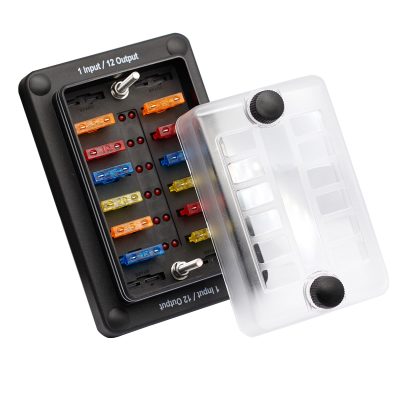
Fuse boxes typically share mounting points over several years, but internal busbar geometry, connector keying, and relay layouts may shift with each revision. A later-year unit might introduce extra slots for driver-assistance systems, higher current rails, or upgraded PCB substrates. Even when housings look identical, pin assignments in the main harness plugs can change, leading to misrouted circuits if an earlier fuse box is installed in a newer vehicle. Careful comparison of terminal indexing, cavity numbering, and mechanical coding features is mandatory before claiming cross-year compatibility.
Electrical Performance, Ratings, And Safety Margins
Across production cycles, OEMs often increase alternator output, add power-hungry infotainment systems, or integrate electric pumps and actuators. The matching fuse box may receive thicker copper traces, higher interrupt-rating fuses, and more robust relay sockets to manage thermal stress. Using an older, lower-rated fuse box in a later vehicle can result in hot spots, nuisance fuse blows, or, in worst cases, insulation damage. Performance advantages of the newer units include improved fault isolation, reduced voltage drop at high loads, and better coordination with low-resistance, high-speed switching components.
Application Scenarios And Interchangeability Strategies
In fleet upgrades, remanufacturing projects, and aftermarket conversions, engineers often seek to reuse fuse boxes to control BOM complexity. A common scenario is retrofitting safety features or auxiliary lighting into vehicles spanning several years of production. When planning such applications, technicians must map each circuit using OEM wiring diagrams, verify continuous current ratings, and validate relay coil control paths against body control module outputs. Where differences are minor, harness adapters or jumper looms can restore compatibility while preserving diagnostic access points. Documented cross-reference lists, including OE and aftermarket part numbers, reduce the risk of fitting incompatible assemblies.
Impact On Diagnostics, Serviceability, And SEO-Relevant Considerations
Modern fuse boxes often incorporate integrated diagnostics such as built-in test points, failure indicators, or even current-sensing elements linked to the CAN network. Later production years may consolidate multiple junction blocks into a single power distribution module, streamlining service but requiring updated troubleshooting procedures. For workshop operations, using the correct year-specific fuse box preserves scan tool consistency and avoids false fault codes. In online parts catalogs, using searchable terms such as “fuse box compatibility by year,” “automotive power distribution module performance,” and “OEM vs aftermarket fuse block cross-reference” helps engineers and buyers quickly locate the correct component and evaluate its application scope.
1. How can I confirm that a fuse box fits multiple production years?
Check OEM part numbers, compare connector pinouts and cavity labels, and review wiring diagrams to ensure identical circuit mapping and current ratings.
2. What risks arise from using an older fuse box in a newer vehicle?
Potential issues include undersized current paths, overheating under heavy load, unexpected fuse operation, and incompatibility with upgraded control modules.
3. Are aftermarket fuse boxes suitable for cross-year applications?
They can be suitable when they replicate OEM layouts, maintain equal or higher current ratings, and provide documented compatibility tables covering specific production years.