Efficient Current Shutdown Thermal Fuse Enhances Electrical Safety And System Integrity
News 2025-11-27
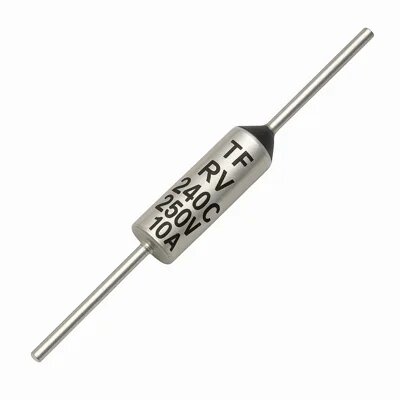
Efficient-current-shutdown thermal fuses are dedicated safety components designed to interrupt abnormal current before excessive heat damages surrounding circuitry. By combining precise thermal response characteristics and low internal resistance, these devices prevent insulation breakdown, PCB scorching, and catastrophic failures in high-density electronics. Their role becomes particularly important in compact systems where traditional circuit breakers or resettable protectors cannot react quickly enough to localized temperature rise or long-term overload.
Operating Principle And Key Performance Characteristics
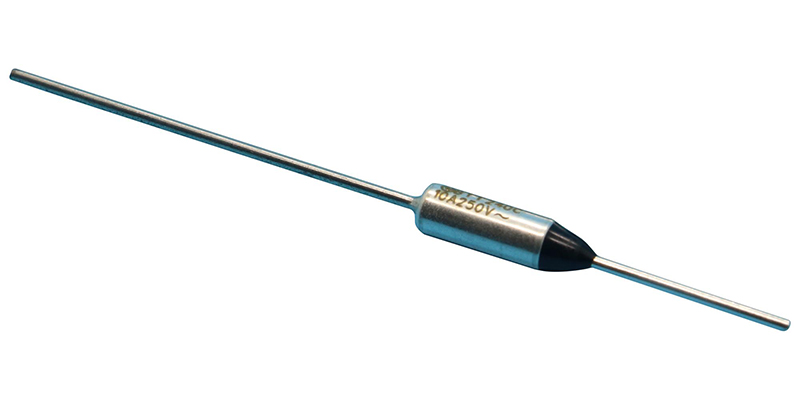
Efficient-current-shutdown thermal fuses contain a calibrated thermal pellet or alloy that melts when internal temperature reaches a predefined threshold, causing a mechanical separation of the conductive path. Unlike generic overcurrent devices, the trip point reflects a combination of ambient temperature, load profile, and mounting conditions, enabling highly predictable shutdown. Low contact resistance supports stable operation in both low-voltage DC and higher-voltage AC circuits, while stringent creepage and clearance design helps maintain insulation coordination. High breaking capacity ratings allow safe interruption of fault currents that might otherwise cause arcing or contact welding.
Application Scenarios In Industrial And Consumer Electronics
These thermal fuses appear in motor drives, power tools, HVAC controllers, LED lighting engines, battery packs, and switch-mode power supplies where thermal runaway could damage expensive assemblies or trigger fire hazards. In industrial automation cabinets, they protect transformers, compact SMPS modules, and I/O interface boards against overloads caused by wiring errors or harsh environmental conditions. In household appliances such as coffee machines, hair dryers, and induction cookers, they act as a permanent last line of defense once electronic control loops fail, ensuring that housings, connectors, and plastic frames do not exceed safe temperature limits.
Integration, Selection, And Design Considerations
Engineering teams select efficient-current-shutdown thermal fuses by matching rated current, cut-off temperature, and maximum interrupt rating to the real operating profile. Proper PCB placement near heat sources and accurate thermal coupling to transformers, power MOSFET heatsinks, or motor windings are crucial for correct response. Designers must consider airflow, enclosure materials, and derating factors so that the fuse does not trip during normal peak loads yet reacts promptly under fault conditions. Compliance with UL, VDE, and IEC standards simplifies global certification, and using components from traceable, high-quality manufacturers reduces variability from batch to batch, supporting consistent field performance.
Performance Advantages And System-Level Benefits
Compared to conventional one-size-fits-all protectors, efficient-current-shutdown thermal fuses deliver faster, more localized intervention, reducing secondary damage to PCBs and connectors. Their compact form factor enables integration in densely populated boards, improving the safety profile without sacrificing layout flexibility. Permanent open-circuit behavior after activation forces maintenance staff to identify and remove root causes rather than simply resetting power, which improves long-term reliability metrics and reduces warranty costs. By stabilizing system operation under fault conditions and helping products comply with safety regulations, these fuses contribute directly to higher equipment uptime and stronger brand reputation.
FAQ On Efficient-Current-Shutdown Thermal Fuses
1What differentiates an efficient-current-shutdown thermal fuse from a standard fuse?
The device responds to both overcurrent and the resulting temperature rise, using a precisely tuned thermal element that opens the circuit before surrounding components exceed their safe operating temperature.
2Where are these thermal fuses most commonly deployed?
They are widely used in power supplies, battery-powered tools, household appliances, LED drivers, industrial controllers, and transformer-based modules where compact yet accurate overtemperature protection is required.
3How should engineers select the correct rating?
Engineers analyze maximum steady-state current, ambient temperature range, and worst-case fault conditions, then choose a thermal fuse whose rated current, cutoff temperature, and breaking capacity match the intended application margins.