Efficient Overheat Protection Thermal Fuse Prevents Costly Electrical System Failures
News 2025-11-27
Efficient overheat protection thermal fuses have become a key safeguard in compact, high‑power electronic designs. By interrupting current once a preset temperature is exceeded, these fuses prevent damage to wiring, PCBs, and sensitive semiconductor devices. Unlike resettable protection elements, a thermal fuse offers a permanent, clearly detectable failure mode that supports diagnostics, compliance, and long‑term safety in demanding electrical environments.
Core Operating Principle and Construction
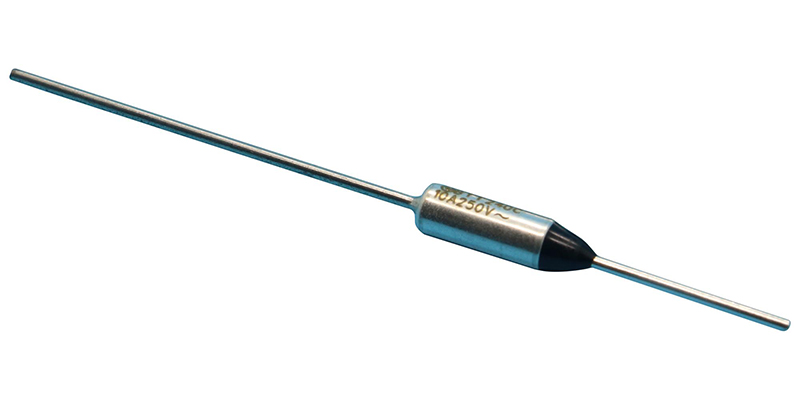
A thermal fuse integrates a fusible pellet, spring mechanism, and contact assembly sealed in a compact housing. Under normal operating temperatures, the pellet maintains contact pressure and current flows with minimal resistance and low self‑heating. When ambient or component temperature rises beyond the rated cutoff, the pellet melts or deforms, releasing the spring and mechanically opening the circuit. This one‑time action isolates downstream circuits from overheating sources such as stalled motors, blocked airflow, abnormal load conditions, or failed control ICs. Carefully engineered contact materials, creepage distances, and insulation systems enable compliance with UL, IEC, and EN standards across appliance, industrial, and power‑conversion markets.
Key Performance Advantages in Electronic Systems
Compared with conventional overcurrent fuses or PTC resettable devices, an efficient thermal fuse directly tracks temperature rather than only current flow. This behavior is valuable in applications where thermal runaway may occur even at normal current levels, such as tightly packed power supplies, LED drivers, and lithium‑ion battery packs. Low internal resistance keeps power dissipation negligible during regular operation, supporting high energy efficiency and stable thermal profiles. Precise opening temperatures, often available in increments of 5 °C, allow design engineers to coordinate fuse ratings with PCB layout, heatsink design, and airflow, achieving repeatable protection thresholds across mass production.
Application Scenarios Across Industry Segments
In consumer appliances, thermal fuses protect heaters, coffee makers, hair dryers, and induction cooktops from unsafe temperature rise caused by thermostat failure or user misuse. In HVAC systems, they safeguard fan motors, transformers, and control boards where prolonged overload conditions can lead to insulation breakdown. Lighting manufacturers integrate thermal fuses into LED drivers and high‑bay luminaires to counteract blocked vents or unexpected ambient temperature surges in warehouses. Automotive engineers use them inside seat heaters, blower modules, and on‑board chargers, where compact packaging and vibration require robust, temperature‑driven protection. Data‑center and telecom power shelves benefit from fuses placed near hot spots on high‑density DC‑DC converter boards, preventing local overheating that jeopardizes uptime.
Selection, Integration, and Safety Compliance
Effective implementation starts with selecting the cutoff temperature slightly above the maximum expected operating temperature of the protected component. Engineers must consider worst‑case ambient conditions, tolerance of the fuse trip point, and the thermal coupling between the fuse body and the heat source. Axial‑lead or radial‑lead packages can be mounted directly on PCBs or clamped to heatsinks to achieve fast thermal response. Verification testing, including heat‑soak, surge, and cycling tests, confirms coordination between the thermal fuse and upstream electronic controls. Using safety‑approved parts from recognized laboratories simplifies certification to household appliance and information‑technology equipment standards, while detailed datasheets and derating curves support accurate simulation in CAD and thermal analysis tools.
Typical Questions About Efficient Thermal Fuses
1. Where are thermal fuses most frequently used in modern designs?
They are widely used in power adapters, LED lighting, home appliances, battery packs, and automotive comfort systems where compact design and predictable thermal protection are required.
2. How does a thermal fuse differ from a standard overcurrent fuse?
A standard fuse reacts primarily to excessive current, while a thermal fuse responds to temperature at its mounting point, providing protection even when current remains within the normal operating range.
3. Can a thermal fuse be reset after it opens the circuit?
No. Once a thermal fuse trips, it must be replaced. This permanent interruption creates a clear maintenance signal and helps prevent repeated exposure to unsafe thermal conditions.