How Automotive Battery Box Insulation Reduces Thermal Stress and Improves EV Durability
News 2025-11-17
Automotive battery systems operate under harsh thermal conditions that directly influence safety, lifespan, and performance. As electric vehicles become the core of modern transportation, the battery box has evolved from a simple enclosure into a thermally engineered subsystem. Insulation materials inside the battery box now play a decisive role in controlling temperature fluctuations, preventing hotspots, and reducing wear caused by repeated charge–discharge cycles in varying climates.
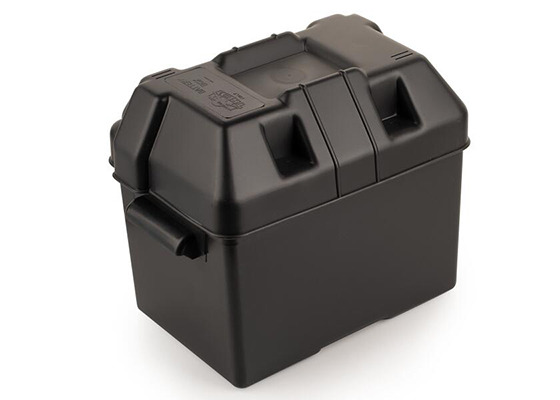
Thermal Challenges in Automotive Battery Packs
Electric vehicle batteries generate significant heat under fast charging, high current acceleration, and regenerative braking. External factors such as direct sunlight, low ambient temperatures, and road splash expose the pack to constant thermal cycling. Without dedicated insulation, individual cells can experience uneven temperatures, leading to accelerated aging, capacity fade, and increased internal resistance. These factors not only shorten usable range but also raise the risk of thermal runaway in fault conditions.
Insulation Materials and Design Approaches
Modern battery box insulation combines low thermal conductivity with precise mechanical integration. Typical solutions use multi-layer laminates of foams, aerogels, mica, and ceramic-filled elastomers to block heat paths between the pack and the environment. Designers position insulation between modules, around busbars, and along the bottom plate to manage both conduction and radiation. Material choices must meet strict requirements for flame retardancy, dielectric strength, low outgassing, and chemical resistance to coolants, road salts, and automotive fluids.
Performance Benefits and Application Scenarios
High-quality insulation helps maintain cell temperature within the optimal operating window, reducing temperature gradients across large battery packs. In hot climates, it slows heat ingress from the underbody and engine bay, easing the load on liquid cooling systems and improving fast-charging efficiency. In cold regions, it supports preheating strategies by retaining thermal energy, which improves power delivery and extends driving range. Fleets for logistics, ride-hailing, and public transport particularly benefit from reduced degradation, lower maintenance costs, and more predictable performance throughout the vehicle lifetime.
Integration With Thermal Management and Safety Systems
Battery box insulation is most effective when paired with active thermal management, sensors, and safety electronics. Insulation stabilizes the thermal environment so that cooling plates, refrigerant circuits, and heaters operate within their optimal capacity range. This stabilizing effect supports more accurate battery management system algorithms for state-of-charge and state-of-health estimation, improving energy utilization. At the same time, appropriately rated insulation materials act as fire barriers, enhancing containment and delaying heat propagation between modules in abnormal events.
1. How does insulation extend battery life?
By moderating temperature swings and reducing cell-to-cell gradients, insulation slows chemical degradation, helping the pack maintain capacity and power output over more cycles.
2. Is insulation only needed in extreme climates?
No. Even in moderate conditions, repeated daily heating and cooling create stress. Insulation reduces this cumulative wear, improving consistency and safety.
3. Does insulation increase vehicle weight significantly?
Specialized lightweight materials add minimal mass compared with the overall pack and are usually offset by gains in efficiency, range stability, and reduced cooling demand.