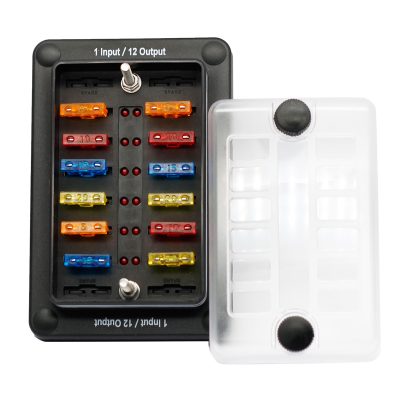
Installation Errors In Fuse Box Assemblies That Trigger Persistent Electrical Issues
News 2025-12-22
Incorrect installation of a fuse box in industrial, commercial, or automotive systems often creates recurring electrical faults that standard troubleshooting cannot eliminate. When protective devices, terminations, or enclosure layouts are not configured according to system load and environmental conditions, the result can be nuisance tripping, overheating, and intermittent downtime. Consistent layout discipline, correct component selection, and verification against load profiles are necessary to prevent repeat failures and protect sensitive electronic modules, power converters, and control units.
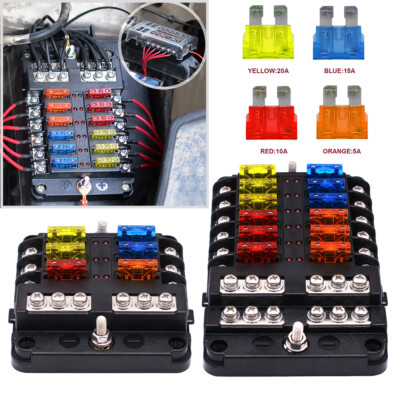
Misaligned Circuit Ratings And Load Distribution
Improper matching between fuse ratings and circuit load is one of the most common installation errors. Oversized fuses may allow conductors and busbars to run beyond their thermal limits, accelerating insulation fatigue and causing repeat ground faults. Undersized fuses lead to frequent, unexplained outages under normal operating current, particularly in motor control centers, EV charging cabinets, and communication power shelves. Accurate calculation of steady‑state and inrush current, including motor starting and capacitor bank energizing, ensures that fuse curves match application demands and minimize nuisance openings.
Faulty Terminations, Torque, And Contact Integrity
Loose, contaminated, or over‑torqued terminations in the fuse box promote long‑term instability. Micro‑arcing at poorly tightened lugs generates localized heating, raising contact resistance and creating cyclical failures under peak load. This is especially problematic in high‑density DC distribution panels and telecom back‑up systems, where vibration and thermal cycling are significant. Following manufacturer torque specifications, using calibrated tools, and employing crimp terminals or busbar clamps rated for the conductor size preserves low contact resistance and enables consistent fuse performance over the full service life.
Improper Segregation, Labeling, And Coordination
Inadequate circuit segregation and poor labeling inside the fuse box often lead to repeated troubleshooting errors rather than hardware faults. When feeders, control circuits, and sensitive low‑voltage electronics share the same compartment without clear identification, technicians may replace incorrect fuses or bypass protective links to restore power quickly, setting up future failures. Proper coordination between upstream breakers and downstream fuses, along with durable labeling and clear circuit maps, reduces fault clearing time and preserves selectivity, so only the affected branch disconnects during a fault event.
Environmental And Mechanical Installation Oversights
Ignoring environmental ratings during fuse box installation can shorten component life and cause recurring problems that resemble design defects. In outdoor or high‑humidity applications, unsealed enclosures allow condensation to corrode fuse clips and terminals, raising resistance and triggering intermittent outages. High‑temperature locations, such as near transformers or engine compartments, can derate fuse performance and cause unexpected openings. Selecting enclosures with suitable IP or NEMA ratings, providing adequate ventilation, and mounting fuse boxes away from vibration sources greatly enhances reliability in industrial drives, renewable energy inverters, and process automation panels.
Best Practices That Enhance Performance And Application Reliability
Engineering the fuse box around actual application conditions provides measurable performance advantages. Using time‑delay fuses on inductive loads, fast‑acting devices on sensitive electronics, and high‑rupturing‑capacity designs in high‑fault‑current networks reduces wear on contactors, relays, and semiconductor switches. Integrating status indicators, fuse monitoring modules, or remote signaling contacts improves maintainability in data centers and factory automation lines. These measures minimize unplanned downtime and extend the service life of cables and connected equipment, turning the fuse box into a stable, predictable protection node rather than a recurring source of electrical problems.
1What causes frequent fuse blowing in new installations?
Incorrect fuse sizing, poor terminations, or lack of coordination with upstream breakers often leads to repeated fuse operation under normal or slightly elevated load conditions.
2How does environment affect fuse box reliability?
Moisture, dust, vibration, and high temperature accelerate corrosion and derating, increasing contact resistance and causing intermittent tripping or overheating of conductors.
3Which applications benefit most from precise fuse box design?
High‑density power distribution in industrial automation, telecom, EV charging infrastructure, and renewable energy systems gains the greatest reliability and uptime from well‑engineered fuse box installations.