Long-Service-Life Thermal Fuse Reduces Replacement Frequency in Vehicle Systems and Boosts Safety Reliability
News 2025-11-27
Long-Service-Life Thermal Fuse Reduces Replacement Frequency in Vehicle Systems and Boosts Safety Reliability
Enhanced Protection in Modern Vehicle Architectures
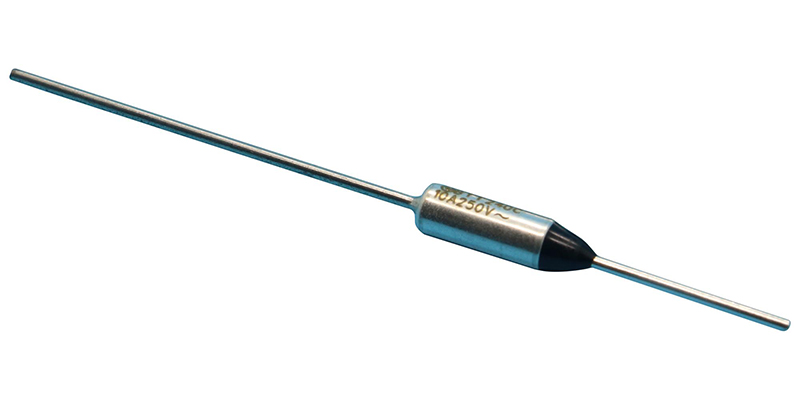
In contemporary vehicles, electronic control units, battery management modules, inverters, and on-board chargers all rely on precise thermal protection. A long-service-life thermal fuse acts as a permanently switching safety device that interrupts the circuit once a defined temperature threshold is exceeded. Compared with conventional fuses that may fatigue under repeated thermal stress, extended-life designs maintain stable opening characteristics over many years of operation. This stability is crucial in high-density automotive environments where ambient temperatures fluctuate and components face vibration, load cycling, and transient overloads, especially in hybrid and electric platforms.
Key Performance Advantages and Design Features
The long-service-life thermal fuse typically adopts a compact, hermetically sealed structure, using high-purity metals and calibrated organic pellets to ensure predictable trip temperatures. Tight tolerance of opening temperature supports accurate coordination with MOSFETs, IGBTs, and other semiconductor protection schemes. Low internal resistance minimizes power loss and heat rise during normal operation, which helps increase system efficiency and reduce thermal stress on surrounding components. High surge withstand capability and mechanical robustness against shock and vibration extend service life, reducing nuisance openings and preventing premature failure in harsh vehicle environments.
Vehicle Application Scenarios and System Integration
In powertrain applications, the fuse can be installed near traction inverters or DC-link capacitors to guard against overheating caused by cooling system degradation or abnormal switching conditions. In battery packs and charging units, it provides last-resort thermal protection in case of cell runaway, connector failure, or overcurrent events that generate excessive heat. Body electronics benefit as well, especially in seat heaters, HVAC blowers, LED lighting modules, and ADAS control units where compact protection is required. Designers can integrate the fuse into PCB assemblies, busbar modules, or harness connectors, enabling straightforward replacement during service while preserving the integrity of the vehicle wiring architecture.
Impact on Maintenance, Cost, and Regulatory Compliance
Adopting a long-service-life thermal fuse helps OEMs and fleet operators reduce maintenance intervals by lowering the frequency of component replacement and associated labor. Stable performance over the vehicle lifetime supports warranty targets and total cost of ownership goals. Compliance with AEC-Q200, RoHS, and relevant ISO standards strengthens the safety case for EV and ICE platforms aiming to meet stringent regulatory requirements. By curbing thermal incidents early, the fuse helps prevent damage to high-value assemblies, mitigates fire risk, and supports cybersecurity efforts by ensuring that thermal faults do not compromise critical electronic control systems.
Common Questions About Long-Service-Life Thermal Fuses
1. How does a long-service-life thermal fuse differ from a standard fuse?
A long-service-life thermal fuse offers tighter temperature tolerances, enhanced vibration resistance, and extended endurance under repeated thermal cycling, which significantly reduces unintended openings and replacement frequency in vehicle electronics.
2. Where is this type of fuse typically installed in a vehicle?
It is commonly installed in battery packs, on-board chargers, DC/DC converters, traction inverters, and high-density control units, providing precise overtemperature protection in locations where thermal runaway would cause serious damage.
3. What should engineers consider when selecting a thermal fuse for automotive use?
Engineers should evaluate opening temperature, current rating, surge capability, environmental qualifications such as AEC-Q, package size, and integration options that match the thermal profile and safety requirements of the specific vehicle subsystem.