Low‑Profile Thermal Fuse Design Enabling High‑Density Vehicle Electrical Protection
News 2025-11-27
Low-profile-size thermal fuses are becoming a key safety component in modern vehicles, where space is restricted yet power density keeps rising. As wiring harnesses, junction boxes, and battery-management modules shrink, engineers need overtemperature protection that fits into narrow gaps while still meeting stringent automotive standards. A compact, surface-mountable thermal fuse helps designers protect control units, LED lighting, infotainment systems, and electrified powertrain circuits without redesigning surrounding mechanical structures.
Compact Form Factor For Tight Electrical Spaces
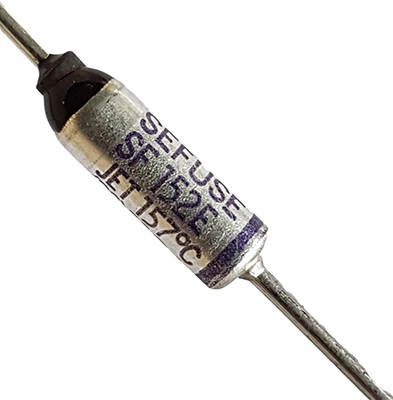
A low-profile thermal fuse typically features a flat body height of only a few millimeters, enabling placement under low covers, inside slim lamp housings, or beneath densely populated printed circuit boards. The reduced footprint supports high component density in junction boxes and distribution panels mounted in instrument clusters or door modules. This geometry minimizes shadowing during PCB assembly, eases automated optical inspection, and supports short trace routing, which lowers parasitic resistance and improves thermal response consistency across the board area.
Performance Characteristics And Safety Behavior
Although small in size, the fuse must sustain automotive vibration, humidity, and temperature cycling while maintaining predictable opening characteristics. Typical devices specify precise opening temperatures, narrow tolerance bands, and defined holding currents to avoid nuisance tripping under transient load peaks. Fast thermal coupling between the protected conductor and the fusible element ensures rapid interruption under overheating fault conditions. High interrupt ratings allow the component to break elevated automotive currents in 12 V, 24 V, and increasingly 48 V systems without arcing damage to neighboring circuitry or connectors.
Automotive Application Scenarios And Integration
The low-profile design suits thermal protection in LED headlamps, cabin light engines, seat heaters, steering-wheel heaters, and wireless charging pads, where internal clearances are extremely limited. In battery-management systems and DC/DC converter modules, these fuses act as a last line of defense against thermal runaway when cooling paths are partially obstructed. Designers can mount them directly on PCB copper planes near power MOSFETs, shunt resistors, and high-current traces, improving detection of localized hot spots and enabling more accurate coordination with electronic overcurrent protection such as smart high-side switches.
Benefits For System Efficiency And Compliance
The combination of small footprint, low height, and accurate trip behavior simplifies compliance with ISO and OEM-specific safety requirements while leaving room in the enclosure for added functionality. Reduced component mass improves shock resistance and long-term reliability. The low-profile thermal fuse also supports streamlined harness architecture: by placing compact protection closer to the load, engineers can shorten cable runs and reduce copper usage, which translates into lower vehicle weight and improved fuel or energy efficiency. These characteristics make the component attractive for both traditional and electrified platforms.
Quick Questions And Answers
1Where is a low-profile thermal fuse typically installed in a vehicle electrical system?
It is commonly placed on PCBs in junction boxes, LED modules, BMS boards, and local load controllers where space is tightly constrained and direct thermal coupling to hot components is required.
2How does the compact size influence design flexibility?
The reduced height and footprint allow protection to be integrated very close to heat sources, enabling higher circuit density, easier routing, and smaller enclosure dimensions without sacrificing safety margins.
3Can these fuses support higher-voltage architectures such as 48 V?
Yes, many low-profile automotive thermal fuses are qualified to interrupt fault currents in 12 V, 24 V, and 48 V networks, provided the correct voltage and interrupt rating is selected during the design phase.