Low-Profile Thermal Fuse Optimizes Space in Compact Vehicle Electrical Modules and Harness Nodes
News 2025-11-27
Thermal protection has become a key enabler of downsizing in modern automotive electronics. As control units migrate into tighter locations inside dashboards, door panels, seat modules, and battery junction boxes, every millimeter of height inside the housing matters. A low-profile thermal fuse helps engineers meet strict packaging constraints while maintaining dependable overtemperature protection for wiring, connectors, and semiconductor devices subjected to increasingly high current densities.
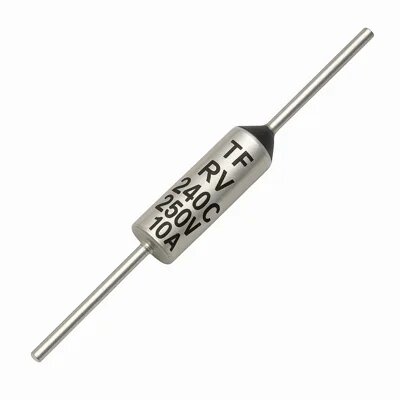
Space-Saving Design for Dense Automotive Modules
Low-profile thermal fuses are engineered with reduced height and minimal footprint so they can be integrated on crowded printed circuit boards or placed directly in harness connectors. This geometry supports ultra-flat body control modules, compact LED lighting drivers, and slim infotainment units mounted behind display panels. The reduced component height improves airflow paths and allows closer stacking of adjacent boards or mechanical parts, enabling slimmer housings without sacrificing safety margins.
Performance Characteristics and Protection Behavior
These fuses typically use a precisely formulated alloy or organic pellet that opens the circuit when a defined temperature threshold is reached. The response combines temperature sensitivity and current load, allowing protection against both overloads and abnormal ambient heating. Key parameters include rated current, opening temperature, maximum interrupting current, and insulation resistance after operation. Stable calibration over the vehicle lifetime supports consistent trip behavior despite vibration, thermal cycling, and long-term aging in under‑hood and in‑cabin locations.
Application Scenarios in Next-Generation Vehicles
Low-profile thermal fuses are widely used in seat heater control, HVAC blowers, mirror defoggers, steering wheel heaters, and window lifter modules where compact actuators and tight trim panels constrain design freedom. In high-voltage hybrid and battery electric platforms, they can be integrated into cell balancing boards, on-board chargers, and DC‑DC converters to protect against localized overheating of power MOSFETs, transformers, and shunt resistors. Their flat form factor supports modular junction boxes and harness nodes that must fit close to battery packs or within narrow structural cavities.
Advantages Over Traditional Overcurrent Protection
Compared with conventional fuses and resettable devices, a low-profile thermal fuse offers targeted temperature-triggered disconnection, improving protection where thermal runaway is the primary concern. The single-shot mechanism eliminates nuisance resets and locks the circuit in a safe open state until service. Low resistance minimizes power loss and heat generation during normal use, helping engineers meet stringent efficiency and thermal budgets. The mechanical simplicity of the component enables cost-effective, high-volume integration in standardized footprints suitable for automotive manufacturing.
1, How does a low-profile thermal fuse improve automotive module miniaturization?
By reducing component height and footprint, it frees vertical space inside compact housings, allowing designers to use thinner control units and stack more functionality into the same installation envelope while preserving thermal protection.
2, Where is this type of thermal fuse typically installed in vehicles?
It is commonly mounted on PCBs inside body control modules, seat and door controllers, LED drivers, battery junction boxes, and high-voltage converter boards, as well as embedded in connector or harness assemblies.
3, What key parameters should engineers check when selecting a thermal fuse?
Engineers should evaluate opening temperature, rated current, interrupting capability, resistance, package dimensions, and compliance with relevant automotive standards to ensure safe operation over the full mission profile.