Precision Calibration Thermal Fuses That Ensure Accurate Temperature Trigger Points in Demanding Electronics
News 2025-11-27
Precision-calibration thermal fuses play a decisive role in safeguarding modern electronic systems where tight thermal margins define performance, lifetime, and safety. Unlike generic cutoffs that respond to broad temperature ranges, these components are engineered to open the circuit at highly controlled trigger points. This accuracy protects batteries, power supplies, chargers, lighting systems, and industrial control boards from overheating, while helping designers meet stringent regulatory and warranty requirements.
Working Principle and Design Characteristics
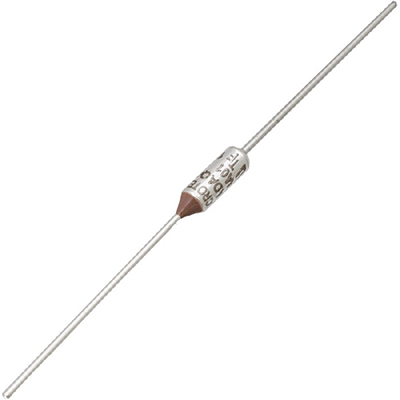
A precision-calibration thermal fuse contains a temperature-sensitive alloy or organic pellet that melts or deforms at a predetermined temperature. When the trigger point is reached, the internal mechanism separates the contacts and permanently interrupts current flow. The calibration process tightly controls the melting characteristics, resulting in narrow tolerance bands such as ±3 °C around the rated temperature. Low internal resistance, compact package sizes, and compatibility with standard soldering profiles make these fuses ideal for dense PCB layouts in consumer, automotive, and industrial applications.
Key Performance Advantages in Real-World Systems
Accurate trigger points directly translate into predictable protection behavior across a wide population of devices. Engineers can select specific opening temperatures that match the thermal profile of MOSFETs, IGBTs, lithium-ion cells, and magnetic components, preventing nuisance trips while avoiding thermal overstress. High interrupt ratings support use in AC and DC mains equipment such as power adapters and LED drivers. Stable characteristics over time, low leakage, and robust mechanical construction improve long-term stability, reducing field failures and lowering total cost of ownership for OEMs.
Application Scenarios in Power, Battery, and Lighting Systems
In battery packs for tools, e-bikes, and energy storage modules, precision-calibration thermal fuses protect against runaway conditions triggered by charging faults or cell imbalance. Power supplies and adapters rely on them as a secondary overtemperature safeguard in addition to electronic monitoring, ensuring safe shutdown when airflow is blocked or ambient temperature rises unexpectedly. LED lighting engines use precise fuses near driver ICs and current regulators to prevent damage in compact, sealed luminaires where heat buildup is difficult to dissipate. HVAC controls, white goods, and smart meters also benefit from accurate temperature cutoffs that align closely with component ratings and safety standards.
Selection, Integration, and Compliance Considerations
When selecting a precision-calibration thermal fuse, engineers evaluate rated opening temperature, tolerance, holding temperature, and maximum continuous current. PCB placement should consider airflow, nearby heat sources, and thermal coupling to critical components so that the fuse senses the most relevant temperature. Coordination with other protection elements such as PTC thermistors, NTC sensors, and electronic controllers yields layered safety. Compliance with UL, VDE, and IEC standards supports global certification efforts and improves search visibility, as terms related to safety approval, accurate temperature cutoff, and overtemperature protection remain key SEO drivers in component sourcing platforms.
1, How does a precision-calibration thermal fuse differ from a standard thermal cutoff?
A precision-calibration thermal fuse offers much tighter temperature tolerances, enabling highly predictable opening points that align closely with component ratings and system safety limits.
2, Where are precision-calibration thermal fuses most commonly used?
They are widely used in battery packs, power adapters, LED drivers, home appliances, HVAC controls, and industrial control boards that require accurate and permanent overtemperature protection.
3, Can these fuses replace electronic temperature monitoring circuits?
They are typically used as a complementary safety layer, providing a fail-safe mechanical cutoff even if sensors, firmware, or control logic malfunction.