Safety-First Thermal Fuse Technology Enhancing Electrical Fire Protection
News 2025-11-27
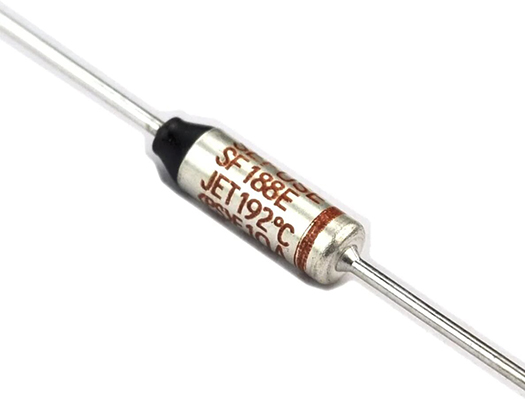
Safety-first thermal fuses are key protective components in modern electrical and electronic systems, designed to interrupt dangerous overtemperature conditions before they escalate into electrical fires. Unlike resettable protectors, a thermal fuse performs a one-time, permanent disconnection when its calibrated temperature threshold is exceeded, creating a fail-safe open circuit. This irreversible action is especially valuable where human access is limited, ambient temperatures vary, and regulatory standards demand predictable, documented responses to overheating.
Working Principle and Core Performance Features
A safety-first thermal fuse contains a temperature-sensitive pellet or alloy that changes state when a defined cutoff temperature is reached. The change causes internal contacts to separate, breaking the circuit instantly. Key performance metrics include rated functioning temperature (Tf), holding temperature, maximum temperature limit, and rated current and voltage. High-quality thermal fuses maintain tight tolerance on Tf, low internal resistance, and minimal self-heating even at the upper end of their current rating. This combination delivers fast, accurate thermal response while preserving normal operation under everyday load and minor transient conditions.
Fire-Risk Application Scenarios in Household and Office Equipment
In household appliances, thermal fuses are widely integrated into coffee makers, hair dryers, rice cookers, heaters, and clothes dryers, where heating elements and insulation materials can reach combustible temperatures. When ventilation is blocked or control electronics fail, the fuse senses abnormal temperature rise and isolates the circuit before plastic housings or adjacent components ignite. In office and commercial settings, thermal fuses protect printers, copiers, power strips, LED drivers, and external power adapters. Manufacturers use them to meet UL, IEC, and EN safety requirements, reduce product liability, and enhance the fire safety profile of devices installed in dense, unattended environments.
Industrial, Automotive, and Battery System Deployment
In industrial control cabinets and power supplies, safety-first thermal fuses help mitigate overheating near high-density power semiconductors, transformers, and PCB-mounted resistors. They provide a final layer of protection when cooling fans fail or airflow paths become obstructed. In automotive electronics, they appear in seat heaters, blower motors, and DC-DC converters where confined spaces and vibration heighten thermal risk. Battery packs for tools, e-bikes, and energy storage systems frequently integrate thermal fuses near cells or busbars; when runaway temperatures occur, the fuse interrupts current flow and limits propagation, supporting compliance with battery safety standards and transportation regulations.
Selection, Integration, and Performance Advantages
Engineers select thermal fuses by matching Tf to the maximum safe temperature of the protected component, leaving adequate margin above normal operating conditions. Proper mounting is critical: good thermal coupling to the hotspot, avoidance of direct soldering heat damage, and adherence to creepage and clearance distances. Compared to thermal switches or electronic protection alone, safety-first thermal fuses offer a simple structure, no standby power consumption, immunity to software faults, and predictable end-of-life behavior. These performance advantages make them highly attractive in cost-sensitive designs that nevertheless must satisfy strict fire safety, energy-efficiency labeling, and long-term reliability targets.
1, What triggers a safety-first thermal fuse?
The fuse operates when its internal element reaches a predefined temperature, causing the contacts to open and permanently disconnect the circuit.
2, Can a thermal fuse replace electronic overcurrent protection?
It complements rather than replaces electronic protection, handling dangerous thermal faults and control failures that current-based protection might miss.
3, Where should designers place thermal fuses in a circuit?
They should be mounted close to the primary heat source or potential ignition point, ensuring fast, accurate sensing of real component temperature.