Upgrades To Fuse Box Designs That Cut Short Circuit Hazards In Modern Systems
News 2025-12-22
Modern electrical systems carry higher loads, tighter packaging, and more sensitive electronics than older installations. Traditional fuse boxes often struggle under these conditions, increasing the likelihood of overheating, arcing, and short circuits. Upgrading the fuse box is no longer only a matter of convenience; it has become a targeted strategy to protect high‑value equipment, maintain uptime, and comply with stricter safety standards in industrial, commercial, and demanding residential environments.
High‑rupturing capacity fuses and coordinated ratings
Replacing outdated fuses with high‑rupturing capacity (HRC) types raises the breaking capacity of the system, preventing catastrophic failure when a short circuit occurs. When combined with properly coordinated fuse ratings, upstream and downstream devices operate selectively: only the closest fuse to the fault opens, while the rest of the network remains energized. This selective coordination is vital in production lines, data centers, and building automation panels where segment isolation and continuity of service are key performance metrics.
Thermal management, contact quality, and enclosure upgrades
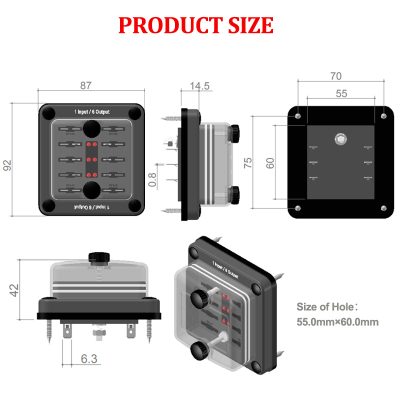
Modern fuse boxes now integrate copper busbars with low contact resistance, spring‑loaded terminals, and plated surfaces that limit hot spots. Adding heat‑resistant insulation and using enclosures rated for higher ambient temperatures reduce the chance of insulation breakdown leading to short circuits. DIN‑rail modular fuse holders, combined with IP‑rated metal or engineered‑plastic housings, create robust assemblies ideal for EV charging cabinets, photovoltaic combiner boxes, and motion‑control racks exposed to continuous duty cycles.
Monitoring, indicators, and smart protection modules
Upgraded fuse boxes often incorporate blown‑fuse indicators, current sensors, and even communication‑enabled modules. Local LEDs allow technicians to locate a faulted circuit within seconds, reducing troubleshooting time that might otherwise involve live probing. Smart modules can track load profiles, detect abnormal inrush currents, and send alarms over industrial networks, enabling predictive maintenance. In applications such as process control or telecom power distribution, this monitoring capability reduces nuisance trips and helps engineers optimize fuse sizing while still limiting short circuit energy.
Installation practices, standards compliance, and serviceability
Well‑engineered fuse box upgrades go hand in hand with optimized wiring routes, proper torqueing of terminals, and adherence to IEC and NEC requirements. Clear circuit labeling and segregated low‑voltage and control sections improve serviceability and minimize wiring mistakes that often cause shorts. Quick‑release fuse carriers and touch‑safe designs let operators replace protection elements without exposing live parts, a critical factor in machine panels, elevator controllers, and HVAC units operating in public or semi‑public spaces.
1What applications benefit most from upgraded fuse boxes?
Industrial automation lines, data centers, EV charging infrastructure, solar combiner panels, and high‑density residential switchboards gain the largest safety and uptime advantages.
2How do smarter fuse modules reduce short circuit risks?
They track load behavior, flag abnormal current spikes, and support predictive maintenance, allowing timely adjustments before a fault escalates into a short circuit event.
3Why is selective coordination important in fuse box design?
It ensures only the fuse nearest the fault opens, preserving power to unaffected circuits and protecting sensitive equipment from unnecessary interruptions.