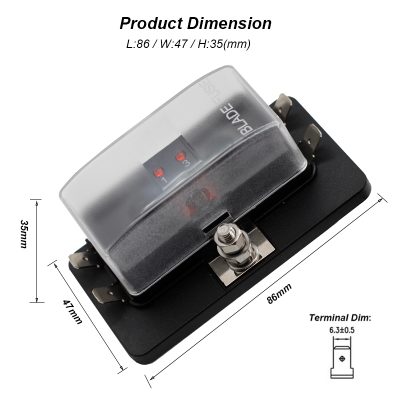
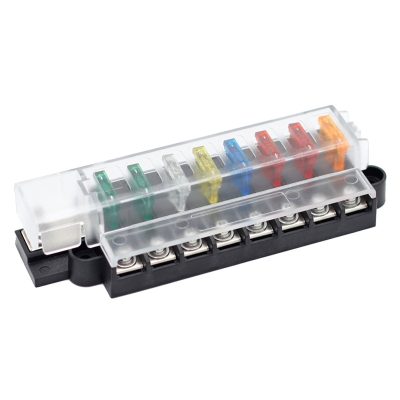
Voltage Fluctuation Effects On Fuse Box Internal Components In Modern Systems
News 2025-12-22
Voltage fluctuation is a major stress factor in modern electrical and electronic installations, from residential distribution boards to complex industrial control cabinets and EV charging infrastructure. Within a fuse box, internal components such as fuses, miniature circuit breakers (MCBs), busbars, contact terminals, surge protective devices (SPDs), and monitoring modules must function consistently under rapidly changing line conditions. Unstable supply can accelerate aging, reduce safety margins, and compromise system availability, making careful selection and design of components a priority in high‑performance applications.
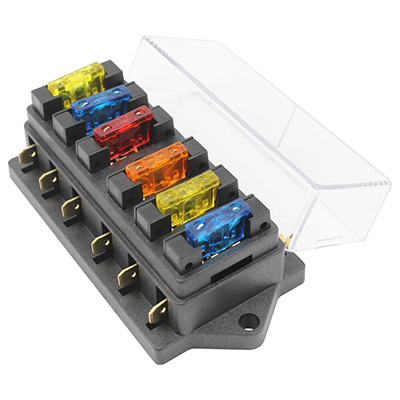
Impact On Overcurrent Protection Devices
Voltage swings change current profiles across fuse links and breaker mechanisms. During sags, motors and power supplies may draw inrush currents for longer periods, increasing thermal loading on fuse elements and MCB bimetals. During swells, the let‑through energy during short‑circuits can exceed design expectations, stressing arc chambers and contacts. High‑quality fuses and breakers use optimized alloys, calibrated trip curves, and arc‑quenching geometries to handle repetitive fluctuations without nuisance tripping, making them suitable for mission‑critical scenarios such as data centers, telecom base stations, and automated process lines.
Effects On Busbars, Terminals, And Insulation
Irregular voltage can drive cyclic heating of busbars, terminal lugs, and PCB traces inside compact fuse boxes. Repeated expansion and contraction loosen connections over time, raising contact resistance and creating hot spots that can lead to discoloration, insulation breakdown, or even fire risk. Components engineered for high-conductivity, low-loss performance, combined with robust plating and heat-resistant insulation materials, sustain stable operation under fluctuating load conditions. In building distribution panels and OEM machinery enclosures, this translates into lower maintenance frequency, more predictable thermal profiles, and improved long-term electrical safety.
Role Of Surge Protection And Monitoring Modules
Voltage fluctuation often includes transient spikes from switching operations, lightning events, or harmonics injected by non-linear loads such as drives and LED drivers. Integrated SPDs, voltage relays, and metering modules inside the fuse box play a key role in absorbing or isolating these disturbances before they propagate downstream. High-performance SPDs use fast-response MOV or combined MOV/TVS architectures, coordinated with fuses or MCBs to prevent thermal runaway. When paired with digital meters and communication interfaces, the fuse box becomes a monitoring node capable of logging sags, swells, and surge counts, supporting predictive maintenance in smart buildings, photovoltaic arrays, and industrial IoT environments.
Design Strategies To Enhance Performance Under Fluctuation
Engineers can mitigate the negative effects of voltage fluctuation by specifying components with suitable voltage ratings, breaking capacities, and pollution categories, and by applying selective coordination between upstream and downstream devices. Thermal management is equally important; adequate spacing, ventilation paths, and derating policies keep internal temperatures within the component design window. Fuse boxes tailored to EV charging parks, microgrid systems, and factory automation often feature modular rails, plug-in protection cartridges, and configurable SPD stages, delivering scalable performance and faster field replacement, which reduces downtime and service costs.
Application Scenarios And Performance Advantages
In smart commercial buildings, stable operation of HVAC drives, lighting controllers, and access systems depends on fuse boxes that can ride through frequent grid disturbances. In renewable energy plants, fluctuating generation and inverter switching stress every protective and conductive element in the distribution path. By using high-end components rated for wide voltage tolerance, low power dissipation, and high mechanical endurance, system designers gain tangible advantages: fewer false trips, extended service life, higher energy efficiency, and improved uptime metrics. These benefits directly support SEO-relevant topics such as electrical safety, power quality optimization, and cost-effective maintenance in professional installations.
1Voltage fluctuation damage indicators
Discoloration of terminals, frequent fuse operation, and unusual breaker trips often signal that internal components are suffering from repeated voltage swings.
2Best components to handle unstable supply
Select fuses and MCBs with appropriate voltage ratings, high breaking capacity, certified SPDs, and terminals designed for low contact resistance and high thermal stability.
3When to upgrade an existing fuse box
Upgrade is advisable when load profiles have changed, new sensitive equipment is added, or monitoring shows recurring sags, swells, or surge events that exceed original design assumptions.