Weather-Resistant Thermal Fuse Enables Safe Operation Across Extreme Temperature Ranges
News 2025-11-27
Weather-Resistant Thermal Fuse Performs Reliably in Extreme Temperature Conditions
Robust Design for Harsh Outdoor and Industrial Environments
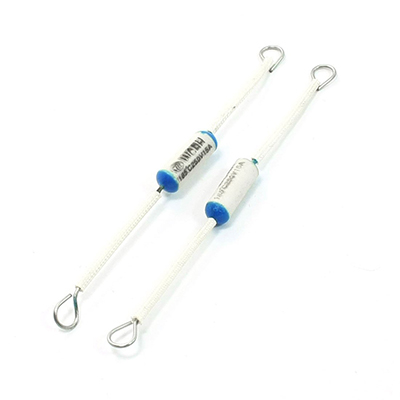
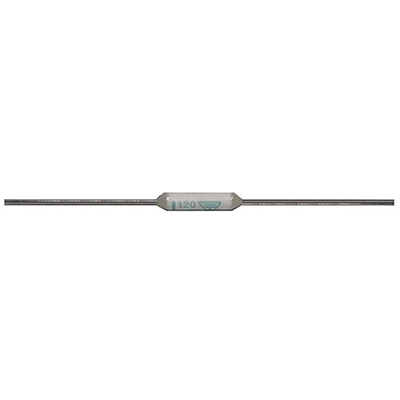
A weather-resistant thermal fuse is engineered to interrupt current once a predefined temperature threshold is exceeded, even when exposed to moisture, dust, or rapid temperature swings. Encapsulated housings, sealed terminals, and corrosion-resistant lead materials help maintain insulation resistance under rain, salt spray, and high humidity. In outdoor power supplies, street lighting, traffic control cabinets, and photovoltaic combiner boxes, the device prevents overheating of transformers and control electronics. In heavy-duty industrial machinery, it supports long service intervals by maintaining a stable cut-off point despite repeated heating and cooling cycles.
Stable Performance Across Extreme Temperature Conditions
The core advantage of this thermal fuse lies in its predictable trip temperature over a wide ambient range, often from −40 °C up to 125 °C or higher. The sensing pellet and internal spring components are formulated to resist thermal aging, ensuring that the opening temperature remains within a narrow tolerance window after long field exposure. This stability is crucial in motor windings, battery packs, EV charging modules, and power inverters, where local hot spots can arise suddenly. Engineered creepage distances and insulation coordination support compliance with international safety standards such as IEC and UL, which is important for global certification and market entry.
Application Scenarios in Power, Mobility, and Smart Infrastructure
In solar inverters and energy storage systems, the fuse provides a last line of defense against abnormal heating caused by blocked airflow, dust accumulation, or partial component failures. Telecom base stations and remote sensor nodes benefit from its compact size, allowing integration close to heat sources such as DC-DC converters. In e-mobility chargers and on-board charging units, the device prevents thermal runaway in dense power modules exposed to road spray and temperature cycling. HVAC equipment, heat pumps, and outdoor LED drivers use the same fuse technology to maintain safety while meeting strict efficiency and lifetime targets.
Key Performance Benefits and Design Considerations
Compared with standard indoor-only thermal fuses, weather-resistant variants offer improved sealing, higher mechanical strength, and reduced drift of the opening temperature under prolonged stress. Low internal resistance minimizes self-heating and power loss, which supports high-efficiency designs. Engineers should select the rated functioning temperature and holding temperature based on worst-case ambient conditions and maximum load current. Proper placement in direct thermal contact with the risk component, combined with accurate thermal modelling, ensures that the fuse responds quickly to abnormal conditions yet avoids nuisance tripping during normal peaks.
FAQ: Weather-Resistant Thermal Fuse in Real Projects
1What types of equipment benefit most from a weather-resistant thermal fuse?
Outdoor power supplies, LED lighting drivers, EV charging infrastructure, solar inverters, and industrial control panels benefit significantly, especially where moisture, dust, or large temperature swings are expected.
2How does this fuse improve safety compared to a standard fuse?
A standard fuse reacts mainly to excessive current, while a weather-resistant thermal fuse responds directly to temperature, shutting down the circuit when components overheat even if the current remains within the normal range.
3What should designers check before selecting a specific model?
Designers should confirm the rated functioning temperature, maximum operating voltage, current rating, insulation class, environmental sealing level, and applicable safety approvals such as UL, VDE, or IEC.