Backup Camera Fuse Safeguards Modern Reversing Systems and Display Modules
News 2025-11-17
A backup camera fuse is a small yet decisive component within modern automotive electronics. By protecting the camera module, display head unit, and associated harnesses, it prevents electrical faults from escalating into costly damage or safety hazards. As vehicles integrate parking sensors, panoramic views, and driver-assistance overlays, a correctly specified fuse ensures consistent performance of these vision systems while meeting stringent automotive safety and EMC regulations.
Role of the Backup Camera Fuse in Vehicle Architectures
The backup camera circuit typically taps into the reverse-lamp or body-control module output, routing power to the camera and the infotainment display input. The fuse serves as a defined weak link that opens when current exceeds its rating, protecting sensitive CMOS image sensors, video encoders, and LVDS links from short circuits or wiring damage. By isolating faults, the fuse helps maintain the integrity of the broader 12 V distribution network and reduces the risk of wiring harness overheating, connector burn, or cascading failures in adjacent systems such as lighting or ADAS controllers.
Key Performance Characteristics and Selection Criteria
Selecting an appropriate backup camera fuse requires attention to several parameters. Rated current must exceed the steady-state load of the camera and display electronics while accommodating inrush currents from display backlights and voltage regulators. Proper interrupt rating and voltage rating are vital to safely clear faults in both traditional 12 V systems and emerging 48 V architectures. Time-current characteristics determine response speed to overloads; fast-acting fuses offer rapid protection for delicate semiconductor devices, while time-delay variants tolerate brief surges during start-up. Additional considerations include low temperature derating, vibration resistance, and compliance with automotive standards such as AEC-Q200 and ISO 16750.
Application Scenarios in OEM and Aftermarket Systems
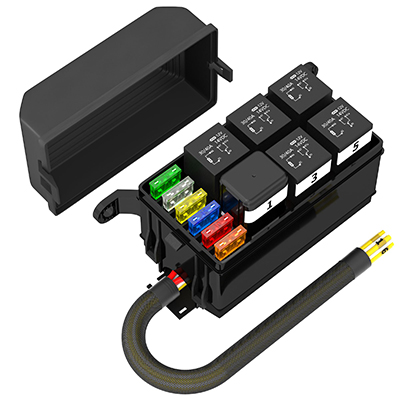
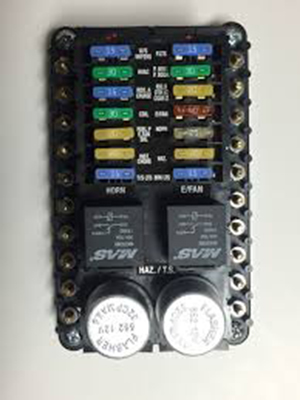
Backup camera fuses are deployed across factory-installed head units, standalone display mirrors, and aftermarket retrofit kits. In OEM systems, they are often placed inside junction boxes or integrated fuse blocks, enabling centralized protection and simplified service procedures. In aftermarket installations, inline blade or mini-blade fuse holders are commonly used to protect add-on harnesses connected to tail lamps or accessory power. Commercial vehicles, delivery fleets, and buses rely on correctly fused multi-camera systems for rear and side visibility, reducing accident rates in tight urban environments. Specialized off-highway equipment and agricultural machinery also use dedicated camera fusing to maintain visibility in harsh conditions where cable abrasion and moisture ingress are common.
Advantages in Safety, Serviceability, and System Reliability
A well-engineered fuse strategy for backup cameras delivers clear performance benefits. It enhances safety by preventing thermal damage and preserving consistent image quality when drivers shift into reverse. From a maintenance perspective, a blown fuse provides a simple diagnostic indicator; technicians can quickly isolate a faulted camera or chafed cable without extensive teardown. The low cost of fuses compared to head units, harnesses, or camera assemblies makes them an effective safeguard that lowers total lifecycle cost. For OEMs and system integrators, robust fusing supports warranty reduction targets and increases customer satisfaction by reducing field failures related to parking-assist functions.
FAQs on Backup Camera Fuse Protection
1. Where is the backup camera fuse usually located?
It is typically found in the main cabin or engine-bay fuse box, often labeled for reverse camera, infotainment, or rear vision; aftermarket kits may use an inline holder near the tap-in point.
2. What symptoms indicate a blown backup camera fuse?
Common signs include a black or blue screen when shifting into reverse, intermittent image loss, or a camera error message on the display while other infotainment functions continue to operate normally.
3. Can a higher-rated fuse be installed to prevent repeated blowing?
Using a larger rating is not recommended, because it can mask underlying faults and expose wiring and electronics to excessive current; the proper solution is to identify the root cause and retain the specified fuse rating.