Consistent-Reliability Thermal Fuse Ensures Stable Overtemperature Protection Across Diverse Electronics
News 2025-11-27
Consistent-Reliability Thermal Fuse Delivers Stable Protection Across Applications
Stable Overtemperature Cutoff for Modern Electronics
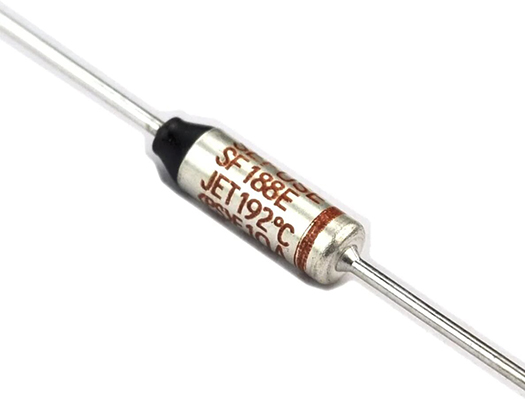
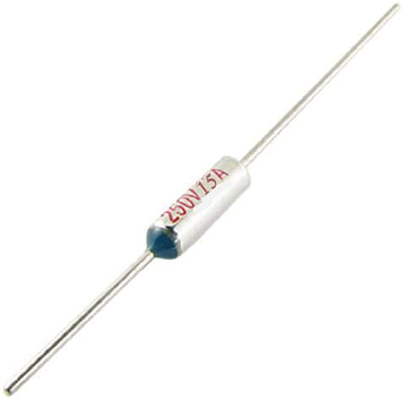
A thermal fuse using a consistent-reliability design provides a single-use, precisely calibrated cutoff point that disconnects power when abnormal heat occurs. Unlike resettable devices, it permanently opens the circuit once its rated temperature is reached, preventing insulation damage, component drift, or fire hazards. Its compact structure and low series resistance make it suitable for high-density boards where thermal behavior must be predictable. Manufacturers favor this fuse in safety-related designs, as it satisfies international standards and supports compliance in consumer, industrial, and medical electronics.
Key Performance Benefits and Safety Characteristics
The main advantage lies in tight opening-temperature tolerance and long-term stability under normal operating loads. Low contact resistance reduces self-heating, helping maintain accurate trip points even in confined enclosures. Robust internal construction resists surge currents and mechanical shock during assembly and transport. The fuse body typically uses heat-resistant resin or ceramic, ensuring insulation integrity after activation. These characteristics reduce nuisance activations while still reacting quickly when a fault causes overheating, supporting strong product reliability records and fewer field failures.
Application Scenarios Across Consumer and Industrial Systems
This thermal fuse is widely applied in switching power supplies, battery packs, LED drivers, coffee machines, hair dryers, and HVAC controllers. In power adapters and chargers, it protects against transformer insulation breakdown or blocked airflow. In lithium battery modules, it acts as a last line of defense when charging circuitry fails and temperature rises beyond design limits. Motors, pumps, and compressors use the device to guard stator windings and plastic housings from thermal stress. Designers also place it near heating elements in printers or small appliances to assure safe shutdown if thermostats or control ICs malfunction.
Design Integration, Selection, and Compliance Considerations
Engineers select a fuse temperature rating slightly above maximum normal operating temperature but below levels that may damage surrounding materials. Correct positioning on the PCB or near heat sources is critical, as poor thermal coupling can delay operation. Matching the rated current, voltage, and breaking capacity to worst-case fault scenarios avoids arcing during disconnection. Devices are available in axial leaded, radial, and compact micro types to suit automated assembly lines. Compliance with standards such as UL, TÜV, and IEC helps end products pass regulatory tests in global markets, while consistent batch performance simplifies qualification.
Three Common Questions About Thermal Fuse Deployment
11. Where is a consistent-reliability thermal fuse most effective?
It is most effective where overheating can rapidly damage insulation or flammable materials, such as inside compact AC adapters, battery packs, or household appliances that run unattended for long periods.
22. How does it differ from a resettable thermal protector?
A resettable protector re-closes after cooling, while a thermal fuse opens only once. The one-time action ensures a permanent interruption after severe faults, which is often required by safety standards.
33. What factors matter most when choosing a rating?
Key factors include maximum normal operating temperature, ambient conditions inside the enclosure, expected inrush and steady-state current, and the safety margin needed to protect nearby plastics, windings, and PCB materials.