Heat-Resistant Fuse High-Temperature Tolerance Suits Engine Bay Locations And Demanding Circuits
News 2025-11-17
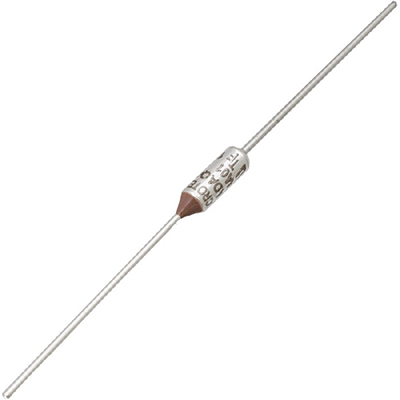
Heat-resistant fuses are purpose-built overcurrent protection components engineered to withstand the thermal stress found in engine bays and other harsh automotive compartments. Unlike standard fuses intended for cabin or low-temperature environments, these parts maintain stable electrical characteristics while exposed to continuous radiant heat, vibration, and transient high-temperature spikes. Their role is to protect wiring harnesses, ECUs, sensors, and power distribution units from excessive current, even when installed inches away from combustion engines or turbochargers.
Key Applications In Engine Bay Environments
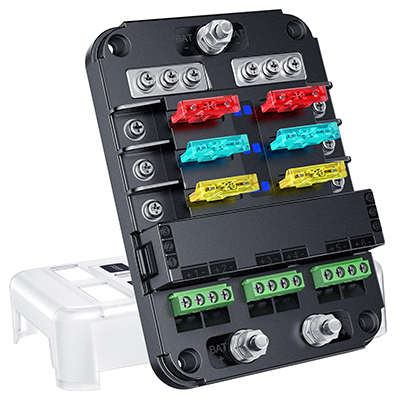
Heat-resistant fuses are widely deployed in passenger vehicles, commercial trucks, construction machinery, and agricultural equipment. Typical locations include engine control modules, starter and alternator circuits, ABS and ESC systems, electric cooling fans, and under-hood power distribution centers. These circuits often experience elevated ambient temperatures exceeding 125°C, along with hot-spot areas near exhaust manifolds or EGR components. In hybrid and battery-electric platforms, high-temperature fuses protect DC/DC converters, auxiliary 12 V rails, and thermal management pumps, where packaging constraints force the fuse block into tight engine bay spaces.
Performance Advantages And Design Characteristics
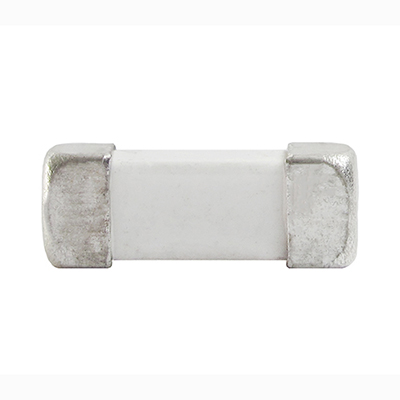
The most notable advantage of a heat-resistant fuse is its ability to maintain consistent time-current behavior across a wide temperature range. Stable operating curves help designers predict opening characteristics under normal and fault conditions, preventing nuisance blowing when ambient temperature rises sharply. High-temperature fuse elements use carefully selected alloys and plating that resist creep and premature aging, while ceramic or high-Tg thermoplastic bodies preserve mechanical strength and insulation performance. Many series carry AEC-Q200 or similar automotive qualifications, high interrupt ratings, low contact resistance, and precise current ratings, enabling use in both low-voltage and emerging 48 V vehicle architectures.
Installation Practices And Selection Considerations
When specifying heat-resistant fuses for engine bay applications, engineers must consider ambient temperature profiles, airflow, and proximity to heat sources. Derating curves provided in the datasheet should guide the selection of nominal current values so the fuse operates below its maximum temperature threshold in worst-case conditions. Mounting orientation, PCB copper area, and connector design affect heat dissipation and long-term stability. Using sealed fuse holders or IP-rated blocks protects contacts from moisture, oil, and road contaminants, further improving performance. Verification through thermal imaging, current cycling, and under-hood validation testing confirms that the chosen fuse series can tolerate real-world mechanical shock and vibration.
Safety, Compliance, And Long-Term Reliability
Heat-resistant fuses contribute directly to functional safety in modern vehicles by limiting fault energy and preventing wire insulation damage or local hotspots that could trigger ignition. Compliance with ISO, UL, and regional automotive standards supports homologation and simplifies system certification. Long-term reliability is achieved through rigorous qualification, including thermal endurance, rapid temperature cycling, and corrosion testing. Partnering with established fuse manufacturers allows design teams to access detailed application notes, SPICE models, and failure analysis support, helping optimize protection strategies over the full vehicle life.
1. What temperature range can heat-resistant fuses typically handle?
Many automotive heat-resistant fuses operate reliably in ambient temperatures from -40°C up to 150°C, with some specialty parts rated even higher depending on the package and material system.
2. Where are these fuses most often placed in a vehicle?
They are most often found in under-hood fuse boxes, engine control circuits, starter and alternator lines, cooling fan modules, and near high-power loads mounted in the engine bay.
3. How do they differ from standard cabin fuses?
Compared with cabin fuses, heat-resistant versions use higher-grade materials, tighter derating control, and more robust housings, allowing stable performance and predictable opening behavior in sustained high-temperature zones.