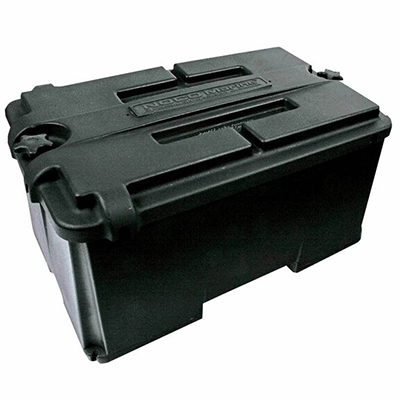
How Automotive Battery Box Ventilation Slots Improve Safety and Thermal Stability
News 2025-11-17
Automotive battery packs operate in confined spaces where heat, moisture, and gases can quickly accumulate. As energy density rises in modern electric and hybrid vehicles, the battery box must do more than provide mechanical protection; it must also manage airflow and temperature. Ventilation slots have become a key structural and thermal feature, helping engineers balance safety, performance, and packaging constraints without excessive cost or added system complexity.
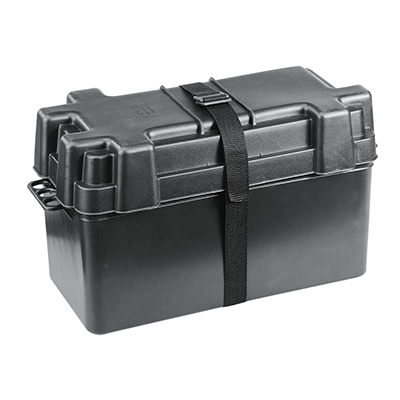
Thermal management and overheating prevention
Ventilation slots in the battery enclosure promote controlled convection, allowing warm air to escape and cooler air to enter. This airflow supports the work of active cooling systems, helping to keep cell temperatures within the optimal range for charge acceptance and cycle life. By preventing localized hot spots, properly placed slots reduce the risk of thermal runaway and slow the rate of performance degradation over time. In high-load driving or fast-charging conditions, efficient ventilation lowers temperature peaks, stabilizes internal resistance, and contributes to consistent power delivery.
Design considerations for ventilation slot geometry
Slot geometry, orientation, and distribution are carefully engineered to balance thermal performance with structural strength and ingress protection. Engineers must consider slot length, width, and spacing to achieve adequate airflow while preserving stiffness against vibration and impact. Baffles, louvers, or mesh inserts are often integrated to prevent water splash, dust, and road debris from reaching sensitive electronics. Computational fluid dynamics and finite element analysis support the design process, enabling optimization of slot positions relative to heat sources, busbars, and electronic control units inside the battery box.
Application scenarios in electric and hybrid vehicles
Ventilated battery boxes are widely used in BEVs, PHEVs, and 48 V mild-hybrid systems installed in underbody, trunk, or engine-bay locations. In underfloor packs, slots are typically positioned to align with underbody airflow, leveraging vehicle motion to enhance cooling without increasing power consumption. In engine compartments, ventilation patterns are coordinated with existing ducting and fan flow. Commercial vehicles, off-highway machinery, and stationary energy storage units also rely on similar slot concepts, adapted to harsher environments and longer duty cycles where thermal stability directly affects availability and warranty costs.
Performance advantages for safety and service life
Effective ventilation contributes to longer battery service life by reducing thermal stress on cells, busbars, and BMS components. Lower operating temperatures slow electrolyte decomposition and preserve electrode integrity, supporting higher cycle counts and more stable capacity retention. From a safety perspective, ventilation slots help disperse gases released under abnormal conditions, limiting pressure buildup inside the enclosure. This function complements pressure relief valves and flame arresters, forming a multilayer safety architecture. For OEMs and Tier-1 suppliers, optimized slot designs support compliance with automotive standards while improving charging performance, range consistency, and total cost of ownership.
1. How do ventilation slots affect battery safety?
Ventilation slots relieve heat and help vent gases, reducing the likelihood of thermal runaway propagation and excessive pressure inside the enclosure.
2. Do ventilation slots increase contamination risk?
Properly engineered slots with baffles, seals, and drainage paths maintain airflow while blocking water, dust, and debris from sensitive components.
3. Are ventilation slots needed with liquid cooling systems?
Yes, they complement liquid cooling by improving overall air circulation, stabilizing enclosure temperature, and enhancing redundancy in demanding operating conditions.