Non Toxic Material Auto Fuse Enhancing Family Vehicle Interior Safety Standards
News 2025-12-08
Non-toxic auto fuses are becoming a core requirement in modern family vehicles, where cabin safety and environmental health matter as much as crash protection. Traditional fuses may incorporate halogenated plastics or additives that release hazardous substances under high temperature or electrical fault conditions. By using non toxic material auto fuse solutions, manufacturers help reduce volatile organic compounds in the interior, protect sensitive passengers such as children and the elderly, and align with increasingly strict regulations on vehicle interior emissions.
Material Selection and Safety Compliance
Non toxic material auto fuse designs typically employ halogen-free, low-smoke thermoplastics, lead-free alloys, and RoHS compliant metal conductors. These components ensure minimal release of harmful gases during overload events, while meeting UL, IEC, and automotive-specific standards like ISO 16750 and LV 312. In a family vehicle interior, fuses are often located behind dashboards and side panels near HVAC ducts, making emissions control vital. Using eco-conscious polymers and non-brominated flame retardants helps manufacturers achieve low fogging, low odor, and low toxicity profiles that support cabin air quality targets.
Performance Under Thermal and Electrical Stress
A non toxic material auto fuse must pair environmental safety with solid electrical performance. High-precision alloy elements enable accurate current rating, consistent blow characteristics, and fast reaction to short circuits in infotainment, power seat tracks, and child safety lock actuators. Heat-resistant housings maintain mechanical stability at elevated temperatures caused by tight packaging behind instrument panels and prolonged sun exposure. Moisture, vibration, and temperature cycling are addressed through robust crimping, corrosion-resistant plating, and validated solderless terminals, giving the fuse stable resistance values and predictable time-current curves over the full vehicle lifespan.
Application Scenarios in Family Vehicle Interiors
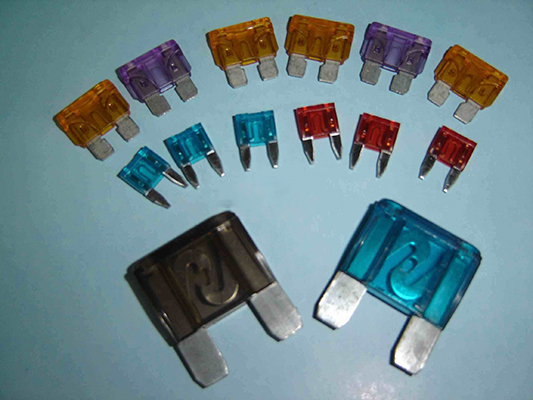
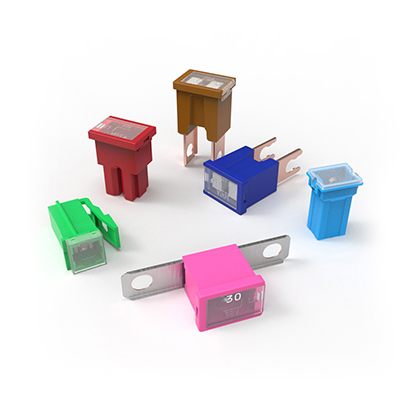
In family cars, non toxic material auto fuses protect USB charging hubs, rear entertainment systems, ambient lighting, and ADAS interface modules that sit near occupants. When a fault occurs, the fuse opens the circuit quickly, preventing wire overheating that could damage trim materials or create unpleasant odors inside the cabin. In electric and hybrid models, low-to-medium current fuses safeguard DC/DC converter auxiliary lines and low-voltage harnesses routed beneath seats and floor mats where children may rest their feet. OEMs and tier-one suppliers prefer compact blade or micro-2 style fuses that integrate seamlessly into interior fuse boxes while maintaining high interrupt ratings and non-toxic performance.
Benefits for OEMs, Regulators, and End Users
Non toxic material auto fuse technology supports marketing claims about healthy interiors and green engineering. OEMs gain an easier path to comply with VOC limits, interior emissions labels, and end-of-life recycling directives. Service technicians appreciate clearly marked, color-coded non toxic fuses that can be replaced without concern over dust or residue from degraded housings. Families benefit from lower exposure to irritants during normal operation and fault conditions, while enjoying stable operation of convenience features like climate control panels, steering wheel controls, and wireless charging pads.
1What makes a non toxic material auto fuse different?
It uses halogen-free, low-emission plastics and lead-free metals that limit harmful gas release, while still delivering accurate current protection in automotive interior circuits.
2Where are these fuses typically used in a family vehicle?
They are commonly installed in interior fuse boxes protecting infotainment units, charging ports, electronic seat systems, lighting, and low-voltage auxiliary circuits near occupants.
3Do non toxic auto fuses affect electrical performance?
No, when properly designed they meet the same or higher interrupt ratings, time-current accuracy, and thermal stability as conventional fuses while adding health and environmental benefits.