Starter Circuit Fuse Safeguards High Current Paths in Automotive Systems
News 2025-11-17
In modern vehicles the starter circuit fuse plays a strategic role in protecting high‑current wiring, the starter motor, and upstream electronic modules. During every engine start, current surges from the battery through heavy cables and electromagnetic switches. A properly specified fuse isolates faults in this demanding path, preventing cable overheating, contact welding, and destructive voltage dips that could damage control units. As vehicles adopt start‑stop systems and compact engine bays, thermal stress and current density rise, making correct fuse design and selection a key aspect of electrical architecture.
Key functions and operating principle
The starter circuit fuse is typically placed near the battery, upstream of the starter relay or integrated in a high‑current fuse block. It reacts to overloads and short circuits by melting its calibrated element, opening the circuit and stopping current flow. Under normal cranking, the fuse must withstand hundreds of amps for a few seconds without nuisance blowing. Manufacturers specify time‑current curves, voltage ratings, and interrupt capacities to match real starting profiles. Correct sizing ensures the fuse clears faults in the wiring or starter solenoid while leaving the battery and electronic control unit unharmed.
Application scenarios in automotive and off‑highway equipment
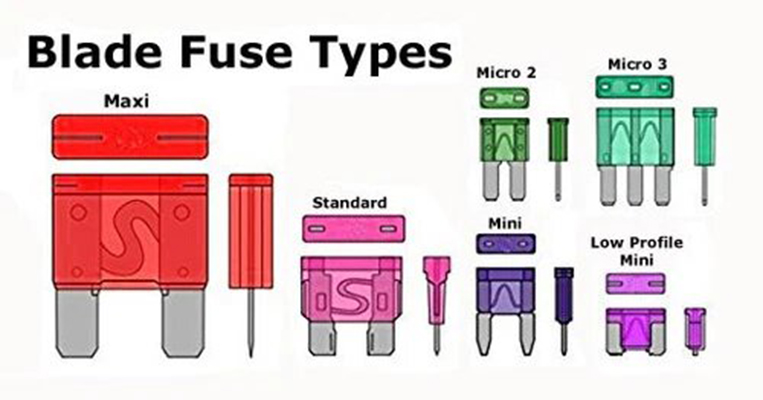
Starter circuit fuses are widely used in passenger cars, commercial trucks, buses, agricultural machines, and construction equipment. High‑displacement diesel engines and cold‑climate vehicles demand especially robust fuses able to tolerate prolonged crank times. In fleets and heavy‑duty applications, these fuses protect auxiliary starter circuits powering PTO systems or secondary engines. Electric and hybrid platforms also integrate starter fuses in 12 V support networks feeding DC‑DC converters, stabilizing they remain protected from shorted harnesses or faulty starter‑mounted components. Standard blade, bolt‑down, and MIDI/MEGA fuse formats allow flexible mounting near batteries, power distribution centers, or dedicated starter junction boxes.
Performance advantages and selection criteria
High‑quality starter circuit fuses deliver low power dissipation, precise melting characteristics, and high interrupt ratings that prevent catastrophic arcing during severe faults. Copper or silver alloy elements, robust terminals, and heat‑resistant housings maintain stable behavior over thousands of engine start cycles. When selecting a fuse, engineers evaluate cold‑cranking current, starter inrush profile, ambient temperature, and allowable voltage drop. They also consider mechanical robustness against vibration and shock in under‑hood environments. Correctly matched fuses reduce unplanned downtime, protect wiring looms from fire risk, and help OEMs comply with safety and EMC regulations while maintaining serviceability in aftermarket maintenance.
Integration, diagnostics, and maintenance practices
To simplify troubleshooting, many OEMs place starter fuses in easily accessible battery‑mounted fuse boxes, often labeled on the cover and in service manuals. Technicians can quickly isolate starting issues by checking continuity across the fuse, then verifying starter relay and motor operation. Some platforms combine the starter fuse with current sensors, enabling onboard diagnostics to detect abnormal cranking loads or repeated fuse blows, which may indicate seized starter bearings or wiring chafing. During replacement, using the original amperage rating and correct mechanical format is crucial; oversizing defeats the protective purpose, while undersizing may cause repeated nuisance failures during normal cold starts.
1What happens when a starter circuit fuse blows?
The starter motor stops receiving power, preventing engine cranking and protecting wiring and upstream electronics from overheating or short‑circuit damage.
2How is the correct starter fuse rating chosen?
Engineers match the fuse rating to peak cranking current, wiring cross‑section, ambient temperature, and time‑current characteristics to ensure fault clearing without nuisance opening.
3Where is the starter circuit fuse typically located?
It is usually mounted close to the battery in a high‑current fuse block or power distribution center, enabling short cable runs and straightforward service access.