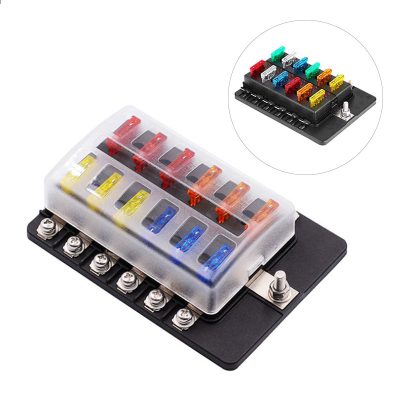
Vehicle-Grade Thermal Fuse Ensuring Stringent Safety Compliance In Modern Electronics
News 2025-11-27
Vehicle-compliant thermal fuses have become a cornerstone of electronic protection in high-density automotive and industrial systems. By interrupting current once a defined temperature threshold is exceeded, they safeguard wiring, semiconductor devices, and battery packs from thermal runaway. As vehicles integrate more advanced control units, ADAS modules, and electrified powertrains, the demand for components that satisfy rigorous safety standards and long-term reliability has increased sharply. A properly specified thermal fuse helps engineers meet regulatory requirements while preserving system uptime and protecting end users.

Compliance Aligned To Automotive Safety Standards
Vehicle-grade thermal fuses are designed in accordance with stringent standards such as AEC-Q200, ISO 26262 functional safety targets, and various OEM-specific qualification plans. These fuses must endure extended temperature ranges, severe vibration, and harsh humidity profiles typical of engine compartments and under-dashboard environments. Automotive compliance also demands traceable production batches, stable opening characteristics throughout the product lifetime, and strict derating guidelines. By adhering to such frameworks, manufacturers enable engineers to integrate thermal protection confidently into ECUs, DC-DC converters, infotainment systems, and on-board chargers.
Key Performance Benefits And Protection Capabilities
A vehicle-compliant thermal fuse combines fast response to abnormal temperatures, low initial resistance, and high interrupting capability in a compact package. Stable fusing temperature and minimal drift help prevent nuisance openings while still reacting quickly under genuine fault conditions such as stalled motors, blocked ventilation, or excessive inrush. Designers also gain consistent I²t characteristics, allowing accurate coordination with upstream fuses and circuit breakers. Low internal resistance reduces power loss, improves energy efficiency, and limits self-heating, which is particularly important in high-current paths supporting electric power steering, HVAC blowers, and battery management circuits.
Application Scenarios In Automotive And Beyond
Thermal fuses serve as a final protective element in traction battery packs, on-board chargers, DC link circuits, and auxiliary power modules found in hybrid and electric vehicles. They help isolate overheated cells, protect PTC heaters in cabin climate systems, and guard compact DC motors responsible for window lifters, seat adjustment, and cooling fans. Outside the vehicle domain, the same automotive-qualified devices protect power tools, industrial drives, telecom rectifiers, and LED drivers that face demanding thermal cycles and tight safety regulations. In each application, the fuse acts as an irreversible safeguard that prevents fire hazards and catastrophic component damage.
Design Considerations And Integration Practices
Effective use of a thermal fuse requires careful selection of opening temperature, rated current, and mounting style. Engineers must analyze worst-case ambient conditions, internal heat generation, and airflow around the fuse to avoid premature operation. Placement near the hottest point of the assembly, accurate thermal modeling, and adherence to recommended solder profiles sustain long-term stability. Coordination with NTC sensors, electronic protection ICs, and traditional overcurrent devices yields a layered safety strategy. When implemented correctly, a vehicle-compliant thermal fuse helps systems pass safety audits, EMC tests, and endurance trials while maintaining compact PCB layouts and cost efficiency.
Common Questions About Vehicle-Compliant Thermal Fuses
1. Typical automotive use cases
They are widely used in battery modules, on-board chargers, DC-DC converters, motor drive boards, and heater circuits where overtemperature risks require irreversible cut-off protection.
2. Difference from resettable devices
A thermal fuse opens permanently when its rated temperature is exceeded, ensuring a fail-safe state, while resettable devices resume operation after cooling, which may not meet specific safety goals.
3. Key parameters during selection
Engineers focus on opening temperature, rated current, interrupting capacity, resistance, package size, and proven compliance to automotive standards to ensure safe and predictable performance.