Weather-Proof Thermal Fuse Ensures Stable Circuit Protection In Harsh Outdoor Environments
News 2025-11-27
Weather-proof thermal fuses are purpose-built circuit protection components designed to keep electrical and electronic systems safe under harsh outdoor exposure. Unlike standard fuses that may degrade when exposed to moisture, ice, or intense solar radiation, these devices maintain consistent performance in rain, snow, and extreme temperatures. Their robust encapsulation and carefully engineered internal structure allow them to open the circuit quickly when abnormal heat is detected, preventing overheating, fire hazards, and costly equipment failure.
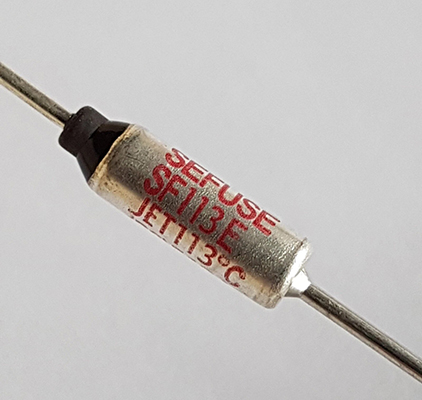
Key Design Features Of Weather-Proof Thermal Fuses
Weather-proof thermal fuses adopt sealed housings that block water, dust, salt spray, and corrosive pollutants encountered in outdoor and industrial environments. The sensing element is calibrated to a precise opening temperature and is thermally coupled to the target component or PCB area. Many products use high-temperature resins, PTFE-insulated leads, and corrosion-resistant terminations to preserve electrical integrity across a wide temperature range. These characteristics reduce nuisance trips while still providing fast response to true overtemperature conditions, which is crucial in high-density power electronics and compact enclosures.
Performance Under Extreme Temperatures And Weather
A core advantage of a weather-proof thermal fuse is its capability to operate accurately across extended ambient ranges, from sub-zero winter conditions to peak summer heat. Qualified devices are tested under thermal cycling, humidity, and condensation to ensure stable opening temperature and insulation resistance. Even when installed in locations subject to direct rain, snow accumulation, or freeze–thaw cycles, the fuse maintains insulation strength and mechanical robustness. This predictable behavior allows engineers to design outdoor power supplies, LED drivers, chargers, and HVAC controllers with confidence in long-term thermal protection.
Typical Application Scenarios In Outdoor And Industrial Systems
These thermal fuses are widely applied in outdoor lighting systems, photovoltaic junction boxes, garden and architectural fixtures, and security cameras mounted in exposed positions. They also protect heaters in de-icing systems, EV charging piles, agricultural pumping stations, and traffic infrastructure cabinets. In such scenarios, equipment must operate continuously under fluctuating loads while facing rain and snow. By integrating a weather-proof thermal fuse in series with transformers, heating elements, or high-power semiconductor modules, designers can limit damage during blocked airflow, enclosure blockage by ice, or abnormal ambient temperature rise.
Integration, Standards Compliance And Selection Tips
When selecting a weather-proof thermal fuse, engineers must consider rated voltage, current, and opening temperature, as well as installation method such as axial leaded, radial, or clip mounting. Compatibility with international safety standards like UL, VDE, and IEC is essential for equipment certification and market access. Proper thermal coupling is achieved through direct contact, carefully chosen mounting pressure, and high-grade insulation sleeves or heat-shrink tubing. Accurate datasheets describing resistance, I2t characteristics, and derating curves support optimized circuit design and help maintain long service life under demanding outdoor duty cycles.
Common Questions About Weather-Proof Thermal Fuses
1How does a weather-proof thermal fuse differ from a standard fuse?
A weather-proof thermal fuse is sealed against moisture and contaminants and is calibrated to open at a specified temperature, while a standard fuse usually responds only to overcurrent and may not withstand prolonged rain, humidity, or ice.
2Where are weather-proof thermal fuses most frequently installed?
They are commonly installed in outdoor LED luminaires, power supplies, EV charging equipment, heaters, HVAC outdoor units, and control boxes exposed to rain, snow, or wide ambient temperature swings.
3Can these thermal fuses be reset after they open?
No. A thermal fuse is a one-time protection component; once it opens due to excessive temperature, it must be replaced to restore the circuit, ensuring that serious overheating events are not ignored.