High Porosity Auto Fuse Design Enabling Superior Heat Dissipation In Modern Vehicles
News 2025-12-08
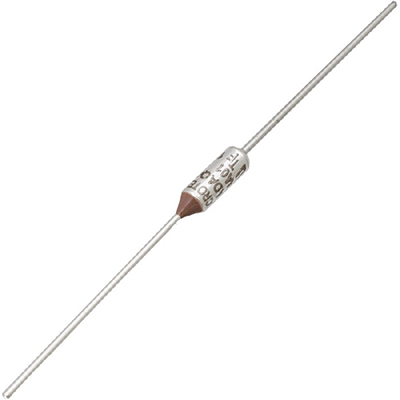
High porosity design auto fuses are emerging as a key component in next‑generation automotive electrical architectures. As vehicle platforms integrate high‑power ECUs, ADAS modules, and electrified powertrains, conventional low‑surface‑area fuses struggle to manage thermal stress. By engineering a porous structure into the fuse body and element surroundings, manufacturers significantly increase effective surface area, enabling faster heat diffusion into the ambient environment and stabilizing operating temperature under heavy loads.
Thermal Management Mechanism
High porosity designs create a network of micro‑channels and voids around the fuse element. These pathways promote enhanced convection and radiation, allowing hot spots to dissipate rapidly when current approaches the rated limit. The porous matrix often leverages ceramic or high‑temperature polymer carriers that maintain structural integrity under repeated thermal cycling. This architecture reduces peak element temperature, delays metal fatigue, and stabilizes resistance, which directly improves current‑time characteristics and short‑circuit interruption behavior.
Automotive Application Scenarios
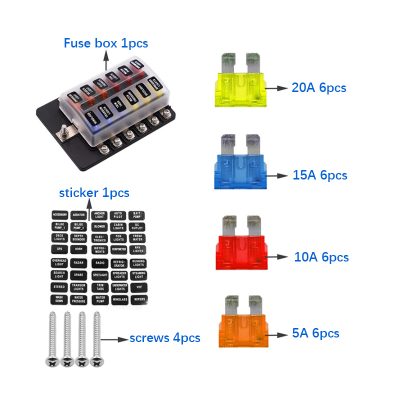
In internal combustion engine vehicles, high porosity auto fuses protect high‑load circuits such as cooling fans, HVAC blowers, fuel pumps, and high‑intensity lighting. In hybrid and battery‑electric platforms, the benefit becomes even more pronounced on DC‑DC converters, on‑board chargers, battery junction boxes, and auxiliary 12 V or 48 V busbars. Compact fuse boxes located near engines or power electronics in confined spaces gain improved reliability, since the porous design compensates for poor airflow and elevated ambient temperature commonly found in under‑hood and under‑floor environments.
Performance Advantages And Design Benefits
By lowering steady‑state temperature, high porosity auto fuses extend service life and maintain stable trip curves over years of operation. Enhanced heat dissipation supports higher continuous current ratings in the same package size, enabling downsized fuse panels and improved wiring harness integration. The porous configuration also mitigates nuisance tripping during transient inrush conditions while still reacting quickly to genuine overloads and short circuits. These characteristics help OEMs meet stringent safety standards, reduce warranty claims, and support higher power density in advanced electrical and electronic subsystems.
Integration, Standards, And Selection
When specifying high porosity design auto fuses, engineers evaluate rated voltage, interrupting capacity, time‑current characteristics, vibration resistance, and compatibility with ISO and SAE automotive standards. Proper coordination with upstream breakers, downstream loads, and PCB or blade‑type sockets ensures selective protection in complex multi‑branch circuits. Thermal simulations and physical layout optimization in fuse boxes further leverage the porous structure, preventing localized overheating around adjacent components.
1. What applications benefit most?
High porosity auto fuses are especially beneficial in high‑current, thermally constrained circuits such as EV auxiliary buses, engine bay junction boxes, and ADAS power distribution.
2. How does porosity improve fuse life?
The increased surface area lowers element temperature under load, reducing metal fatigue and drift in time‑current characteristics, which extends operational lifetime.
3. Are these fuses compatible with existing holders?
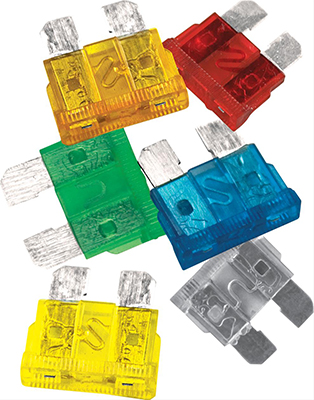
Many high porosity designs follow standard blade or bolt‑down footprints, allowing drop‑in replacement while providing superior thermal performance.